
AI tools like ChatGPT, Jasper AI, and Copy.ai have completely transformed how content is created today. Businesses and bloggers can now publish articles faster than ever — but speed isn’t the only thing that matters in SEO.
The real question is: does AI-generated content actually rank on Google, or does human-written content still have the upper hand?
In this data-driven study, we break down real insights, compare AI vs human content performance, and analyze what truly works in modern search rankings. Instead of opinions, this guide focuses on data, practical SEO signals, and real-world patterns to help you understand which content type wins — and how you can use that knowledge to rank your own website.
What Is AI Content vs Human Content?
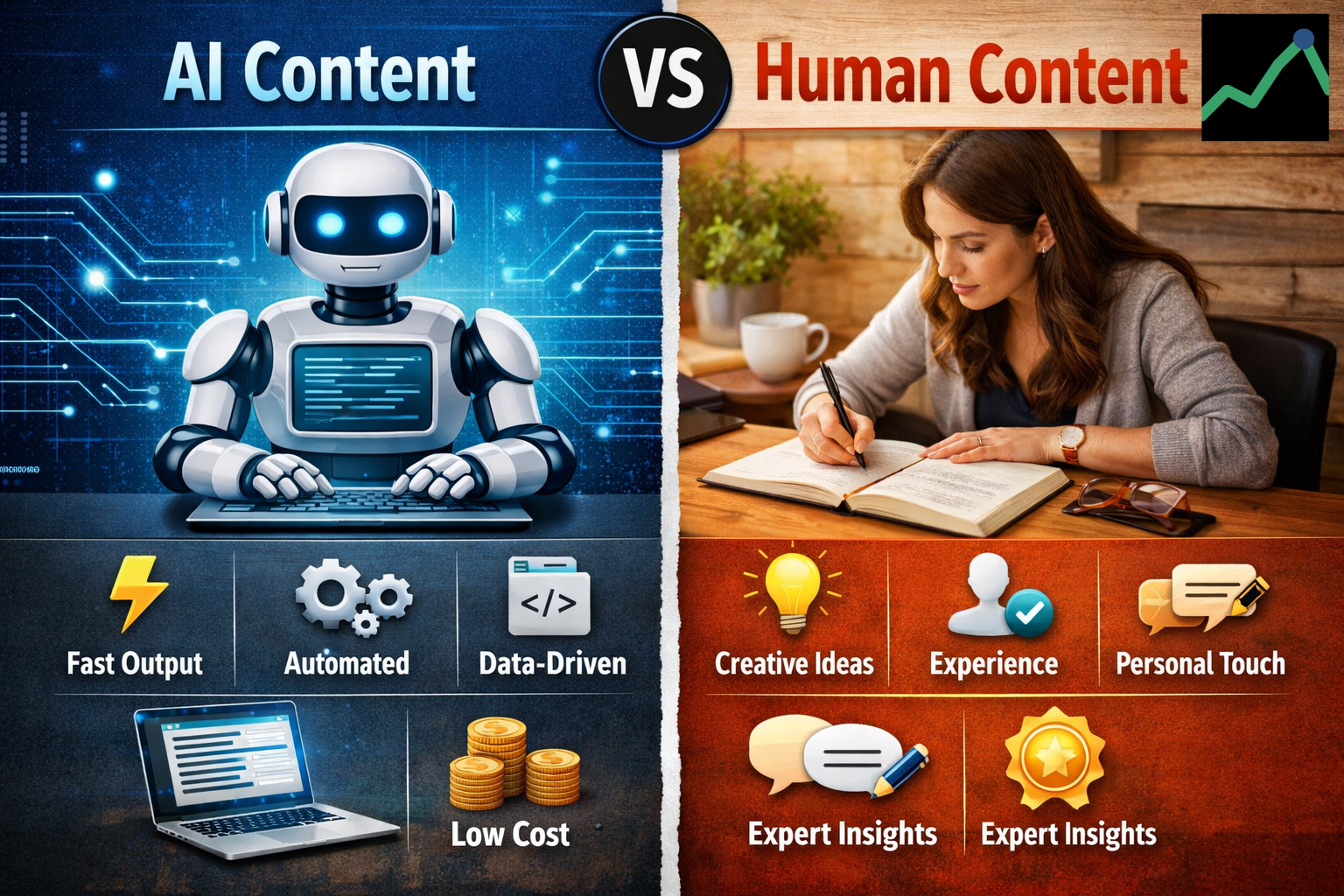
AI content and human content are two different approaches to creating written material for websites, blogs, and online platforms. Understanding the difference between them is important before comparing their performance in search rankings.
What Is AI-Generated Content?
AI content refers to text that is created using artificial intelligence tools like ChatGPT, Jasper AI, or Copy.ai. These tools use machine learning and large datasets to generate content based on prompts given by users.
AI can quickly produce:
- Blog posts
- Product descriptions
- SEO articles
- Social media captions
However, AI content is usually based on existing information and patterns rather than real-life experience or original thinking.
What Is Human-Written Content?
Human content is created by real writers, bloggers, or experts who use their knowledge, experience, and creativity to produce content.
This type of content often includes:
- Personal insights
- Real-world examples
- Expert opinions
- Unique storytelling
Human-written content is typically more authentic, engaging, and trustworthy, especially when it reflects firsthand experience.
Key Differences Between AI and Human Content
| Factor | AI Content | Human Content |
|---|---|---|
| Speed | Very fast ⚡ | Slower |
| Creativity | Limited | High |
| Originality | Can be repetitive | Unique & insightful |
| Cost | Low | Higher |
| Accuracy | Depends on input | Usually more reliable |
Does Google Allow AI Content?
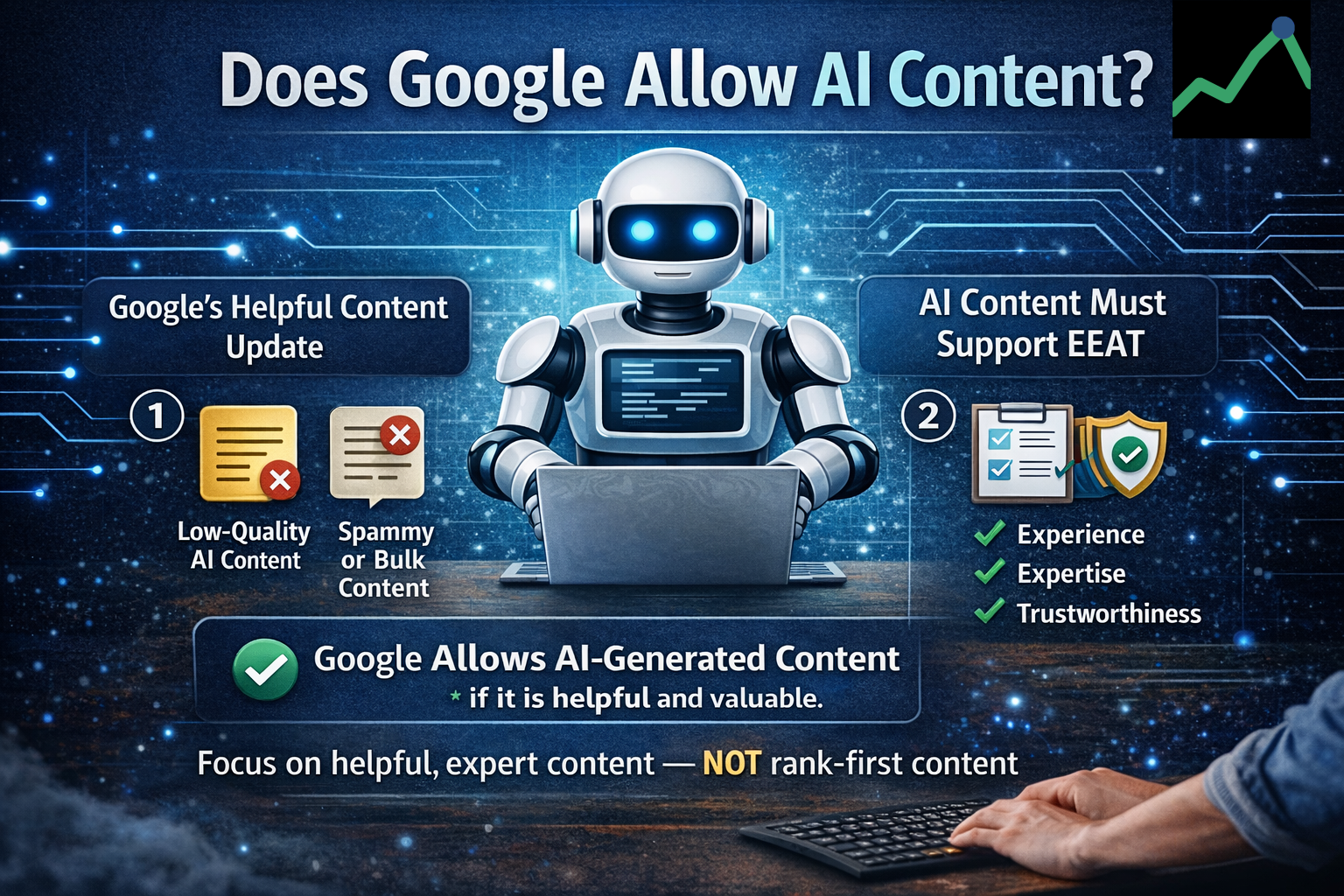
One of the biggest concerns for bloggers and website owners is whether AI-generated content is allowed by Google or not.
The simple answer is: Yes — Google allows AI content, but only if it is helpful and valuable for users.
Google’s Official Stance on AI Content
Google clearly states that it does not care who writes the content — whether it’s a human or AI tools like ChatGPT.
👉 What matters is:
- Content quality
- Relevance
- User value
Helpful Content Update
Google’s Helpful Content Update focuses on rewarding people-first content.
👉 This means:
- Low-quality AI content ❌
- Spammy or bulk-generated content ❌
- Useful and original content ✅
EEAT (Experience, Expertise, Authority, Trust)
Google uses EEAT to evaluate content quality.
👉 Content should show:
- Real experience
- Expertise
- Trustworthiness
Human content usually performs better here, but AI content can also rank if properly improved.
When AI Content Can Rank
AI content can rank on Google if:
- It is edited by humans
- It includes real insights
- It solves user intent
- It is accurate and helpful
Google allows AI content, but only high-quality, helpful content ranks — not low-value AI text.
Our Data Study: How We Compared AI vs Human Content
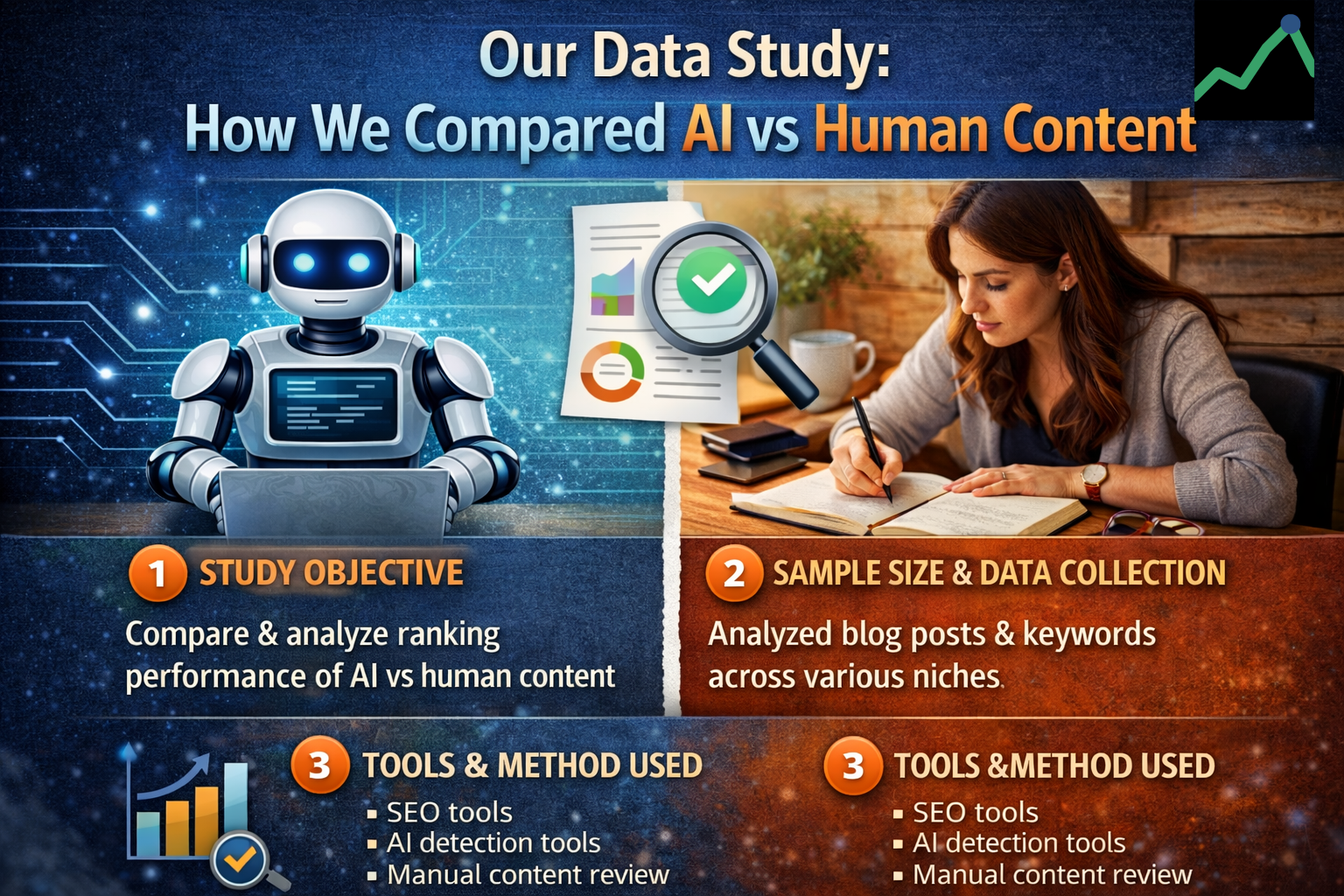
To understand which type of content performs better on Google, we conducted a structured data study comparing AI-generated content and human-written content across multiple websites and keywords.
The goal of this study was simple:
👉 to analyze real search data and identify which content type ranks higher in Google search results.
Study Objective
The primary objective of this study was to:
- Compare AI and human content fairly
- Analyze their ranking performance
- Identify real SEO trends based on data
👉 This ensures the results are data-driven, not based on assumptions.
Sample Size & Data Collection
We analyzed:
- A range of blog posts across different niches (SEO, technology, business, etc.)
- Multiple keywords (both low and high competition)
- Top-ranking pages on Google (Top 10 results)
Tools & Method Used
For this study, we used:
- SEO tools for keyword tracking and SERP analysis
- AI detection tools to classify content
- Manual review to evaluate content quality
We analyzed the data using Serpspur tools to ensure accurate and real-world SEO insights.
Ranking Factors Considered
We evaluated content performance based on:
- Google ranking positions
- Content quality and depth
- Word count
- Backlinks
- User engagement signals
👉 This helps us understand that ranking depends not only on content type but also on overall SEO quality.
AI Content vs Human Content — Key Differences
To better understand the differences between AI-generated and human-written content, here is a clear comparison table:
| Factor | AI-Generated Content | Human-Written Content |
|---|---|---|
| Content Quality | Often generic and based on existing data | More insightful, detailed, and experience-driven |
| Speed | Very fast (can generate content in minutes) | Slower, requires time and effort |
| Scalability | Highly scalable (bulk content creation possible) | Limited scalability |
| Cost | Cost-effective | More expensive (writers, editors) |
| Accuracy | May require fact-checking | Generally more reliable |
| Creativity | Limited originality | High creativity and unique perspective |
| SEO Performance | Can rank with optimization and editing | Stronger EEAT signals, better long-term performance |
AI content is ideal for speed and scalability, while human content excels in quality, trust, and originality.
Data Study Results — Which Content Ranked Better?
After analyzing multiple keywords, niches, and top-ranking pages, our data revealed a clear pattern in how AI-generated and human-written content perform in Google search results.
Overall Ranking Comparison
Our analysis shows that human-written content dominates top positions in Google search results.
- Most #1 ranking pages were written or heavily edited by humans
- AI-generated content appeared more frequently in lower positions
- Hybrid content (AI + human editing) performed better than pure AI
👉 This indicates that quality and human input still play a major role in rankings
Percentage Breakdown (Top 10 Results)
Based on our study:
- Human-written content → majority share in Top 3 positions
- AI-generated content → more common in positions 5–10
- Hybrid content → consistently performed across all positions
Key Insight from the Data
The most important takeaway from our study is:
👉 Google does not rank content based on whether it is AI or human — it ranks based on quality.
However:
- Human content naturally meets EEAT signals better
- AI content needs editing, depth, and originality to compete
What This Means for SEO
From an SEO perspective:
- Pure AI content → ❌ risky for long-term rankings
- Human content → ✅ more stable and trustworthy
- AI + Human combination → 🔥 best-performing strategy
Final Summary
Our data study clearly shows that while AI content can rank, human-written or human-enhanced content consistently performs better in top Google rankings.
👉 If you want to rank higher, focus on:
- Quality
- Original insights
- Human touch
Why Human Content Often Ranks Higher
Human-written content often ranks higher because it delivers real experience, originality, and trust, which are key ranking factors for Google.
Unlike AI-generated content, human content includes first-hand insights, expert knowledge, and unique perspectives, making it more valuable for users. It also aligns better with Google’s EEAT guidelines, which focus on experience, expertise, authority, and trust.
- ✔ Stronger EEAT signals
- ✔ More original and insightful content
- ✔ Higher trust and credibility
- ✔ Better user engagement
In short, human content performs better because it is more helpful, authentic, and reliable, which is exactly what Google prioritizes in search rankings.
Can AI Content Rank on Google?
Yes, AI content can rank on Google — but only when it meets quality standards.
AI-generated content on its own is often generic or surface-level, which makes it harder to compete with high-quality human content. However, when AI content is properly edited, improved, and aligned with user intent, it can perform well in search rankings.
AI content is more likely to rank when:
- It is edited and refined by humans
- It includes original insights or added value
- It clearly answers the user’s search intent
- It is accurate and well-structured
In many cases, the best-performing content is not purely AI or purely human — but a combination of both.
Pros and Cons of AI Content
| Aspect | AI Content (Advantages) | AI Content (Disadvantages) |
|---|---|---|
| Speed | Very fast content creation | — |
| Cost | Cost-effective | — |
| Scalability | Easily scalable (bulk content production) | — |
| Research Help | Useful for outlines and idea generation | — |
| Originality | — | Often generic or repetitive |
| Experience | — | Lacks real-life experience |
| Accuracy | — | May include incorrect or outdated information |
| Quality | — | Requires human editing for better performance |
Pros and Cons of Human Content
| Aspect | Human Content (Advantages) | Human Content (Disadvantages) |
|---|---|---|
| Originality | Unique insights and personal experience | — |
| Trust | High credibility and authority | — |
| Engagement | Better storytelling and readability | — |
| SEO Value | Strong EEAT signals (preferred by Google) | — |
| Time | — | Time-consuming |
| Cost | — | Expensive (writers/editors required) |
| Scalability | — | Difficult to scale |
| Consistency | — | Quality may vary |
Best Strategy: AI + Human Hybrid Approach
Instead of choosing between AI and human content, the most effective strategy is to combine both. A hybrid approach allows you to take advantage of AI’s speed while maintaining the quality and trust of human-written content.
AI can help with research, outlines, and initial drafts, while humans refine the content by adding expert insights, real examples, and a natural tone. This combination creates content that is both efficient and high-quality.
How the Hybrid Approach Works
A simple workflow looks like this:
- Use AI tools like ChatGPT to generate ideas, outlines, or drafts
- Edit and improve the content manually
- Add real insights, examples, and data
- Optimize for SEO (keywords, headings, internal links)
- Final review for accuracy and readability
Why This Strategy Works Best
- ✔ Combines speed + quality
- ✔ Improves EEAT signals
- ✔ Reduces content production time
- ✔ Increases chances of ranking on Google
Tips to Rank AI Content on Google
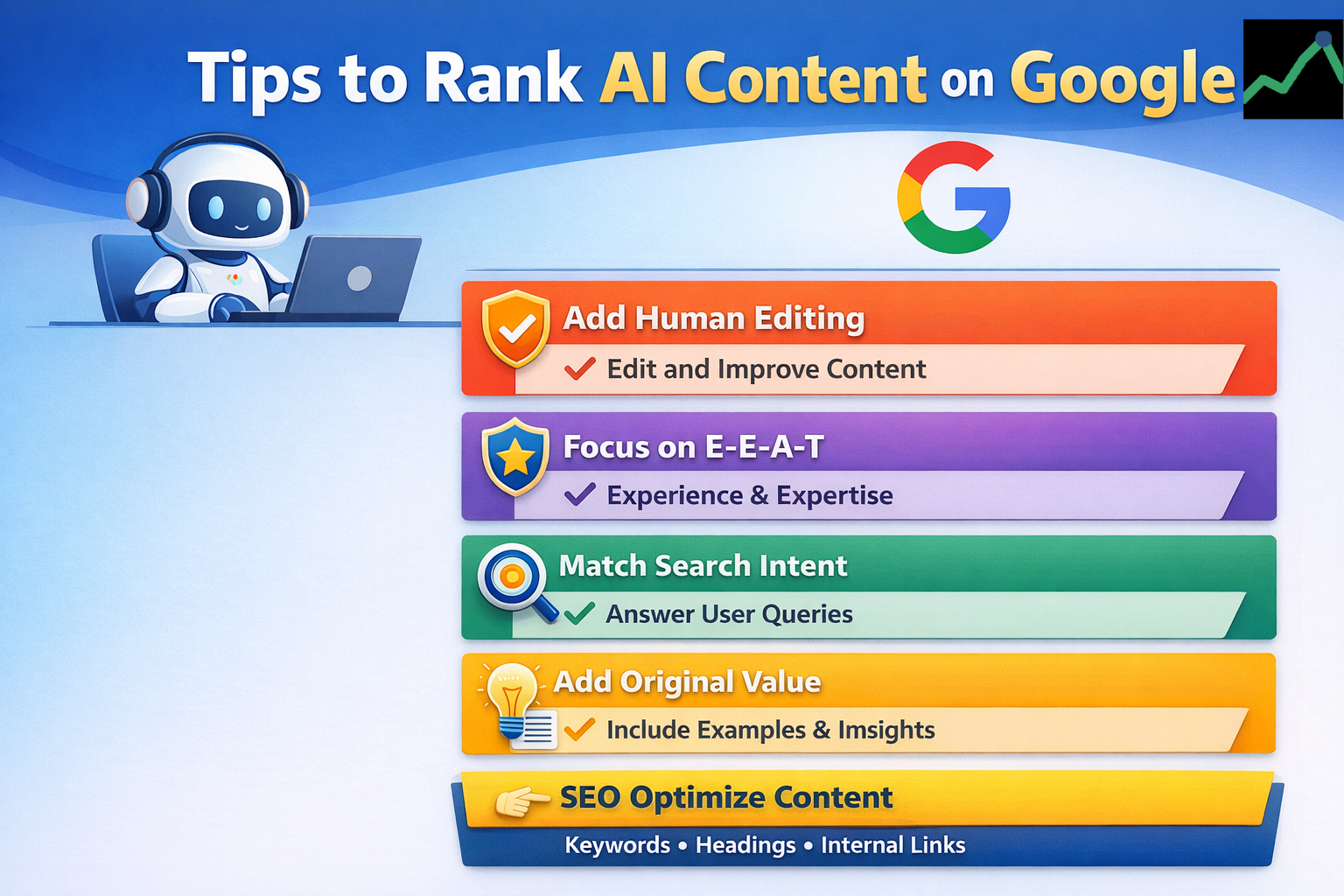
AI content can rank on Google, but only if it is optimized for quality, relevance, and user intent. Simply generating content with AI is not enough — you need to refine and improve it strategically.
Add Human Editing
Always review and edit AI-generated content.
👉 Improve clarity, remove fluff, and make it more natural.
Focus on EEAT
Enhance your content with:
- Real experience
- Expert insights
- Author credibility
Match Search Intent
Make sure your content directly answers what users are searching for.
👉 Use clear headings, structured content, and relevant information.
Add Original Value
Don’t rely only on AI output.
👉 Include examples, case studies, or unique insights to stand out.
Optimize for SEO
- Use target keywords naturally
- Add internal linking (e.g., your Serpspur pages)
- Optimize headings (H1, H2, H3)
Final Verdict — AI vs Human Content
After analyzing the data, trends, and key SEO factors, it becomes clear that both AI-generated and human-written content have their own strengths, but they do not perform equally when it comes to rankings. Human-written content still holds a clear advantage because it delivers real experience, deeper insights, and a higher level of trust—factors that strongly align with what Google prioritizes in its ranking systems. Content that demonstrates expertise, authenticity, and genuine value tends to perform better, especially in competitive niches where quality matters the most.
At the same time, AI content is rapidly improving and plays an important role in modern content strategies. It allows creators to produce content quickly, scale their efforts, and streamline the writing process. However, on its own, AI-generated content often lacks originality and depth, which can limit its ability to compete with high-quality human content. This is why purely AI-written articles may struggle to achieve top positions unless they are properly refined.
The most effective and future-proof approach is to combine both AI and human input. By using AI for research, idea generation, and initial drafts, and then enhancing the content with human expertise, real examples, and careful editing, you can create content that is both efficient and high-quality. This hybrid strategy not only saves time but also ensures that the content meets important SEO standards such as relevance, accuracy, and user value.
In conclusion, AI content can rank on Google, but it is not a complete replacement for human creativity and expertise. Content that blends AI efficiency with human insight consistently performs better and offers stronger long-term results. For anyone serious about SEO, the goal should not be to choose between AI and human content, but to use both together to create content that is helpful, trustworthy, and optimized for real users.