

Keyword research is the foundation of every successful SEO strategy. Whether you’re building a new website or trying to grow your existing traffic, choosing the right keywords helps you understand what your audience is searching for—and how to reach them.
In today’s competitive digital landscape, simply creating content isn’t enough. You need to target keywords that have the right balance of search volume, competition, and user intent. This is where smart keyword research comes in.
In this guide, we’ll walk you through how to do keyword research for SEO step by step using modern strategies and tools like Serpspur, so you can find profitable keywords, outrank competitors, and drive consistent organic traffic.
What is Keyword Research?

Keyword research is the process of finding and analyzing the words and phrases that people type into search engines like Google. These keywords help you understand what your target audience is searching for, so you can create content that matches their needs.
In simple terms, keyword research tells you:
- What people are searching for
- How many people are searching for it (search volume)
- How difficult it is to rank for that keyword (competition)
For example, if someone searches for “best diet plan for weight loss,” it shows they are looking for helpful information. If your website has content targeting that exact keyword, you have a higher chance of appearing in search results.
Keyword research is important because SEO is not just about writing content—it’s about writing the right content for the right audience. Without proper keyword research, your content may never reach the people who actually need it.
It also helps you understand search intent, which means the reason behind a user’s search. Some users want information, while others are ready to buy or take action. By targeting the correct keywords, you can align your content with user intent and improve both rankings and conversions.
In short, keyword research is the first and most crucial step in SEO, and tools like Serpspur make it easier to discover high-value keywords, analyze competition, and build a strong content strategy.
Types of Keywords in SEO
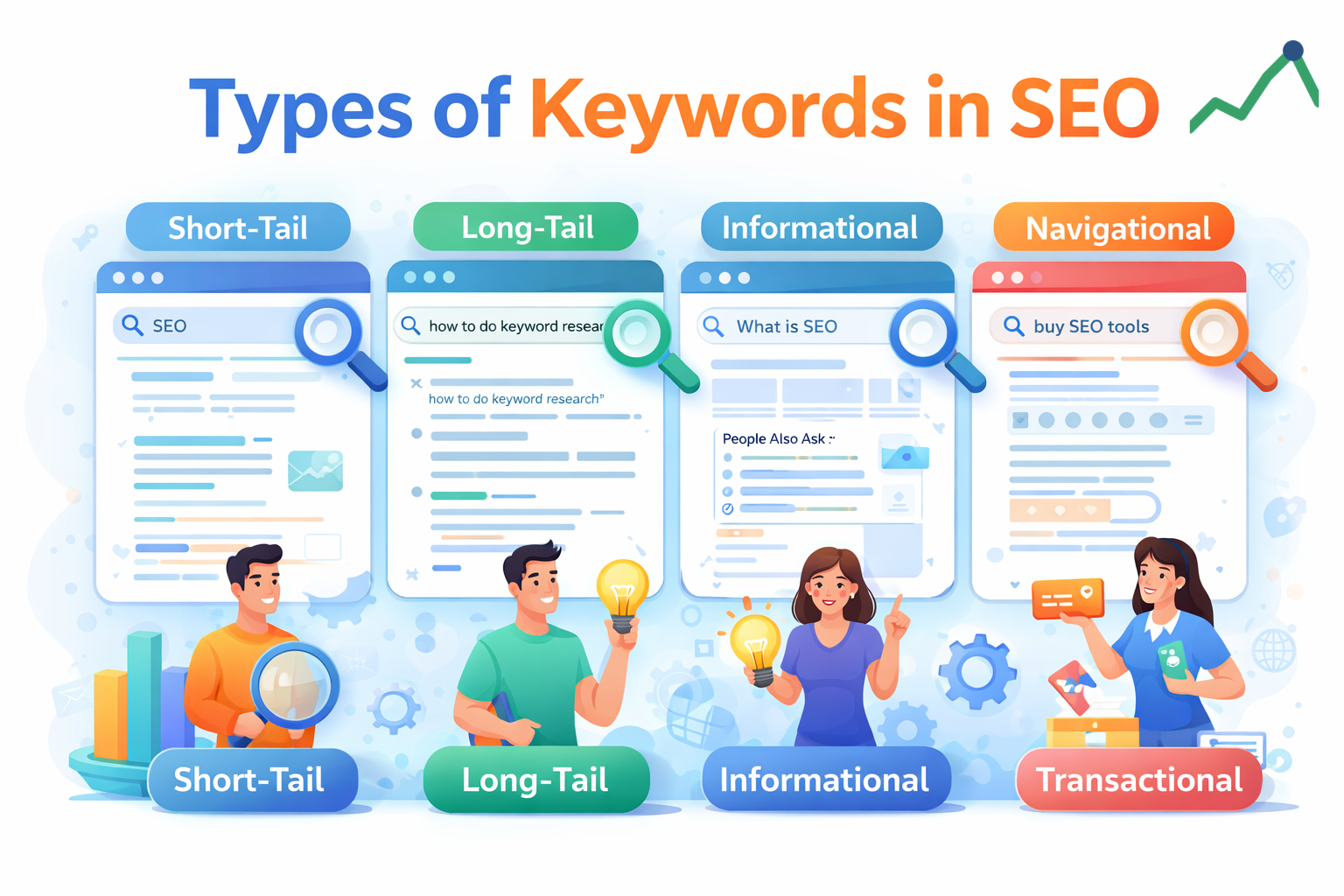
Understanding different types of keywords is very important because each type targets a different audience and purpose. When you use the right mix, your SEO strategy becomes much stronger and more effective.
Short-Tail Keywords
Short-tail keywords are very general and usually contain 1–2 words.
Examples:
- SEO
- Digital marketing
- Keywords
These keywords have high search volume, but they are also very competitive. It’s harder to rank for them, especially for new websites.
Long-Tail Keywords
Long-tail keywords are longer and more specific phrases (3+ words).
Examples:
- How to do keyword research for beginners
- Best free SEO tools for small businesses
These keywords have lower competition and often bring high-quality traffic because they match user intent better.
Informational Keywords
These keywords are used when users are looking for information or answers.
Examples:
- What is SEO
- How keyword research works
They are perfect for blog posts, guides, and tutorials.
Navigational Keywords
Navigational keywords are used when users want to find a specific website or brand.
Examples:
- Facebook login
- Ahrefs keyword tool
Users already know where they want to go—they just use Google to get there.
Transactional Keywords
These keywords show that the user is ready to take action, like buying or signing up.
Examples:
- Buy SEO tools
- Best keyword research tool subscription
These keywords are great for landing pages, product pages, and conversions.
Why Keyword Research is Important

Keyword research is not just a basic SEO step—it directly impacts how well your website performs on search engines. Without proper keyword research, you’re basically creating content without knowing what your audience actually wants.
Helps You Target the Right Audience
Keyword research helps you understand what your audience is searching for.
Instead of guessing, you use real data to create content that matches their needs. This means your website attracts relevant visitors, not just random traffic.
Improves Search Engine Rankings
When you use the right keywords in your content, search engines like Google can better understand your pages.
This increases your chances of ranking higher in search results, which leads to more visibility.
Increases Website Traffic
Targeting the right keywords brings consistent organic traffic to your site.
Instead of depending on ads, you get free traffic from search engines over time.
Boosts Conversions
Not all traffic is valuable. Keyword research helps you find high-intent keywords—people who are ready to take action.
This means more sign-ups, sales, or leads for your business.
Gives You a Competitive Advantage
By analyzing keywords, you can see what your competitors are ranking for and find opportunities they missed.This helps you create better content and outrank them in search results.
Step-by-Step Guide to Keyword Research
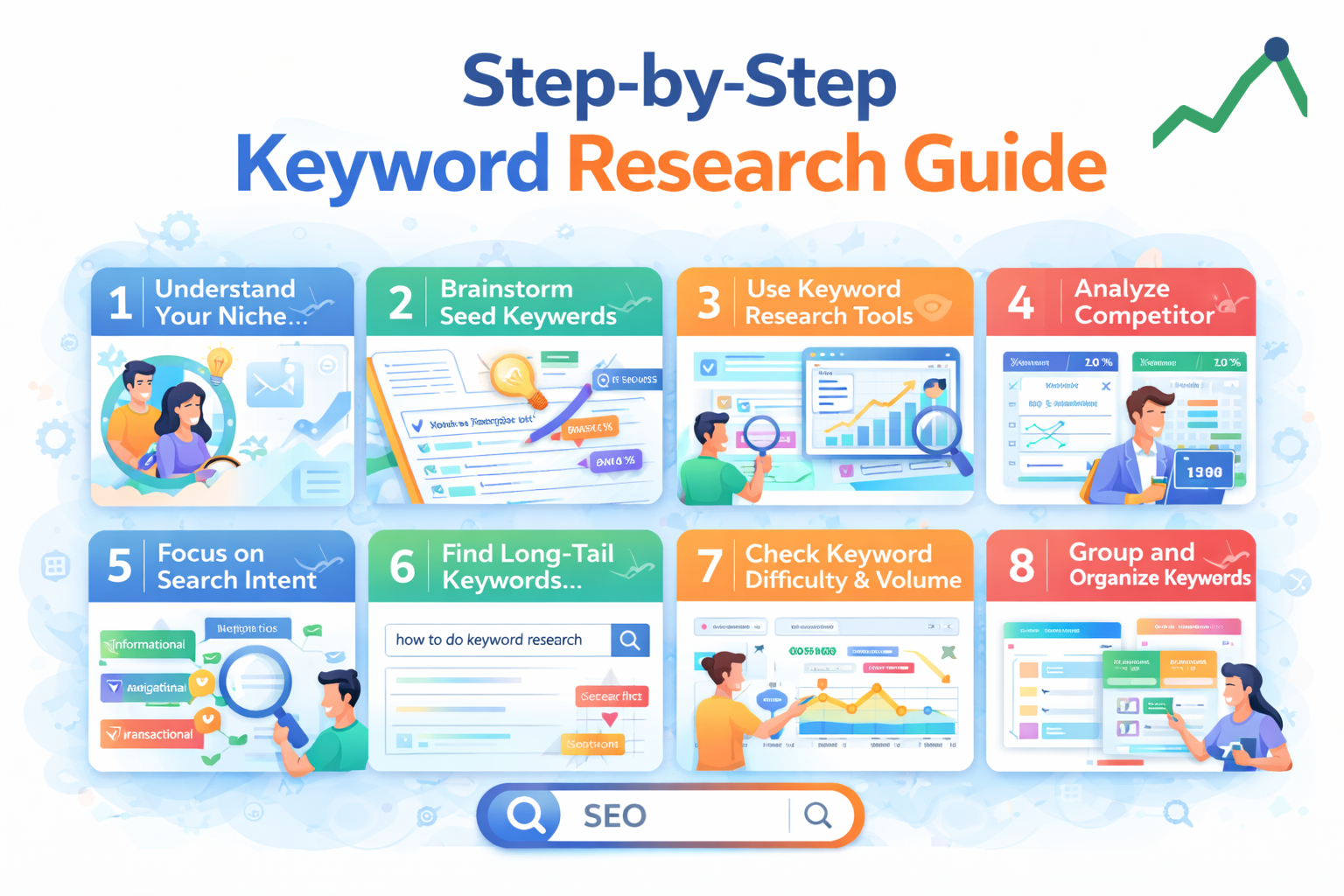
Now that you understand the basics, let’s move to the most important part—how to actually do keyword research. Follow these steps to find the best keywords for your website and rank higher on Google.
Step 1: Understand Your Niche
Start by clearly defining your niche and target audience.
Ask yourself:
- What is my website about?
- Who is my ideal audience?
- What problems am I solving?
This helps you focus only on relevant keywords instead of wasting time on unrelated topics.
Step 2: Brainstorm Seed Keywords
Seed keywords are basic terms related to your niche.
For example (SEO niche):
- SEO tools
- Keyword research
- Backlinks
These keywords are your starting point to discover more advanced keyword ideas.
Step 3: Use Keyword Research Tools
Now use tools like Serpspur to expand your keyword list.
Look for key metrics such as:
- Search volume (how many people search it)
- Keyword difficulty (how hard it is to rank)
- CPC (cost per click)
This step gives you data-driven keywords, not guesses.
Step 4: Analyze Competitor Keywords
Check what keywords your competitors are ranking for.
This helps you:
- Find new keyword ideas
- Discover gaps you can target
- Learn what’s already working in your niche
Step 5: Focus on Search Intent
Always match your keywords with user intent.
There are mainly 3 types:
- Informational (learn something)
- Navigational (find a site)
- Transactional (buy or take action)
If your content matches intent, it ranks better and converts more.
Step 6: Find Long-Tail Keywords
Long-tail keywords are easier to rank and bring targeted traffic.
Example:
Instead of “SEO” → use “how to do keyword research for beginners”
They may have lower volume but higher chances of ranking.
Step 7: Check Keyword Difficulty & Volume
Choose keywords with a good balance:
- High volume = more traffic
- Low difficulty = easier ranking
Avoid extremely competitive keywords if your site is new.
Step 8: Group and Organize Keywords
Finally, organize your keywords into groups (clusters).
This helps you:
- Plan your content
- Avoid keyword cannibalization
- Build topical authority
Best Tools for Keyword Research

To do effective keyword research, using the right tools is essential. These tools help you find keyword ideas, analyze competition, and choose the best keywords based on real data—not guesswork.
Serpspur (Recommended)
Since your goal is to rank and grow efficiently, Serpspur should be your primary tool.
With Serpspur, you can:
- Site audit
- Find high-quality keyword ideas
- Analyze search volume and difficulty
- Track competitor keywords
- Discover keyword gaps
It’s designed to give you everything you need in one place—just like premium tools, but smarter and more focused.
Google Keyword Planner
This is a free tool by Google that helps you find keyword ideas and search volume data.
Best for:
- Beginners
- Basic keyword research
- Finding search trends
Ahrefs
Ahrefs is one of the most powerful SEO tools in the market.
It helps you:
- Analyze competitor keywords
- Check backlinks
- Explore keyword difficulty in depth
SEMrush
SEMrush is an all-in-one digital marketing tool.
Key features:
- Keyword research
- Competitor analysis
- Site audit
Common Keyword Research Mistakes to Avoid
Even if you’re using the best tools, small mistakes in keyword research can stop your content from ranking. Avoiding these common errors will save you time and help you get better SEO results.
Targeting Only High-Competition Keywords
Many beginners go after keywords with very high search volume.
Problem:
These keywords are extremely competitive, and new websites struggle to rank for them.
Better Approach:
Focus on a mix of low + medium competition keywords, especially long-tail keywords.
Ignoring Search Intent
Choosing a keyword without understanding what the user actually wants is a big mistake.
Example:
If someone searches “best SEO tools,” they expect a list—not a sales page.
Better Approach:
Always match your content with the correct intent:
- Informational
- Navigational
- Transactional
- Commercial
Not Analyzing Competitors
Skipping competitor research means missing valuable opportunities.
Problem:
You don’t know what’s already working in your niche.
Better Approach:
Analyze competitor keywords to:
- Find gaps
- Discover ranking opportunities
- Improve your content strategy
Focusing Only on Search Volume
High search volume doesn’t always mean better results.
Problem:
You may get traffic, but not conversions.
Better Approach:
Look at:
- Keyword difficulty
- Search intent
- Conversion potential
Not Using Long-Tail Keywords
Ignoring long-tail keywords is a missed opportunity.
Problem:
You compete with big websites on broad keywords.
Better Approach:
Use specific phrases that are easier to rank and bring targeted traffic.
Poor Keyword Organization
Many people collect keywords but don’t organize them properly.
Problem:
This leads to messy content planning and keyword cannibalization.
Better Approach:
Group keywords into clusters and assign them to specific pages.
Doing Keyword Research Only Once
SEO is always changing, but many people treat keyword research as a one-time task.
Problem:
You miss new trends and opportunities.
Better Approach:
Update your keyword research regularly based on:
- Trends
- Performance data
- Competitor updates
Pro Tips for Better Keyword Research

If you want to get ahead of your competitors and rank faster, you need to go beyond basic keyword research. These advanced tips will help you find hidden opportunities and maximize your SEO results.
Start typing your keyword in Google, and it will suggest popular search queries.
Use Google Autocomplete
Why it works:
These suggestions come from real user searches, so they are highly valuable.
Analyze Trending Keywords
Look for keywords that are growing in popularity.
Tip:
Targeting trending keywords early can help you rank before competition increases.
Focus on Low-Hanging Keywords
These are keywords with:
- Low competition
- Decent search volume
They are easier to rank and give quick wins, especially for new websites.
Spy on Competitors Smartly
Don’t just copy competitors—analyze and improve.
Find:
- Keywords they rank for
- Content gaps
- Weak pages you can beat
Update Your Keywords Regularly
SEO is not static. Trends and rankings change over time.
Best practice:
- Update old content
- Add new keywords
- Optimize based on performance
Use Keyword Clustering Strategy
Instead of targeting one keyword per page, group related keywords together.
Benefits:
- Stronger topical authority
- Better rankings
- Improved content structure
Conclusion
Keyword research is the backbone of every successful SEO strategy. Without it, you’re simply creating content without direction. But when done correctly, it helps you understand your audience, target the right keywords, and drive consistent organic traffic to your website.
In this guide, we covered everything—from understanding keyword types to using advanced strategies like keyword clustering and competitor analysis.
The key takeaway is simple: focus on relevance, intent, and smart keyword selection instead of just chasing high search volume.
Remember, SEO is not a one-time task. Trends change, competition evolves, and search behavior shifts over time. That’s why you should continuously refine your keyword strategy, update your content, and explore new opportunities.
To make this process easier and more effective, using a powerful tool like Serpspur can give you a competitive edge. With the right approach and the right tools, you can find high-value keywords, outrank competitors, and grow your website faster.