Search Engine Optimization (SEO) is the process of improving a website to increase its visibility on search engines like Google. When users search for information, products, or services online, SEO helps your website appear higher in the search results. The higher your website ranks, the more people are likely to visit it, which can increase traffic, engagement, and potential customers.
SEO involves optimizing content, using the right keywords, improving website structure, and ensuring a good user experience so that search engines can easily understand and rank your site.
Understanding SEO in Simple Words
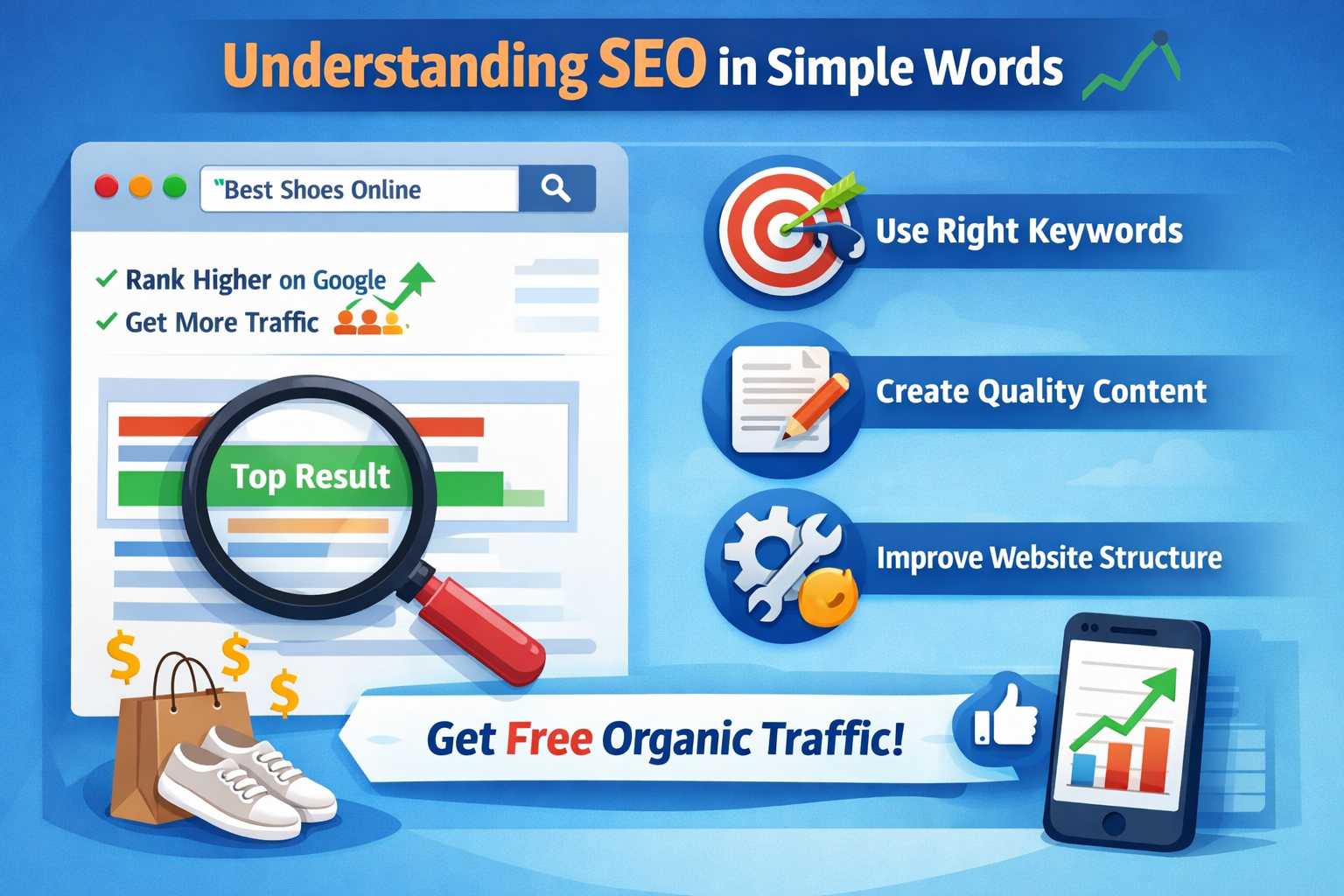
Search Engine Optimization (SEO) is the process of improving a website so it can rank higher on search engines like Google. In simple terms, SEO helps your website become more visible when people search for something related to your content, products, or services.
For example, if someone searches for “best shoes online” and your website appears on the first page, it means your SEO is working effectively. Websites that rank higher usually get more clicks, traffic, and potential customers.
SEO focuses on making your website useful, relevant, and easy to understand for both users and search engines. This includes using the right keywords, creating quality content, and improving website structure.
In short, SEO helps you get free organic traffic without paying for ads.
Why SEO is Important
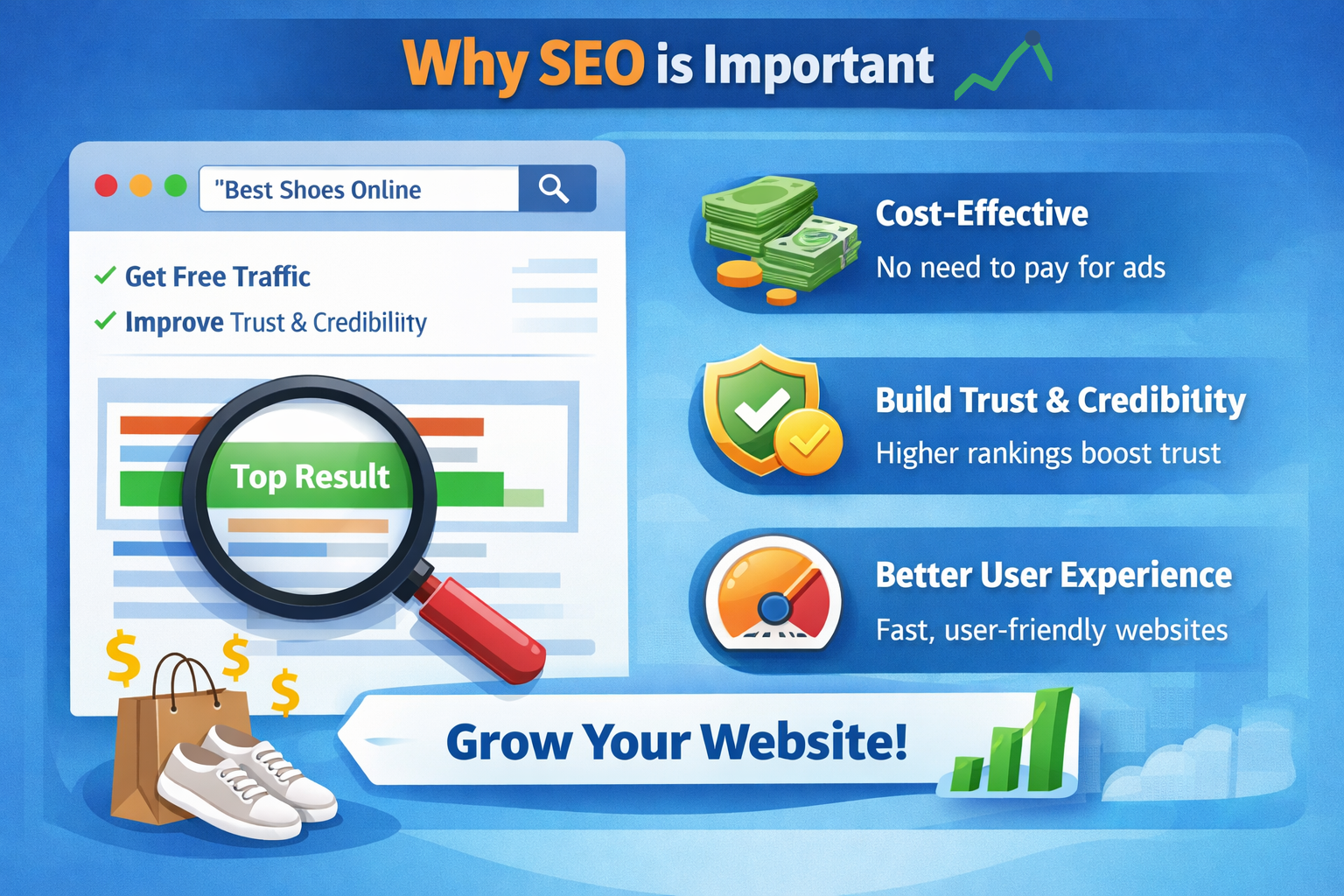
SEO is important because it helps your website get more visibility on search engines like Google. When your website appears on the first page of search results, more people are likely to visit it.
One of the biggest benefits of SEO is that it brings free (organic) traffic to your website. Unlike paid ads, you don’t have to spend money for every visitor. This makes SEO a cost-effective way to grow your online presence.
SEO also helps build trust and credibility. Users usually trust websites that appear at the top of search results, so higher rankings can improve your brand image.
In addition, SEO improves the overall user experience by making your website faster, easier to navigate, and more useful for visitors.
In short, SEO is important because it helps you get more traffic, build trust, and grow your website without relying only on paid advertising.
How SEO Works
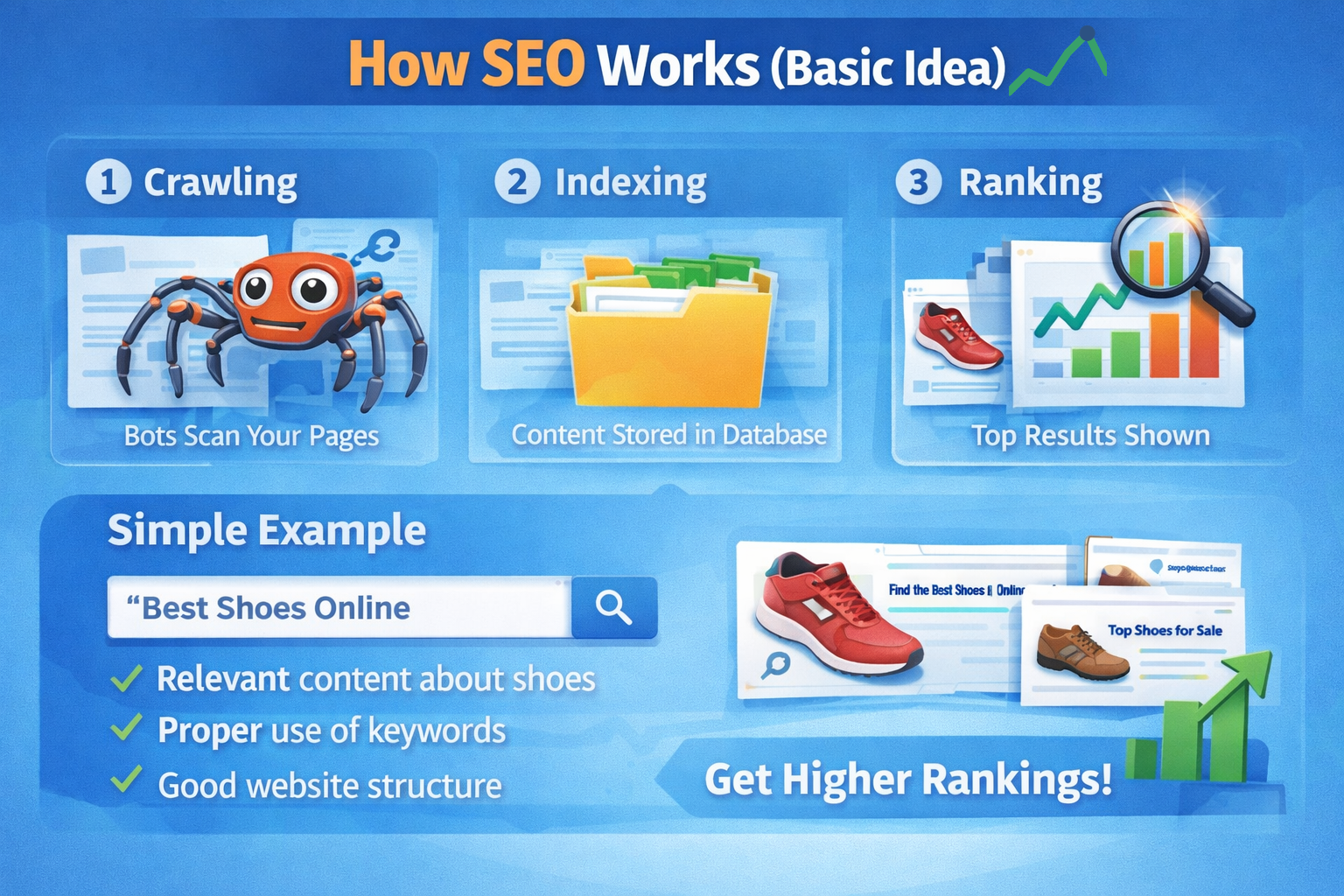
SEO works by helping search engines like Google understand your website and decide when to show it in search results. The goal of SEO is to make your website relevant, useful, and trustworthy so that search engines rank it higher when users search for related topics.
Search engines follow three main steps to process and rank websites:
Crawling 🔍
Crawling is the process where search engines use bots (also called spiders) to scan your website and discover its pages.
These bots:
- Visit your website
- Follow links from one page to another
- Collect information about your content
If your website is well-structured and easy to navigate, it becomes easier for search engines to crawl all your pages.
Indexing 📂
After crawling, the search engine stores your website’s content in its database. This process is called indexing.
During indexing, search engines try to understand:
- What your page is about
- Which keywords you are targeting
- How useful your content is
If your content is clear and optimized, it has a better chance of being properly indexed.
Ranking 📊
Ranking is the final step where search engines decide which websites should appear at the top of search results.
When a user searches for something, search engines analyze many factors, such as:
- Relevance of content
- Keyword usage
- Website quality
- Backlinks (links from other websites)
- User experience (speed, mobile-friendly design)
Websites that perform better in these areas are ranked higher.
📌 Example
If someone searches for “best shoes online,” search engines will show websites that:
- Have relevant and helpful content
- Use the right keywords
- Load fast and work well on mobile
- Have good backlinks and authority
If your website meets these criteria, it will rank higher and get more visitors.
Types of SEO
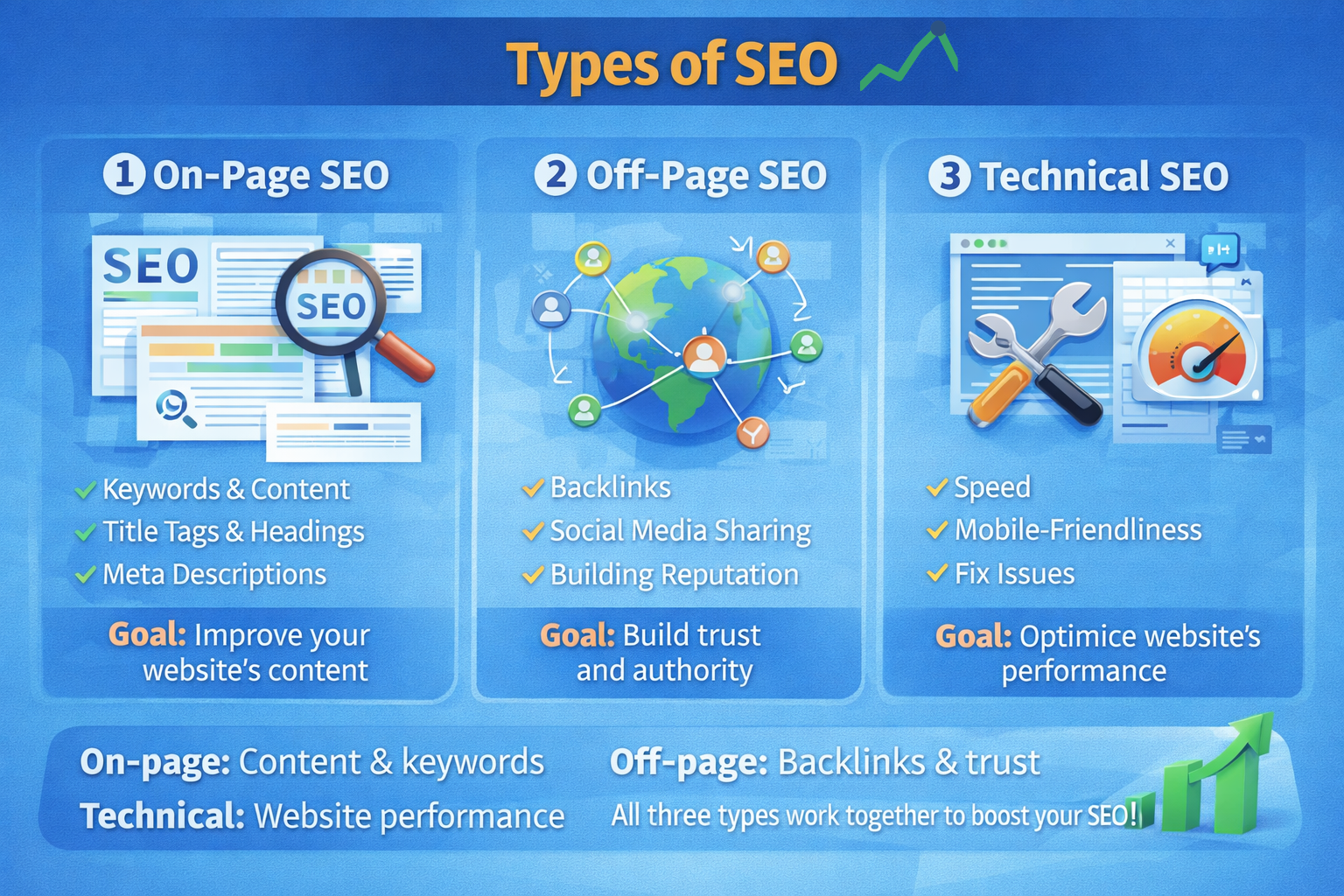
SEO is not just one thing — it has different types that work together to improve your website’s ranking on search engines like Google.
Each type focuses on a different part of your website.
On-Page SEO
On-page SEO refers to everything you do inside your website to improve its ranking.
This includes:
- Using the right keywords in your content
- Writing high-quality and useful content
- Optimizing title tags and meta descriptions
- Using proper headings (H1, H2, H3)
👉 Goal: Make your content clear and relevant for both users and search engines.
Off-Page SEO
Off-page SEO focuses on activities outside your website that help improve its authority and trust.
This includes:
- Getting backlinks from other websites
- Social media sharing
- Building your website’s reputation
👉 Goal: Show search engines that your website is trustworthy and popular.
Technical SEO
Technical SEO deals with the backend and performance of your website.
This includes:
- Website speed
- Mobile-friendliness
- Fixing broken links
- Making your site easy to crawl
👉 Goal: Help search engines easily access and understand your website.
Simple Example of SEO
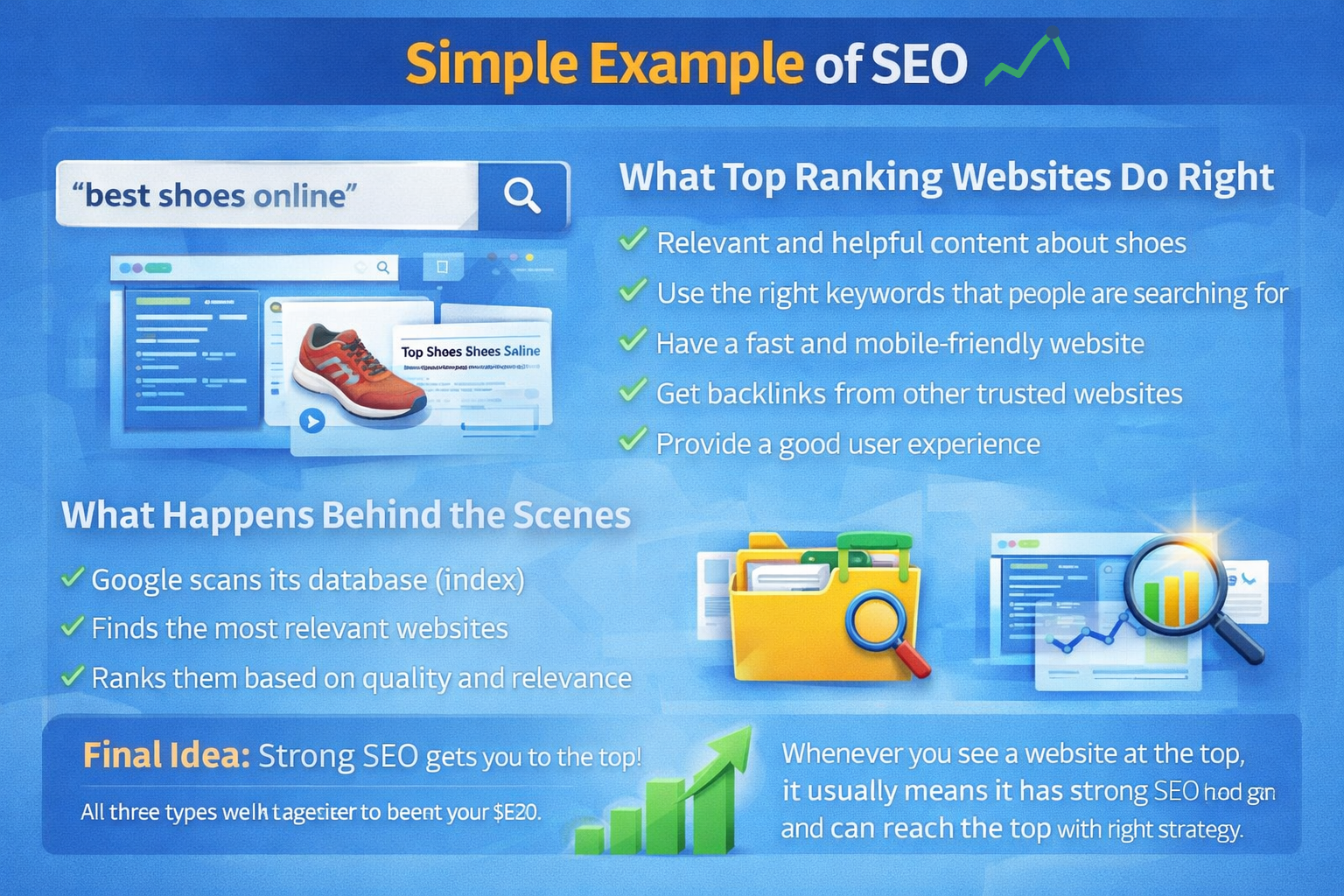
To understand SEO better, let’s look at a simple real-life example.
Imagine you search on Google for “best shoes online”. Within seconds, Google shows a list of websites on the first page.
Now the question is:
👉 Why do some websites appear at the top?
This is because those websites have done proper SEO.
What Top Ranking Websites Do Right
The websites that rank higher usually:
- Have relevant and helpful content about shoes
- Use the right keywords that people are searching for
- Have a fast and mobile-friendly website
- Get backlinks from other trusted websites
- Provide a good user experience
What Happens Behind the Scenes
When you search something:
- Google scans its database (index)
- Finds the most relevant websites
- Ranks them based on quality and relevance
Websites with better SEO are placed higher in the results
In Simple Words
SEO is like a competition.
The better your website is optimized, the higher it will rank compared to others.
If your website provides more value than competitors, search engines will show your site first.
Which Tools Are Helpful for SEO
To perform SEO effectively, using the right tools is essential. These tools help you find the best keywords, analyze competitors, track rankings, audit your website, and improve overall performance. Whether you are a beginner or an advanced user, SEO tools can save time and provide valuable data to make better decisions.
Serpspur
Becoming more popular now in 2026, Serpspur is an emerging SEO platform that provides useful tools for digital marketers. It helps with keyword research, backlinks analysis, keyword tracking, and website audits. With continuous improvements, it is becoming a strong and reliable SEO tool for improving website performance and rankings.
SEMrush
SEMrush is one of the most popular SEO tools used by professionals. It helps with keyword research, competitor analysis, site audits, backlink tracking, and rank tracking. It is especially useful for understanding what your competitors are doing and finding new growth opportunities.
Ahrefs
Ahrefs is another powerful SEO tool known for its strong backlink analysis and keyword research features. It allows you to explore competitor websites, track rankings, and discover content ideas that can help you rank higher on search engines.
Conclusion
SEO is an essential part of building a successful website. It helps your site appear on search engines like Google, attract more visitors, and grow your online presence without relying only on paid ads.
For beginners, SEO may seem difficult at first, but once you understand the basics—like keywords, content, and website optimization—it becomes much easier to apply.
By using the right strategies and improving your website step by step, you can increase your rankings, gain more traffic, and reach your target audience effectively.