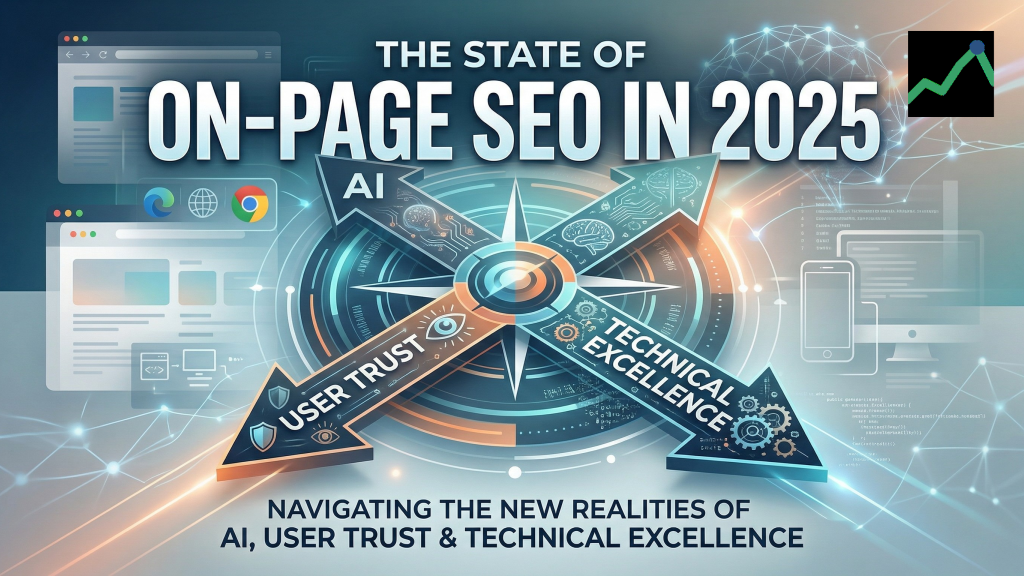
The way people search online is changing faster than most brands realize. Traditional search engines like Google once relied heavily on keywords and links, but today’s ecosystem is powered by AI search—where users get direct, conversational answers instead of scrolling through multiple websites. Platforms such as ChatGPT, Google SGE, and Bing Copilot are redefining how information is discovered, consumed, and trusted.
In this new landscape, ranking #1 on Google is no longer the ultimate goal. Instead, brands must focus on brand visibility in AI search—the ability to be recognized, cited, and recommended by AI systems when they generate answers. This shift has introduced concepts like zero-click search, where users get everything they need without ever visiting a website. As a result, traditional search engine optimization alone is not enough.
To succeed, businesses need a smarter approach—one that blends AI search optimization, content optimization, and SEO strategy with deeper elements like semantic understanding, authority building, and entity recognition. AI doesn’t just scan keywords; it evaluates context, trustworthiness, and how well your brand exists across the digital ecosystem. This includes your website, mentions on other platforms, structured data, and overall digital brand presence.
Another key change is how search intent is interpreted. Through natural language queries and conversational interactions, AI systems understand what users mean, not just what they type. This makes semantic SEO, topical authority, and high-quality content more important than ever. Brands that provide clear, structured, and valuable information are far more likely to be included in AI-generated responses.
In this complete guide, you’ll learn how to build powerful brand visibility in AI search, master AI content optimization, and implement a future-proof AI SEO strategy that ensures your brand doesn’t just rank—but gets chosen, cited, and trusted by AI systems in 2026 and beyond.
What is AI Search?
AI search is the next evolution of search engine optimization and information discovery, where artificial intelligence systems understand user intent and deliver direct, conversational answers instead of just showing a list of links. Unlike traditional search engines like Google, which rely heavily on keywords and rankings, AI-powered platforms such as ChatGPT, Google SGE, and Bing Copilot generate complete responses by combining information from multiple sources.
At its core, AI search uses technologies like Natural Language Processing (NLP) and machine learning to interpret natural language queries—meaning users can search the same way they speak. Instead of typing short keywords like “best SEO tips,” users can ask full questions like “How can I improve my website ranking in 2026?” The AI then analyzes the intent behind the query, scans relevant data, and produces a summarized, easy-to-understand answer.
One of the biggest shifts introduced by AI-driven search is the concept of zero-click search. In this model, users often get their answers instantly without clicking on any website. While this improves user experience, it also changes how brands gain visibility. Instead of focusing only on rankings, businesses must now optimize for AI content visibility—ensuring their information is selected and presented within AI-generated responses.
Another key difference is how information is evaluated. AI systems prioritize semantic SEO, meaning they focus on context, meaning, and relevance rather than just exact keywords. They also rely heavily on search intent, structured data, and trusted sources. This is why brands with strong authority, clear content, and a consistent digital brand presence are more likely to appear in AI results.
In simple terms, AI search transforms search from a “find and click” process into a “ask and receive” experience. And in this new environment, success depends on how well your brand can adapt its SEO strategy to align with AI systems—because being visible is no longer about ranking alone, but about being understood, trusted, and chosen by AI.
How AI Search Works (Step-by-Step Explanation)
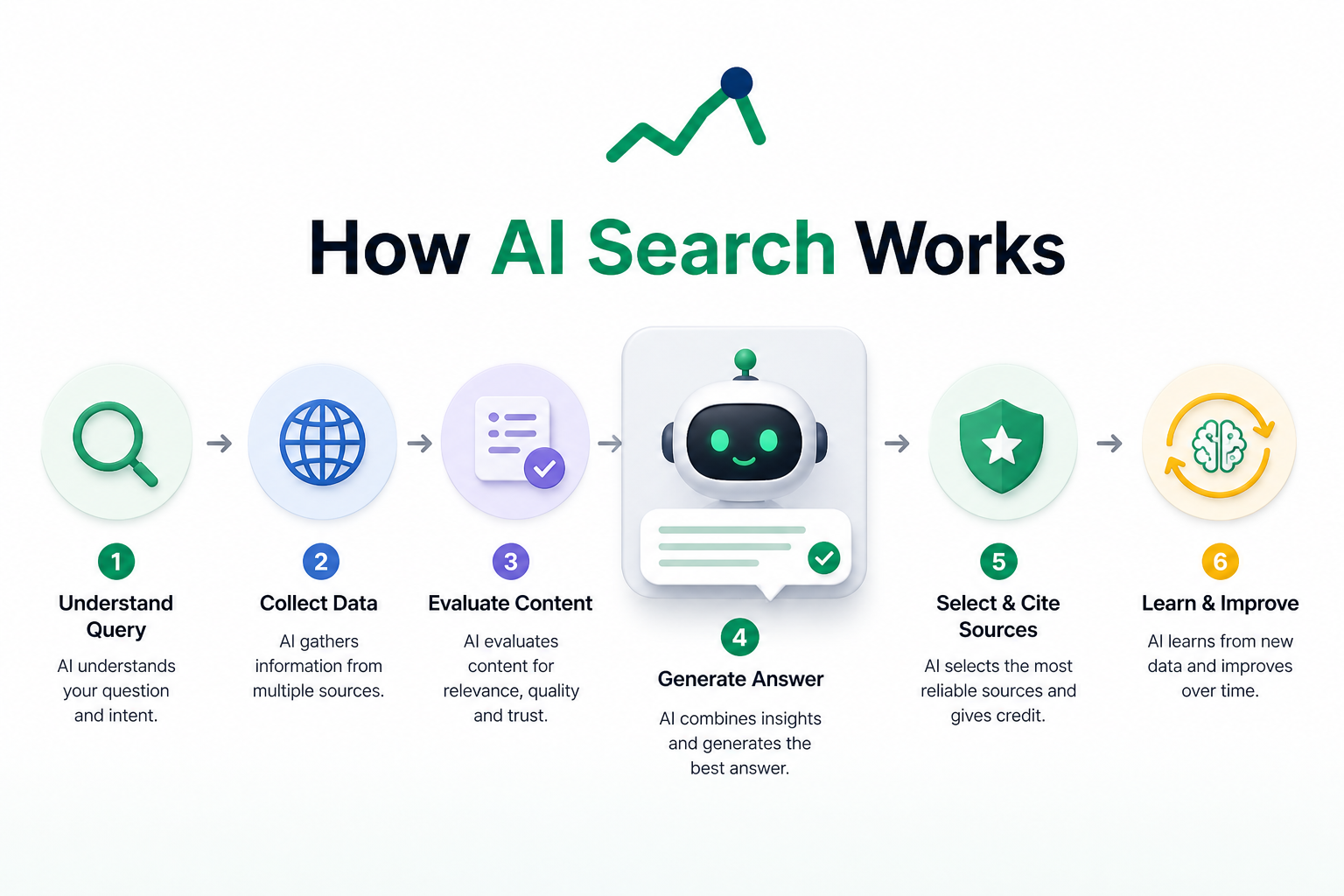
To build strong brand visibility in AI search, you first need to understand how modern AI search systems actually work. Unlike traditional search engine optimization, where pages are ranked based on keywords and backlinks, AI systems analyze, interpret, and generate answers using multiple layers of intelligence.
Query Understanding
When a user types or speaks a query, AI systems focus on natural language queries rather than exact keywords. Using advanced NLP (Natural Language Processing), they interpret the real search intent behind the query.
For example:
- “Best SEO tips”
- “How can I improve my website ranking in 2026?”
Both queries have similar intent, and AI-driven search understands that context. This is why modern SEO strategy must focus on meaning, not just keywords.
Data Collection from Multiple Sources
After understanding the query, AI systems gather information from various sources across the web, including:
- Blogs and websites
- Forums and discussions
- Authority platforms
- Structured databases
This is where your digital brand presence becomes critical. Strong content optimization and consistent publishing increase your chances of being picked as a source for AI content visibility.
Content Evaluation (Authority & Trust Signals)
AI doesn’t treat all content equally. It evaluates sources based on:
- Accuracy and relevance
- Authority of the website
- Freshness of content
- Trust signals (E-E-A-T)
Websites with strong search engine optimization, credibility, and consistent information are more likely to be selected. This directly impacts your AI search ranking and how often your brand appears in responses.
Answer Generation (Not Just Ranking Pages)
This is the biggest shift. Traditional search shows a list of links, but AI search creates a final answer by combining multiple sources.
Instead of:
👉 “Here are 10 links”
AI gives:
👉 “Here is your complete answer”
That’s why AI content optimization is essential—your content must be clear, structured, and easy for AI to extract and summarize.
Brand Selection & Citations
AI systems decide which brands or sources to mention in their responses. This depends on:
- Content clarity
- Authority
- Mentions across the web
- Structured information
If your site is well-optimized, your brand visibility in AI search increases because AI starts recognizing your brand as a reliable source.
Continuous Learning & Updates
AI systems continuously improve based on:
- User interactions
- New content
- Updated data sources
This means your AI SEO strategy must include regular updates, fresh content, and ongoing optimization to maintain strong AI content visibility.
Key Insight
AI search is no longer about ranking pages—it’s about being selected, summarized, and trusted.
To succeed, your focus should be:
- Clear and helpful content
- Strong authority signals
- Consistent SEO strategy
- Optimized structure for AI systems
Because in this new era, visibility comes from being understood—not just indexed.
Traditional SEO vs AI Search Optimization
Understanding the difference between traditional search engine optimization and modern AI search optimization is critical if you want to build strong brand visibility in AI search. While both aim to improve visibility, the way they work—and what they prioritize—is completely different.
Ranking vs Answer Generation
In traditional search engine optimization, the goal is simple:
👉 rank your webpage higher on search engines like Google
You optimize pages using:
- Keywords
- Backlinks
- Technical SEO
But in AI search, there is no simple ranking list. Instead, AI generates a final answer by combining multiple sources.
👉 Traditional SEO: “Top 10 results”
👉 AI search: “Here is your complete answer”
This shift means your focus should move from ranking pages to improving AI content visibility.
Keywords vs Search Intent
Traditional SEO relies heavily on exact-match keywords like:
- “SEO tips”
- “best SEO tools”
But AI-driven search focuses on understanding natural language queries and search intent.
👉 Example:
“Best SEO tools” vs “What tools should I use to improve my website ranking?”
AI treats both similarly because it understands intent, not just keywords.
That’s why modern SEO strategy must include semantic understanding and context.
Click-Based vs Zero-Click Search
Traditional search depends on clicks:
👉 User searches → clicks website → reads content
AI search introduces zero-click search:
👉 User searches → gets answer instantly
This reduces website traffic but increases the importance of being featured in answers.
👉 Result:
- Less clicks
- More importance on brand visibility in AI search
Backlinks vs Brand Mentions
In traditional search engine optimization, backlinks are a major ranking factor.
In AI search optimization, things shift:
- Mentions of your brand across the web matter more
- Authority and trust signals become stronger
AI systems look at your overall digital brand presence, not just links.
Content Length vs Content Clarity
Old SEO strategy:
👉 Longer content = better ranking
AI search prefers:
👉 Clear, structured, and direct answers
This is where AI content optimization plays a key role:
- Simple language
- Well-structured headings
- Easy-to-extract information
Static Optimization vs Continuous Learning
Traditional SEO updates content occasionally.
AI search systems:
- Continuously learn
- Update responses based on new data
- Adapt to user behavior
So your AI SEO strategy must include:
- Regular updates
- Fresh content
- Ongoing optimization
Quick Summary
| Traditional SEO | AI Search Optimization |
|---|---|
| Focus on ranking | Focus on answers |
| Keyword-based | Intent-based |
| Click-driven | Zero-click driven |
| Backlinks matter | Brand mentions matter |
| Long content | Clear content |
| Static updates | Continuous learning |
Key Insight
If you’re still only focusing on traditional search engine optimization, you’re missing the bigger shift.
To succeed today, you need to combine:
- Strong SEO fundamentals
- Smart AI search optimization
- And a strategy focused on brand visibility in AI search
Because in the AI era, it’s not about being #1 on a list—it’s about being the answer.
What is Brand Visibility in AI Search?
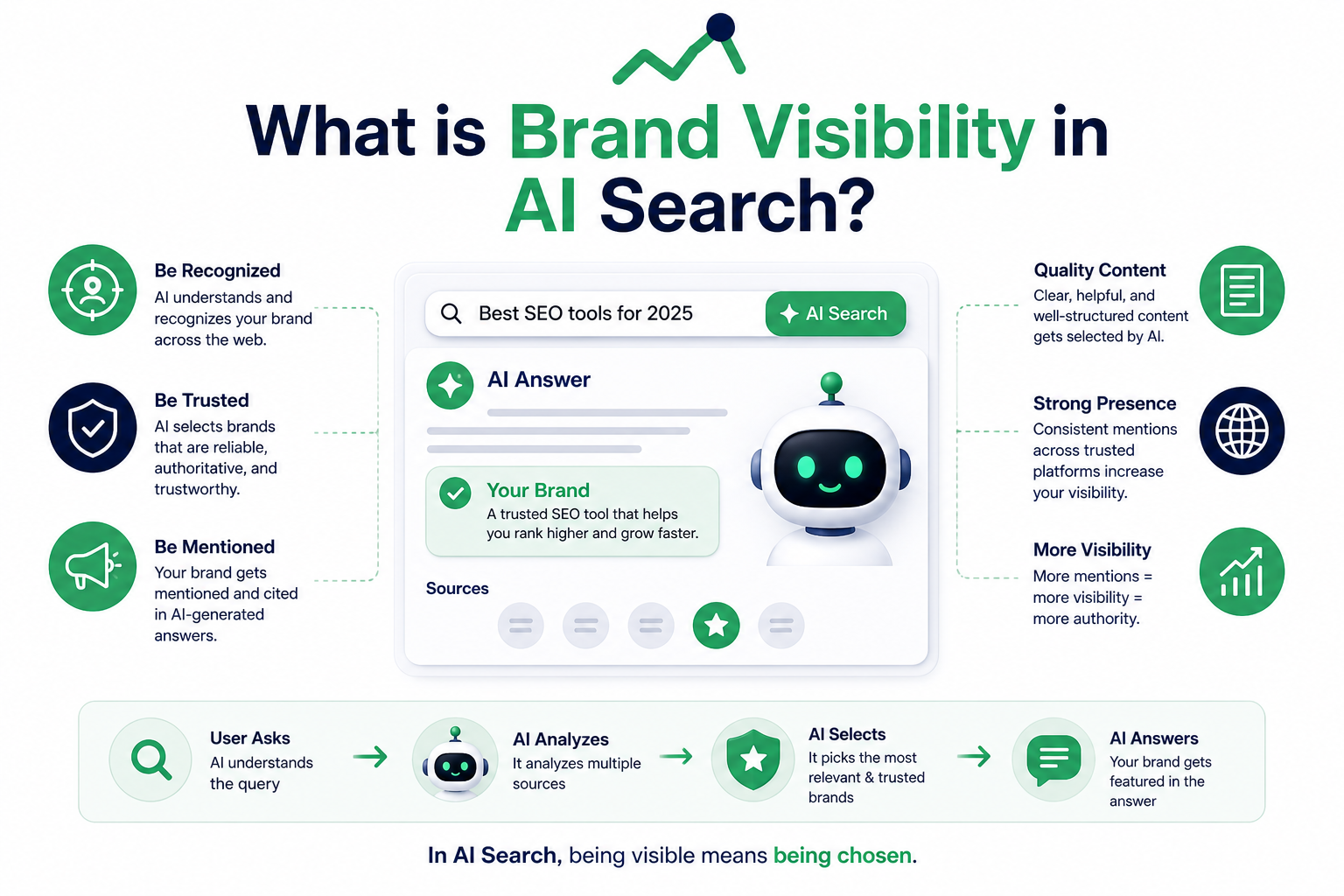
In the era of AI search, visibility is no longer just about ranking your website on the first page. Instead, it’s about whether your brand is recognized, selected, and mentioned by AI systems when they generate answers. This is what we call brand visibility in AI search.
Ranking is Not Visibility Anymore
In traditional search engine optimization, success meant:
👉 ranking #1 on Google
But in AI-driven search, users often don’t even see a list of websites. They get a direct answer.
👉 So now the real question is:
Is your brand included in that answer?
If yes → strong AI content visibility
If no → you’re invisible, even if you rank
How AI Decides Which Brands to Show
AI systems don’t randomly pick sources. They evaluate:
- Content quality
- Authority and trust
- Mentions across the web
- Structured and clear information
This is where AI search optimization becomes essential. AI prefers brands that:
- Appear consistently online
- Provide valuable content
- Have strong credibility signals
Mentions > Rankings
One of the biggest shifts:
👉 Traditional SEO → backlinks matter
👉 AI search → brand mentions matter
Even if your site isn’t ranking #1, your brand can still appear in AI answers if:
- You’re mentioned on trusted platforms
- Your content is widely referenced
- You have a strong digital brand presence
This is a core part of modern SEO strategy.
Entity Recognition (Why AI “Knows” Your Brand)
AI systems treat brands as entities. That means:
- Your brand must exist clearly across the web
- Information about your brand should be consistent
This connects with:
- entity SEO
- knowledge graph
- structured data
The stronger your entity presence, the higher your brand visibility in AI search.
Content That Gets Selected (Not Just Published)
Publishing content is not enough anymore. AI chooses content that is:
- Clear and direct
- Easy to summarize
- Well-structured
This is why AI content optimization is critical. Your goal should be:
👉 “Write content AI can understand and reuse”
Trust is the New Ranking Factor
AI systems prioritize trust more than ever:
- Expertise
- Accuracy
- Reputation
This is where E-E-A-T plays a role in your AI SEO strategy.
If your brand is trusted:
👉 AI will cite you more
👉 Your visibility increases
Key Insight
Brand visibility in AI search means:
👉 Your brand is not just indexed
👉 It is recognized, trusted, and used in AI-generated answers
To achieve this, you must:
- Build authority
- Optimize content for AI
- Strengthen your presence across platforms
Because in the AI era, visibility is no longer about where you rank—
it’s about whether AI chooses you as the answer.
AI Search Ranking Factors (Core Signals You Must Understand)
To improve brand visibility in AI search, you need to understand what actually influences AI search ranking. Unlike traditional search engine optimization, where rankings depend heavily on keywords and backlinks, AI systems evaluate multiple deeper signals before selecting and presenting content.
Content Quality (The #1 Factor)
AI systems prioritize high-quality, useful, and accurate content. Your content must:
- Clearly answer the user’s question
- Be easy to read and understand
- Provide real value (not fluff)
Strong AI content optimization ensures your content is structured in a way that AI can easily extract and summarize.
👉 Tip: Write for humans first, then structure for AI.
Authority & Trust (E-E-A-T Signals)
AI systems prefer content from trusted sources. This includes:
- Experience
- Expertise
- Authority
- Trustworthiness
If your website has strong credibility, your chances of appearing in AI-generated answers increase significantly.
👉 This is a core part of modern SEO strategy and directly impacts AI content visibility.
Brand Mentions Across the Web
AI doesn’t rely only on your website. It looks at your overall presence:
- Mentions on blogs
- Discussions on forums
- References on authority sites
More mentions = stronger signal that your brand is reliable.
👉 This is why brand visibility in AI search depends on your entire digital footprint, not just your site.
Structured Data & Clarity
AI prefers content that is:
- Well-structured
- Organized with headings
- Easy to scan
Using structured formats improves AI search optimization:
- Headings (H1, H2, H3)
- Bullet points
- FAQs
Also, technical elements like schema markup and structured data help AI better understand your content.
Relevance to Search Intent
AI systems focus heavily on search intent, not just keywords.
👉 Your content must:
- Match what the user actually wants
- Answer the query directly
- Avoid unnecessary information
This is where semantic SEO plays a key role.
Freshness & Updated Content
AI prefers up-to-date information. Outdated content is less likely to be selected.
To maintain strong AI search ranking:
- Update your content regularly
- Add new data and insights
- Keep examples current
Multi-Source Consistency
AI compares information across multiple sources. If your brand appears consistently with the same message, it builds trust.
👉 Consistency improves:
- AI content visibility
- Brand recognition
- Authority signals
Quick Summary
To rank in AI search, focus on:
- High-quality content
- Strong authority and trust
- Consistent brand mentions
- Clear structure and formatting
- Intent-based optimization
- Regular updates
Keyword Strategy for AI Search
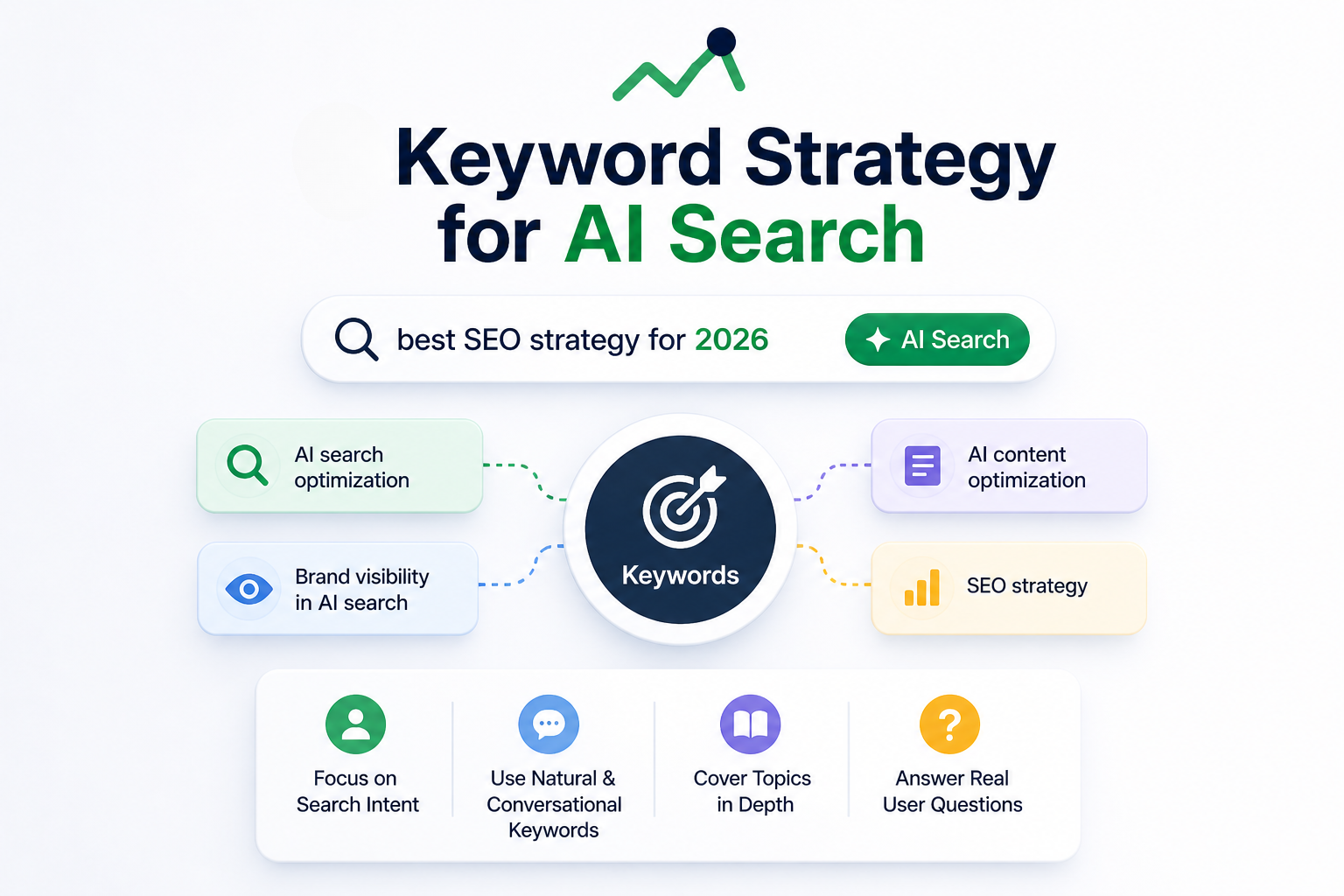
A strong keyword strategy is still important—but in AI search, it works very differently. Instead of focusing only on exact-match terms, you need a smarter approach that blends AI search optimization, user intent, and natural language.
Move from Keywords to Intent
In traditional search engine optimization, you might target keywords like:
- “SEO tips”
- “best SEO tools”
But in AI search, users ask complete questions using natural language queries, such as:
- “How can I improve my website ranking in 2026?”
AI systems analyze search intent, not just keywords.
👉 That’s why your SEO strategy must focus on solving problems, not just inserting keywords.
Use Conversational & Long-Tail Keywords
AI search is built around conversations. So instead of short keywords, use:
- Long-tail keywords
- Question-based queries
- Real-life phrases users speak
Examples:
- how to rank in AI search
- best SEO strategy for beginners
- how to improve website traffic organically
These improve your AI content visibility because they match how users actually search.
Include Primary + Supporting Keywords
To rank effectively, your content should include:
👉 Primary keyword:
- brand visibility in AI search
👉 Secondary keywords:
- AI search optimization
- SEO for AI
- AI SEO strategy
- AI content optimization
👉 LSI keywords (naturally used):
- semantic SEO
- search intent
- conversational search
- topical authority
This combination helps AI understand your topic deeply.
Focus on Topic Coverage (Not Just One Keyword)
AI systems prefer content that covers a topic completely.
Instead of writing one article for one keyword, aim for:
- Full topic coverage
- Multiple related queries
- Deep explanations
This builds topical authority, which improves your chances of being selected in AI-generated answers.
Optimize for Questions (Very Important)
AI search heavily favors content that answers questions.
👉 Include:
- “What is…”
- “How to…”
- “Why does…”
This increases chances of appearing in:
- AI answers
- featured snippets
- voice search results
Natural Keyword Placement (Avoid Stuffing)
Old SEO:
❌ Keyword stuffing
Modern AI SEO:
✅ Natural usage
Your keywords should:
- Fit naturally in sentences
- Appear in headings
- Be used where relevant
This improves both readability and AI search ranking.
Align Keywords with Content Structure
Make your content easy for AI to scan:
- Use clear headings
- Break content into sections
- Add bullet points
- Include FAQs
This improves AI content optimization and helps AI extract your content easily.
Content Optimization for AI Search
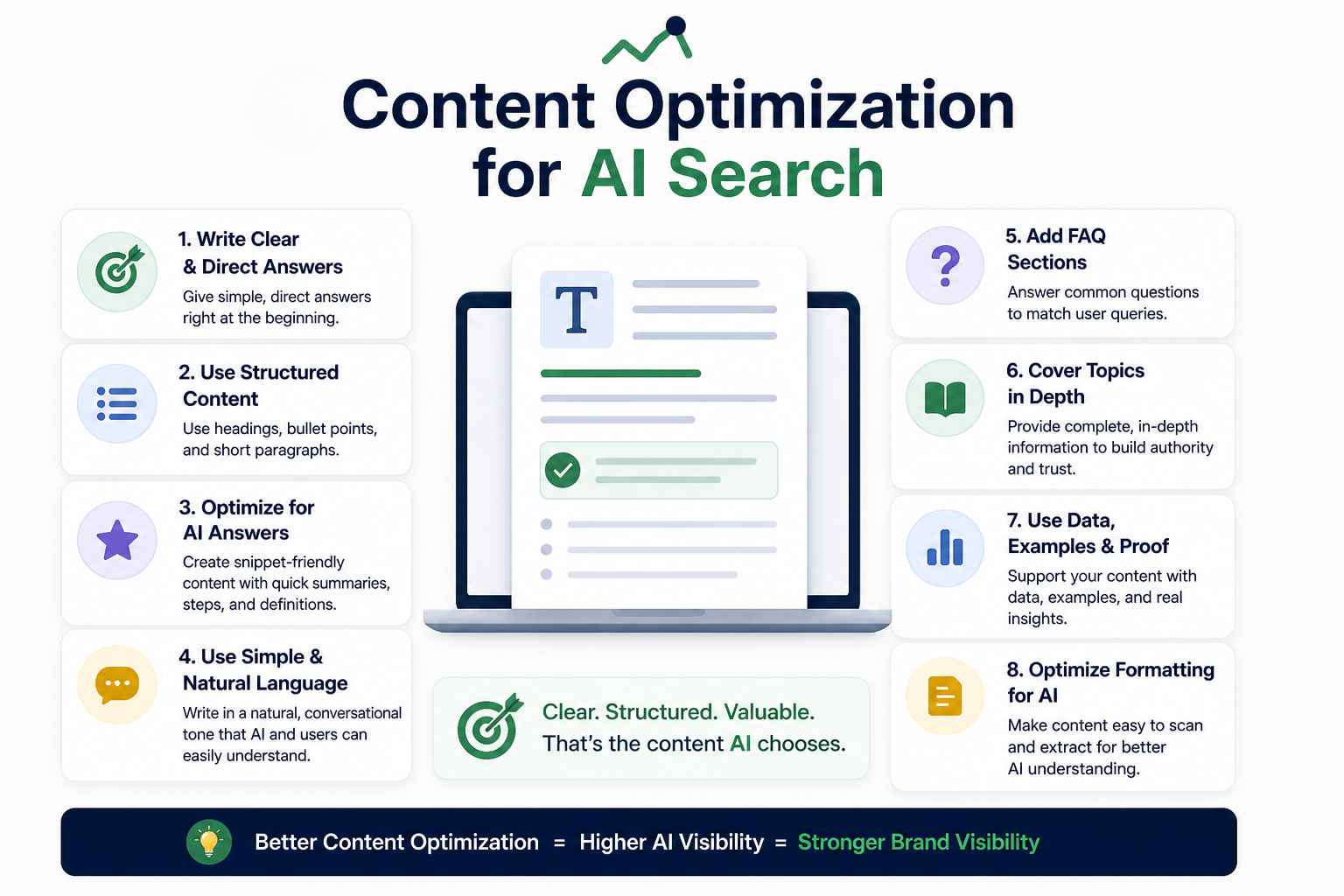
To improve brand visibility in AI search, your content must be optimized not just for users—but also for how AI systems read, understand, and reuse information. This is where AI content optimization becomes a critical part of your overall SEO strategy.
Write Clear & Direct Answers
AI prefers content that answers questions quickly and clearly.
👉 Instead of long introductions, start with:
- Direct answers
- Simple explanations
- Clear value
This improves your chances of being selected for AI content visibility and even featured in AI-generated responses.
Use Structured Content (Very Important)
AI systems scan content, not read like humans. So structure matters.
Use:
- H1, H2, H3 headings
- Short paragraphs
- Bullet points
- Lists
This makes your content easy to extract, improving AI search optimization.
Optimize for Featured Snippets & AI Answers
AI often pulls content from snippet-style sections.
👉 Include:
- Definitions
- Step-by-step guides
- Quick summaries
This increases your chances of appearing in:
- AI answers
- Featured snippets
- Voice search results
Use Simple & Natural Language
Avoid complex or overly technical language.
AI systems work best with:
- Simple sentences
- Conversational tone
- Natural flow
This aligns with natural language queries and improves your AI search ranking.
Add FAQ Sections (High Impact)
FAQ sections are highly effective for AI-driven search.
👉 Why?
Because they:
- Match question-based queries
- Provide direct answers
- Improve content coverage
Example:
- What is AI search?
- How to optimize for AI search?
Cover Topics in Depth (Topical Authority)
AI prefers content that covers a topic completely.
Instead of writing shallow content:
👉 Create in-depth guides
This builds:
- topical authority
- Better AI content visibility
- Stronger trust signals
Use Data, Examples & Proof
AI favors content that is:
- Fact-based
- Supported by examples
- Informative
Adding real insights improves your SEO strategy and increases the chances of being cited.
Optimize Content Formatting for AI
Make your content easy to scan:
- Highlight key points
- Use consistent formatting
- Avoid clutter
This helps AI systems extract relevant information efficiently.
Entity SEO (The Game Changer in AI Search)
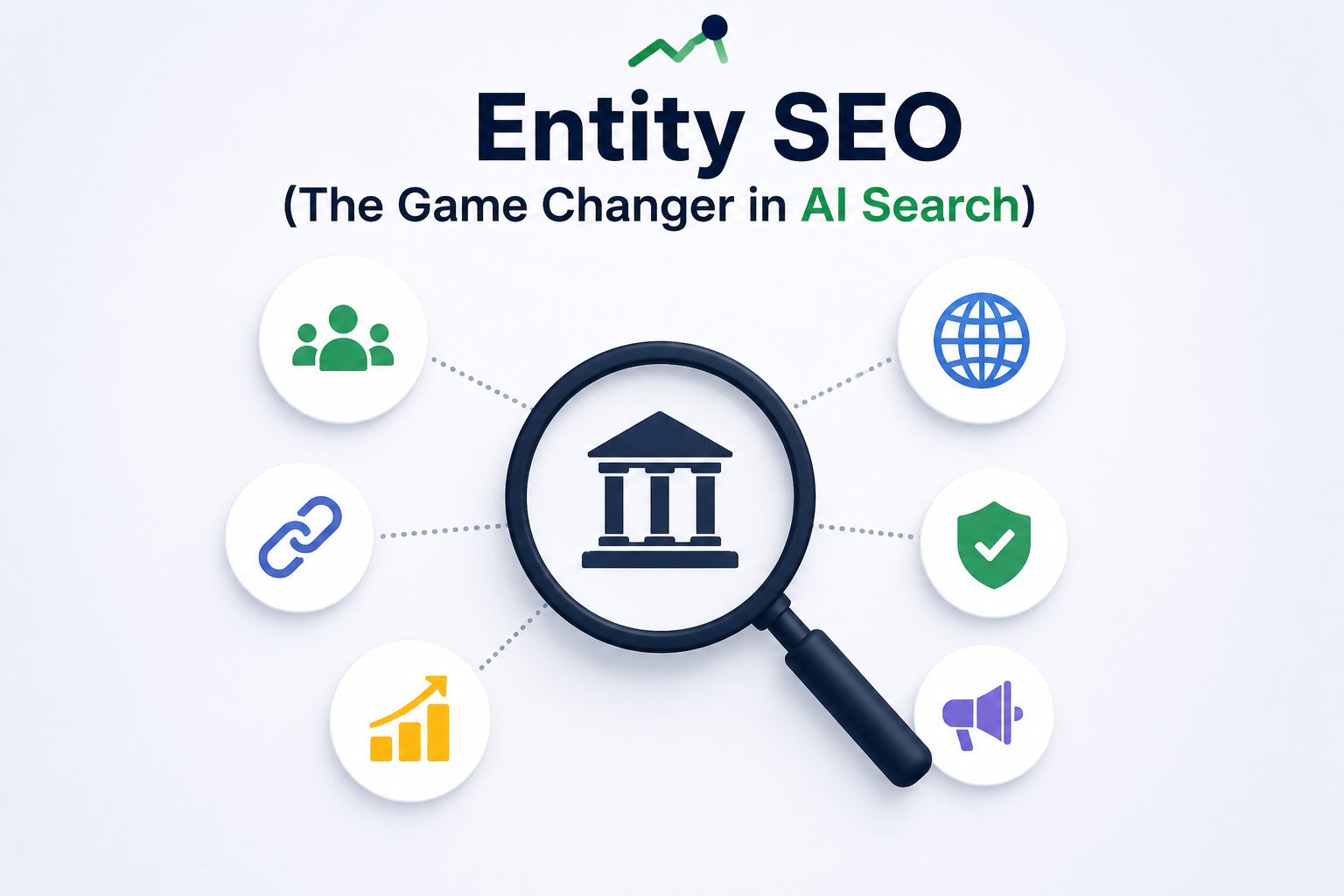
If you want to seriously improve brand visibility in AI search, you need to understand one of the most powerful concepts: entity SEO. This is what helps AI systems recognize your brand as a real, trusted identity—not just a webpage.
What is an Entity?
In simple terms, an entity is:
👉 A clearly defined thing that AI can पहचान (recognize)
Examples of entities:
- A brand
- A person
- A company
- A product
AI systems don’t just see your website—they try to understand:
👉 “Who is this brand?”
👉 “Is it trustworthy?”
This is the foundation of AI search optimization.
How AI Uses Entities
AI search engines build connections between entities using something called a knowledge graph.
They connect:
- Your brand
- Your services
- Your mentions across the web
The stronger these connections, the better your AI content visibility.
👉 This is why random content doesn’t work anymore—AI needs clear identity.
Why Entity SEO is Critical
Without entity recognition:
❌ Your site = just another webpage
With strong entity SEO:
✅ Your brand = trusted source
This directly improves:
- AI search ranking
- brand visibility in AI search
- Trust signals
How to Build Your Brand as an Entity
To become a recognized entity, you need consistency across the internet.
👉 Focus on:
- Same brand name everywhere
- Clear brand description
- Consistent messaging
Also build presence on:
- Social platforms
- Business directories
- Authority websites
This strengthens your overall digital brand presence.
Use Structured Data (Very Important)
AI understands structured information better.
👉 Use:
- schema markup
- structured data
This helps AI:
- Identify your brand
- Understand your content
- Connect your entity across platforms
Get Mentioned on Trusted Platforms
Entity strength increases when your brand is mentioned on:
- Blogs
- News sites
- Forums
- Industry websites
These mentions act as validation signals and improve your SEO strategy.
Create an Ecosystem Around Your Brand
Don’t rely on just one website.
Build a full ecosystem:
- Website
- Social media
- Profiles
- Content hubs
This creates strong signals for AI-driven search.
E-E-A-T (Building Trust for AI Search)
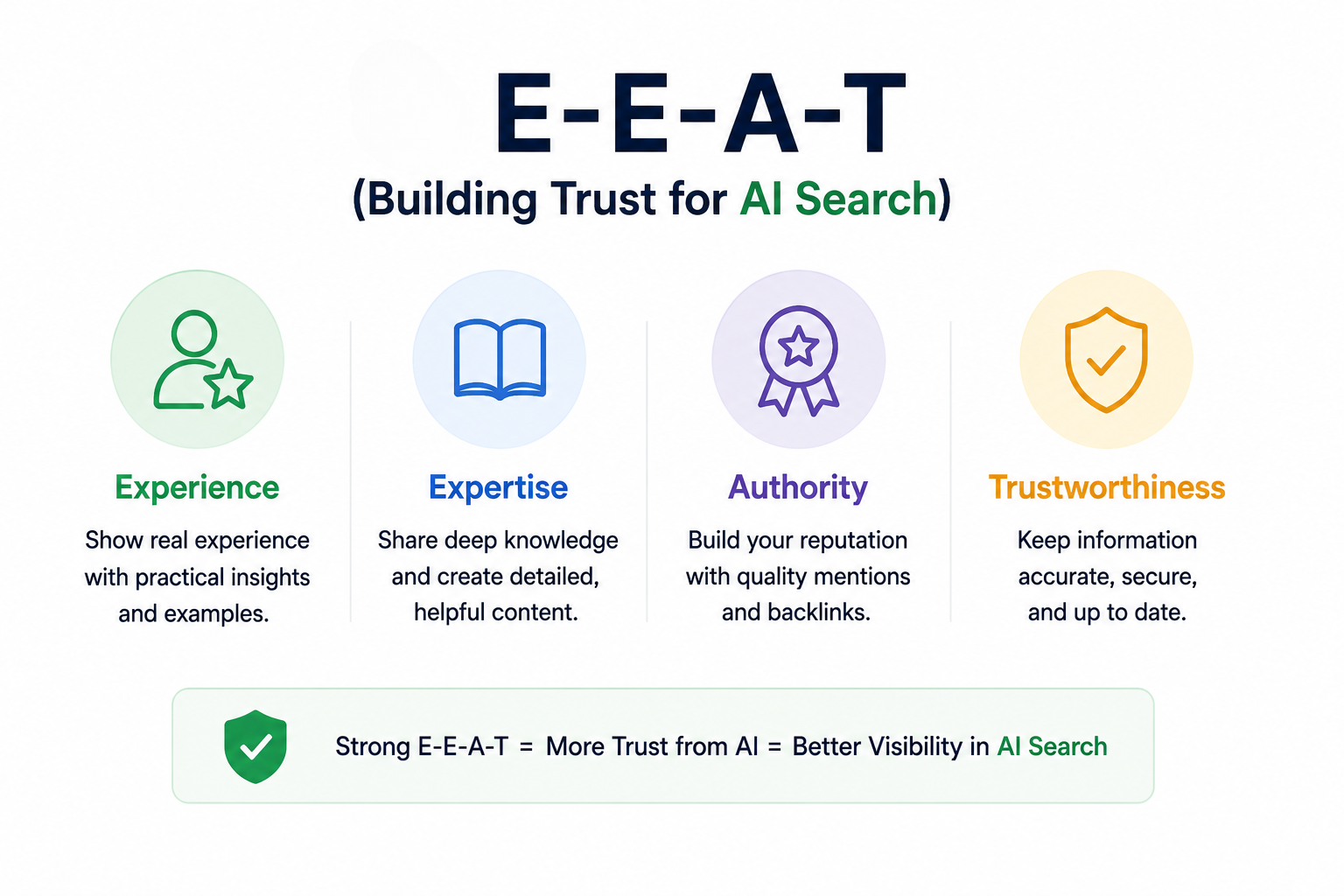
To succeed in brand visibility in AI search, one of the most important factors is trust—and that’s exactly what E-E-A-T represents. It stands for Experience, Expertise, Authority, and Trustworthiness, and it plays a major role in how AI systems evaluate and select content.
Experience (Real-World Knowledge Matters)
AI systems prefer content created by people or brands with real experience.
👉 This means:
- Practical insights
- First-hand knowledge
- Real examples
Content that shows experience performs better in AI search optimization because it feels more authentic and reliable.
Expertise (Depth of Knowledge)
Your content should demonstrate deep understanding of the topic.
👉 To show expertise:
- Explain concepts clearly
- Cover topics in detail
- Avoid shallow or generic content
This improves your AI content visibility and helps AI trust your information.
Authority (Your Reputation Online)
Authority is about how well your brand is recognized across the internet.
AI evaluates:
- Mentions on other websites
- Backlinks from trusted sources
- Your presence in your niche
Strong authority boosts your AI search ranking and strengthens your overall SEO strategy.
Trustworthiness (The Most Critical Factor)
Trust is the core of everything in AI search.
AI systems check:
- Is your information accurate?
- Is your website secure?
- Is your brand consistent?
If your content is trustworthy, AI is more likely to include it in answers—improving your brand visibility in AI search.
Why E-E-A-T is Important in AI Search
In traditional SEO:
👉 You could rank with backlinks and keywords
In AI search:
👉 You must be trusted to be selected
AI systems don’t just rank—they choose sources.
And they choose content that demonstrates strong E-E-A-T signals.
How to Improve Your E-E-A-T
To strengthen your AI SEO strategy, focus on:
- Adding author profiles
- Showing credentials or expertise
- Keeping content accurate and updated
- Building mentions on trusted platforms
- Maintaining consistency across all channels
Technical SEO for AI Search
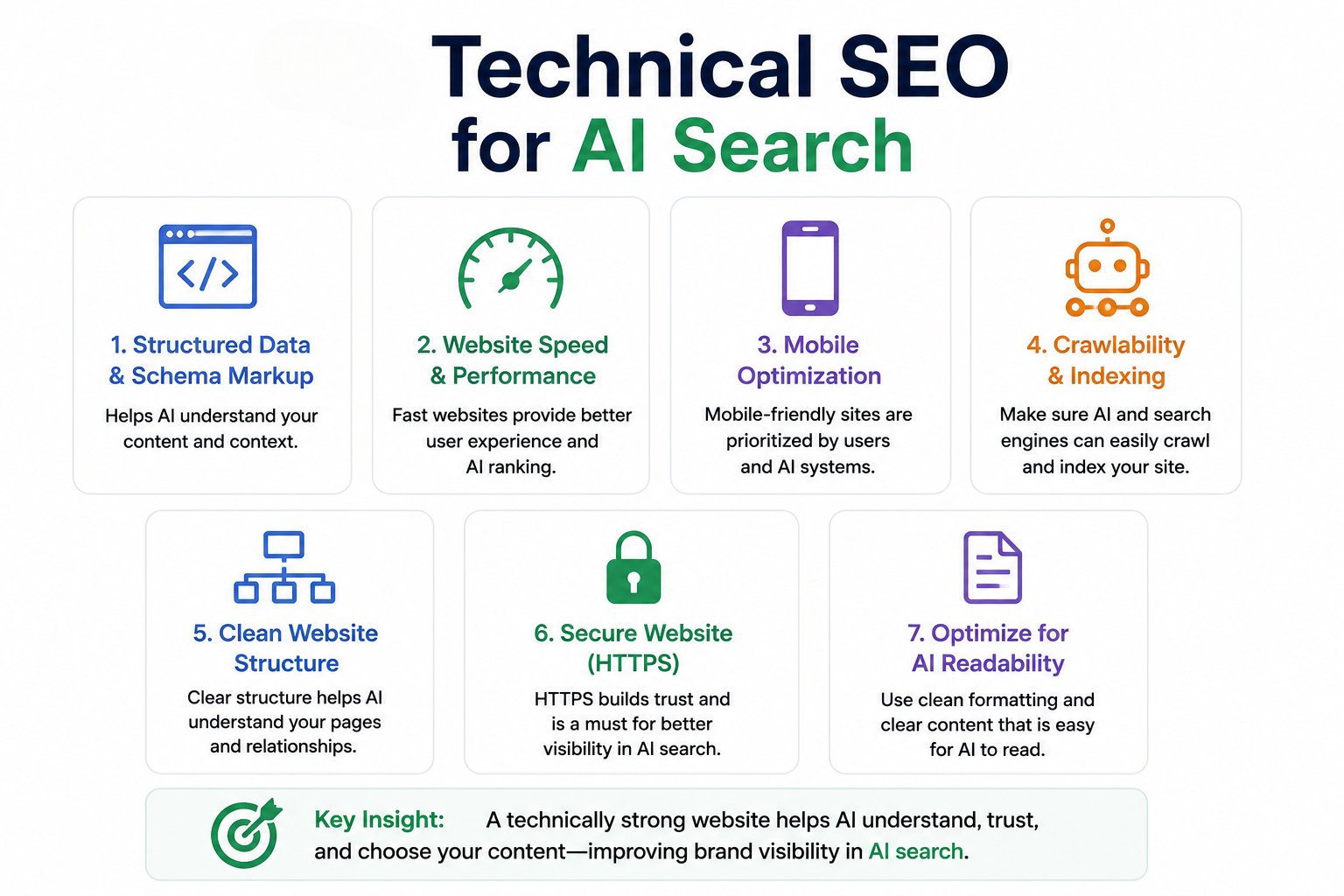
While content and authority are critical, technical SEO is what makes your content accessible and understandable for AI systems. Without proper technical optimization, even high-quality content may not achieve strong brand visibility in AI search.
Structured Data & Schema Markup
AI systems rely heavily on structured information to understand your content.
👉 Use:
- schema markup
- structured data
This helps AI:
- Identify your content type
- Understand context
- Connect your brand as an entity
It directly improves AI search optimization and increases your chances of being selected in AI-generated answers.
Website Speed & Performance
Fast-loading websites are preferred by both users and AI systems.
👉 Optimize:
- Page speed
- Core Web Vitals
- Image sizes
A faster website improves user experience and supports better AI search ranking.
Mobile Optimization
Most users search on mobile devices, and AI systems prioritize mobile-friendly websites.
👉 Ensure:
- Responsive design
- Easy navigation
- Fast mobile loading
Mobile optimization strengthens your overall SEO strategy and improves accessibility.
Crawlability & Indexing
If AI systems (and search engines) cannot crawl your website, your content won’t be visible.
👉 Focus on:
- Clean URL structure
- XML sitemap
- Proper internal linking
- No broken pages
This ensures your content is discoverable, which is essential for AI content visibility.
Clean Website Structure
AI prefers well-organized websites.
👉 Use:
- Clear navigation
- Logical page hierarchy
- Structured headings
This helps AI systems understand relationships between your pages and improves AI-driven search performance.
Secure Website (HTTPS)
Trust is a major factor in AI search.
👉 Always use:
- HTTPS
- Secure hosting
A secure website builds trust and supports stronger brand visibility in AI search.
Optimize for AI Readability
Your content should be easy for machines to process.
👉 Avoid:
- Cluttered layouts
- Hidden content
- Overly complex design
Instead, focus on:
- Clean formatting
- Readable structure
- Clear content hierarchy
This enhances AI content optimization.
Multi-Platform Presence (Beyond Your Website)
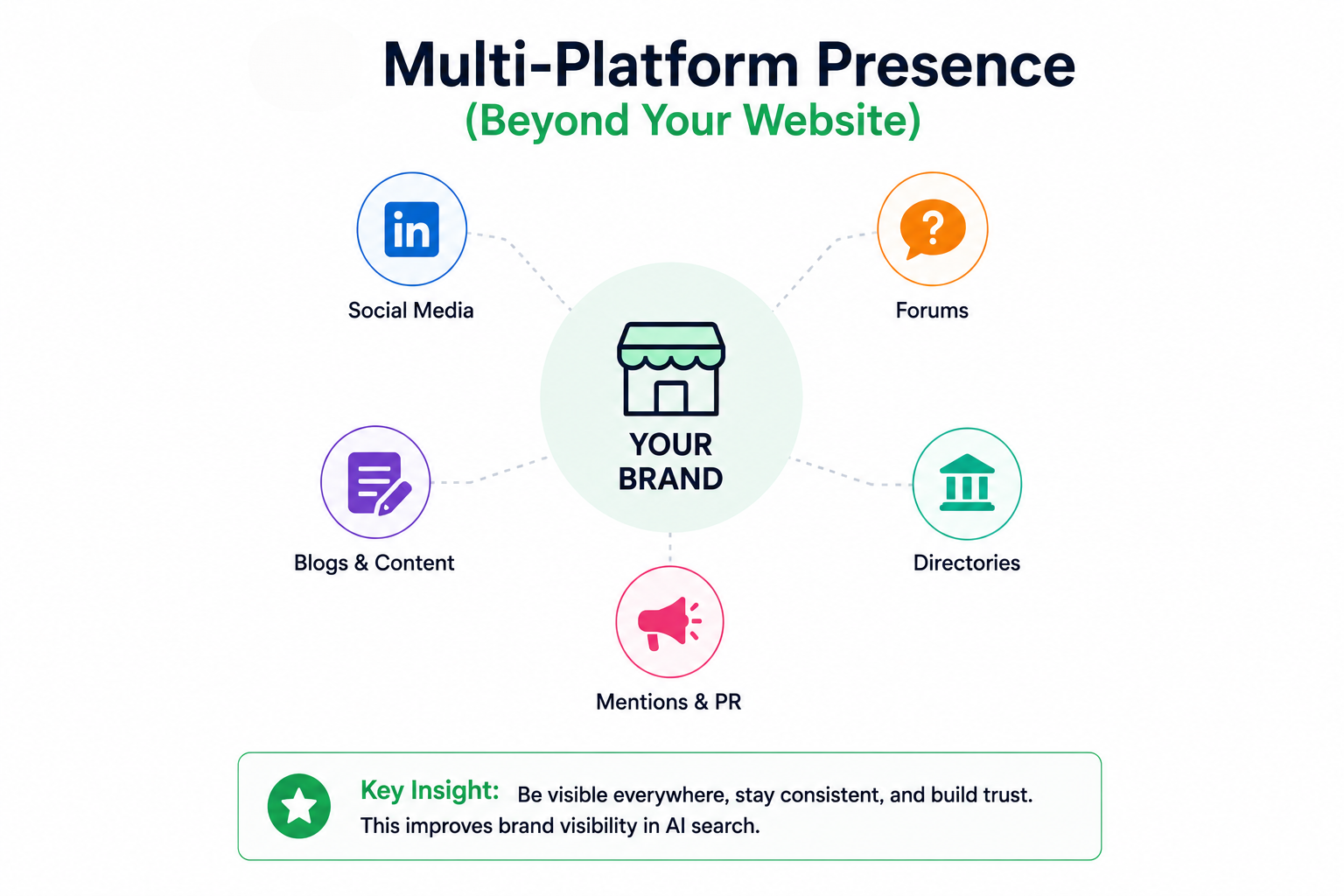
To improve brand visibility in AI search, your brand must exist beyond just your website. AI systems analyze your presence across multiple platforms to decide trust and relevance.
Why It Matters
AI checks your overall digital brand presence, not just one site.
More presence = better AI search optimization.
Where to Be Active
- Social media
- Forums (Reddit, Quora)
- Blogs & guest posts
- Business directories
This boosts AI content visibility.
What Works Best
- Guest posting
- Brand mentions
- User engagement
These improve your SEO strategy and authority.
Stay Consistent
Use the same:
- Brand name
- Message
This strengthens entity SEO.
Voice & Conversational Search Optimization
With the rise of AI assistants, optimizing for AI search now means optimizing for how people speak, not just how they type. This is where voice and conversational search become important for improving brand visibility in AI search.
What is Conversational Search?
Users now ask full questions like:
👉 “How can I improve my website ranking?”
Instead of short keywords.
AI understands these natural language queries and responds directly.
Why It Matters
Voice and conversational queries are growing fast.
Optimizing for them improves your AI content visibility and reach.
How to Optimize
- Use question-based headings (What, How, Why)
- Write in simple, natural language
- Answer queries directly
- Add FAQ sections
This supports better AI search optimization.
Focus on Intent
AI focuses on search intent, not keywords.
Your content should match what the user means, not just what they type.
Zero-Click Search Optimization
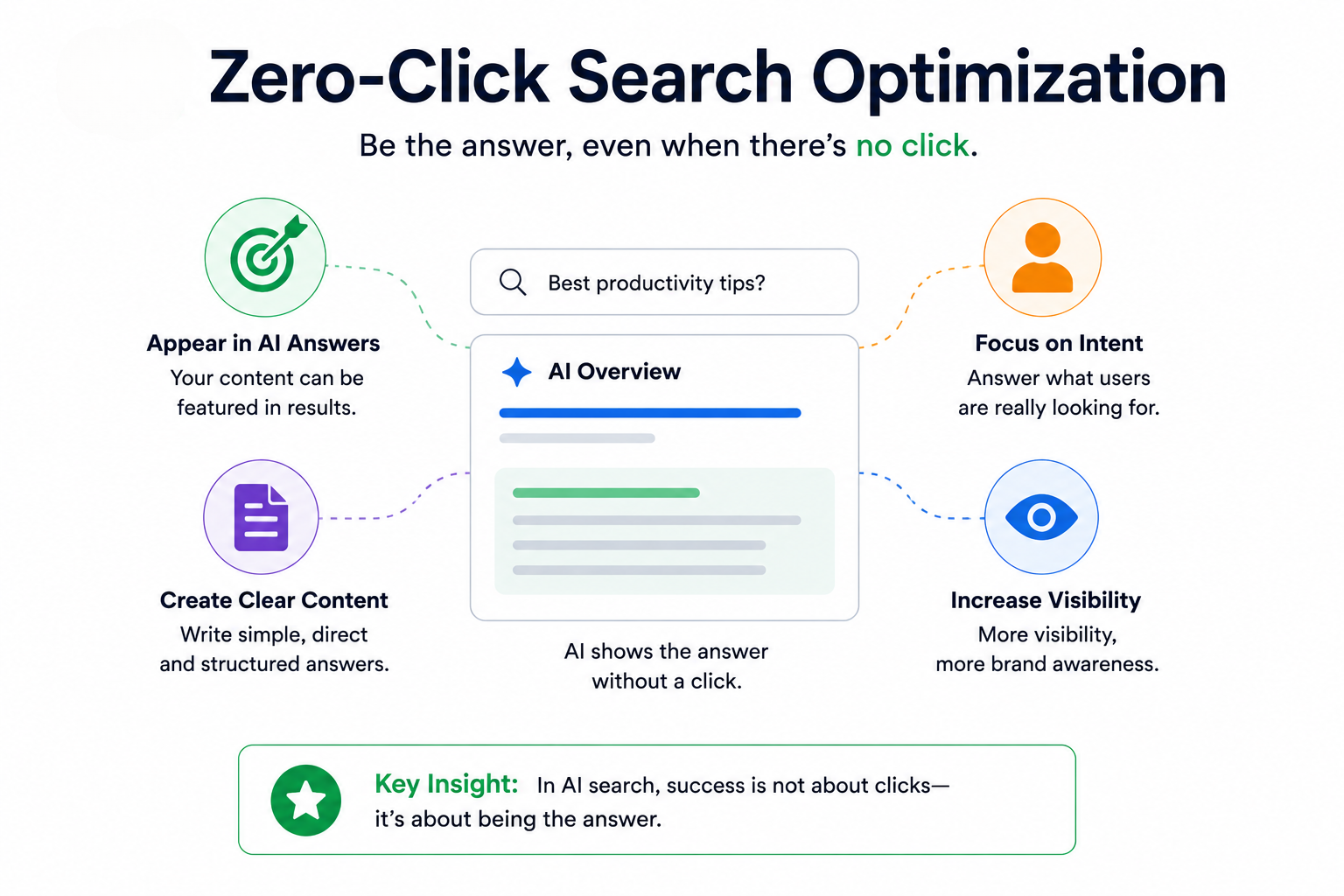
In modern AI search, users often get instant answers without clicking any website. This shift has changed how brand visibility in AI search works, making it more about being selected in answers than getting traffic.
What is Zero-Click Search
Zero-click search happens when AI provides a complete answer directly on the results page. Users don’t need to visit any site because the information is already summarized for them.
Why It Matters
Even without clicks, your brand can appear in AI-generated responses. This improves AI content visibility and builds trust, which is essential for long-term growth.
How to Optimize
To succeed, your content should be clear, structured, and easy to understand. This improves AI content optimization and increases the chances of your content being selected by AI systems.
Focus on User Intent
AI systems prioritize search intent, so your content must directly answer what users are looking for. This strengthens your overall AI search optimization.
Impact on Visibility
While traffic may decrease, your exposure increases. When AI repeatedly uses your content, your brand visibility in AI search grows consistently.
Brand Mentions & Digital PR
In AI search, backlinks are no longer the only signal that matters. To improve brand visibility in AI search, your brand needs to be talked about across the internet. This is where brand mentions and digital PR become powerful.
What Are Brand Mentions
Brand mentions are references to your brand on other websites, even without a link. AI systems treat these mentions as signals of credibility and relevance.
Why Mentions Matter
AI looks at how often your brand appears across trusted sources. More mentions increase AI content visibility and strengthen your overall trust signals.
Role of Digital PR
Digital PR helps you get featured on blogs, news sites, and industry platforms. This expands your reach and improves your AI search optimization.
Mentions vs Backlinks
Traditional search engine optimization focused on backlinks, but AI systems value context and reputation more. Even without links, strong mentions can boost your AI search ranking.
How to Get More Mentions
You need to actively promote your brand through collaborations, guest posts, and media exposure. Consistent visibility builds a strong digital brand presence.
Monitoring & Tracking (Measure Your AI Visibility)
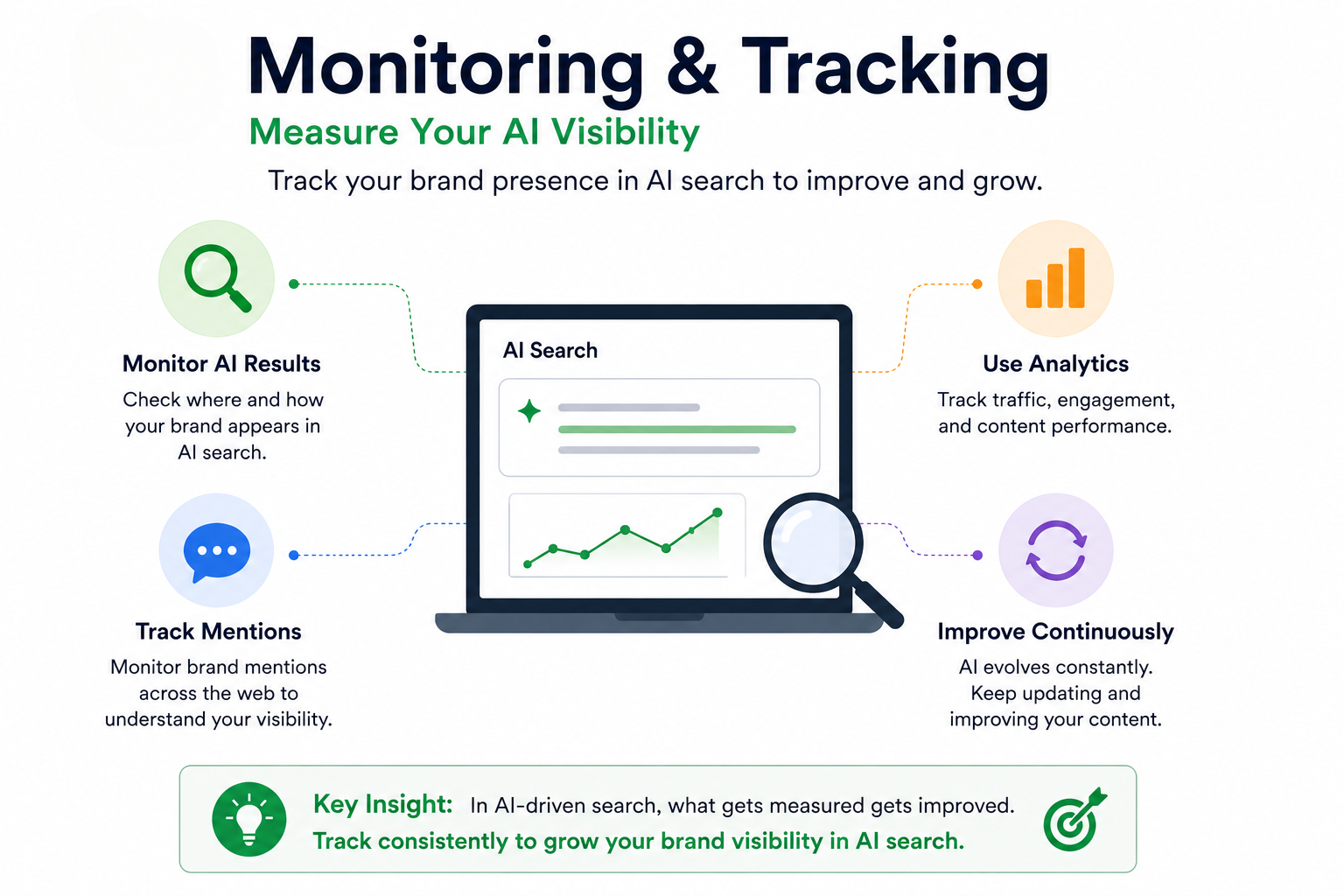
Building brand visibility in AI search is not a one-time task—you need to track how your brand is performing across AI platforms. Without monitoring, you won’t know whether your AI search optimization efforts are actually working.
What to Monitor
You need to check where and how your brand appears in AI search results. This includes whether your content is being used in answers and how often your brand is mentioned.
Track Brand Mentions
Mentions across the web are a key signal. Monitoring them helps you understand your AI content visibility and overall authority.
Check AI Responses Manually
Search your target queries on AI tools and see:
- Is your brand mentioned?
- Is your content being used?
This gives direct insight into your AI search ranking.
Use Analytics Tools
Website analytics still matter. Track:
- Traffic trends
- Engagement
- Content performance
This supports your overall SEO strategy.
Measure Content Performance
Identify which content performs best and is likely to be picked by AI. Optimize those pieces further for better AI content optimization.
Continuous Improvement
AI systems evolve constantly, so your strategy should too. Regular updates and improvements help maintain strong brand visibility in AI search.
Common Mistakes to Avoid in AI Search
Even with the right strategy, many brands fail to achieve strong brand visibility in AI search because they follow outdated SEO practices or ignore how AI systems actually work.
Ignoring Search Intent
Many people still focus only on keywords instead of understanding what users actually want. In AI search, matching search intent is more important than keyword placement.
Keyword Stuffing
Overusing keywords makes content unnatural. AI prefers clear and meaningful content, so poor AI content optimization can reduce your chances of being selected.
Thin or Low-Quality Content
Short, shallow content without real value does not perform well. AI systems prioritize depth and usefulness, which directly impacts AI content visibility.
Lack of Structure
Unorganized content is difficult for AI to understand. Without proper formatting, your AI search optimization becomes weak.
No Authority Building
Ignoring trust signals like mentions, expertise, and consistency limits your growth. Strong authority is essential for improving AI search ranking.
Relying Only on Traditional SEO
Focusing only on search engine optimization without adapting to AI changes can reduce visibility. AI requires a more advanced and holistic approach.
Future of AI Search (What’s Coming Next)
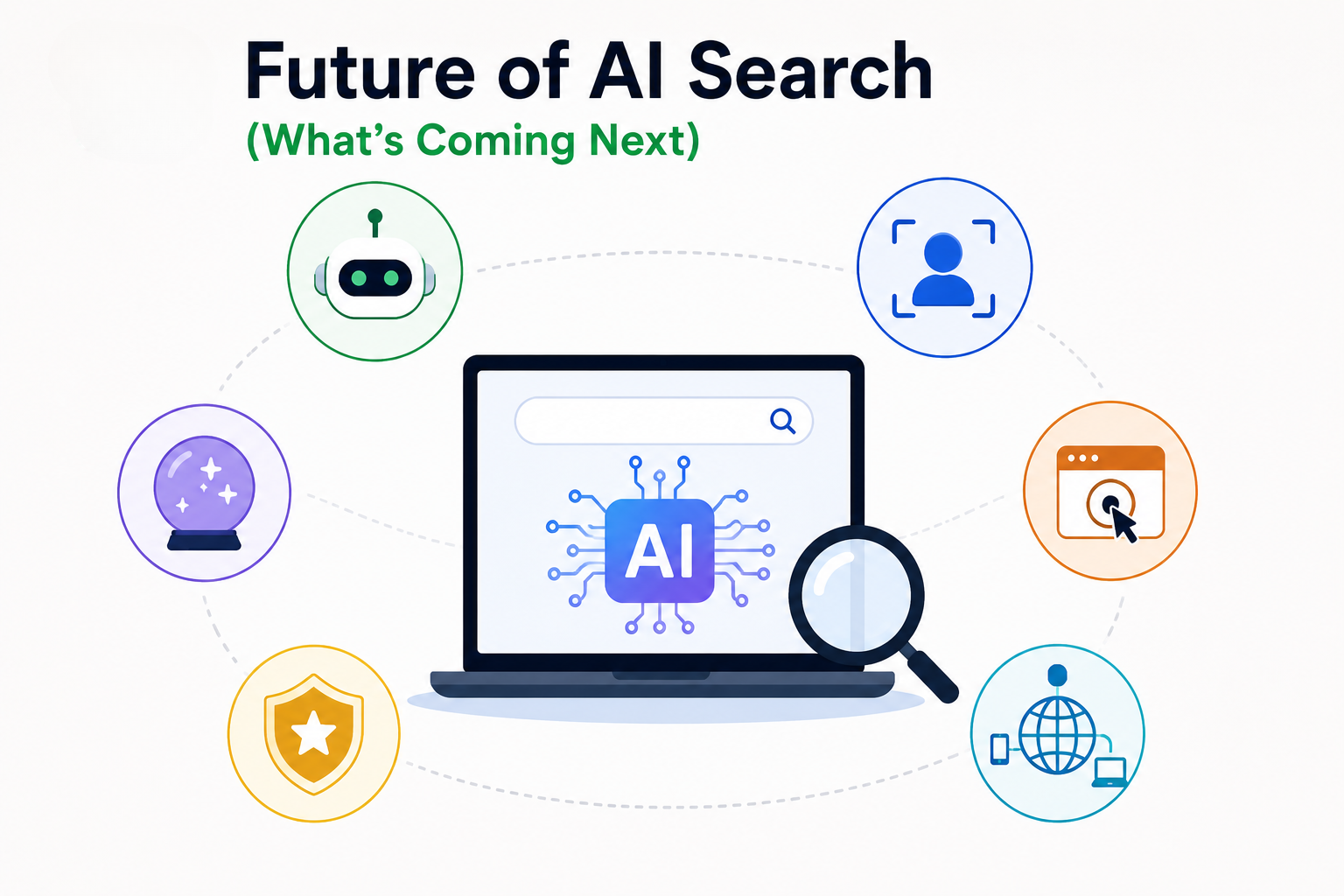
AI search is evolving rapidly, and understanding where it’s heading is essential for long-term brand visibility in AI search. The future is moving toward smarter, more personalized, and more predictive search experiences.
Smarter AI Assistants
AI tools are becoming more advanced and conversational. Instead of just answering questions, they will guide users, recommend solutions, and even make decisions—making AI content visibility more competitive.
Personalized Search Results
AI will deliver results based on user behavior, preferences, and history. This means your AI search optimization must focus on relevance and user experience, not just general content.
Predictive Search
Search will become proactive. AI may suggest answers before users even ask, based on patterns and data. This will change how SEO strategy works in the future.
More Zero-Click Experiences
The trend of zero-click search will continue to grow. Users will rely more on direct answers, increasing the importance of being selected by AI rather than just ranked.
Stronger Focus on Trust & Authority
AI systems will prioritize trusted and well-established brands. Building authority will become even more important for improving AI search ranking.
Integration Across Platforms
AI search will expand beyond search engines into apps, devices, and ecosystems. Your digital brand presence across multiple platforms will directly impact visibility.
Conclusion
Building strong brand visibility in AI search requires more than traditional SEO—it demands a complete strategy focused on AI search optimization, user intent, and trust. Instead of just ranking pages, your goal is to create clear, structured, and valuable content that AI systems can understand and select. By combining AI content optimization, strong authority signals, consistent brand presence across platforms, and continuous improvement, you position your brand as a reliable source. In the evolving world of AI-driven search, success comes from being the answer, not just appearing in results.