If you’re wondering how to rank on Google in 2026, you’re not alone. With increasing competition and frequent algorithm updates, ranking a website on Google has become more challenging than ever. But the good news is that by using the right SEO strategies, including proper keyword research, effective on-page SEO techniques, and strong off-page SEO, you can significantly improve your Google ranking.
In this guide, you’ll learn how to rank your website on Google step by step, understand the latest Google ranking factors, and discover proven methods to increase your organic traffic and reach the #1 position.
What is Google Ranking?
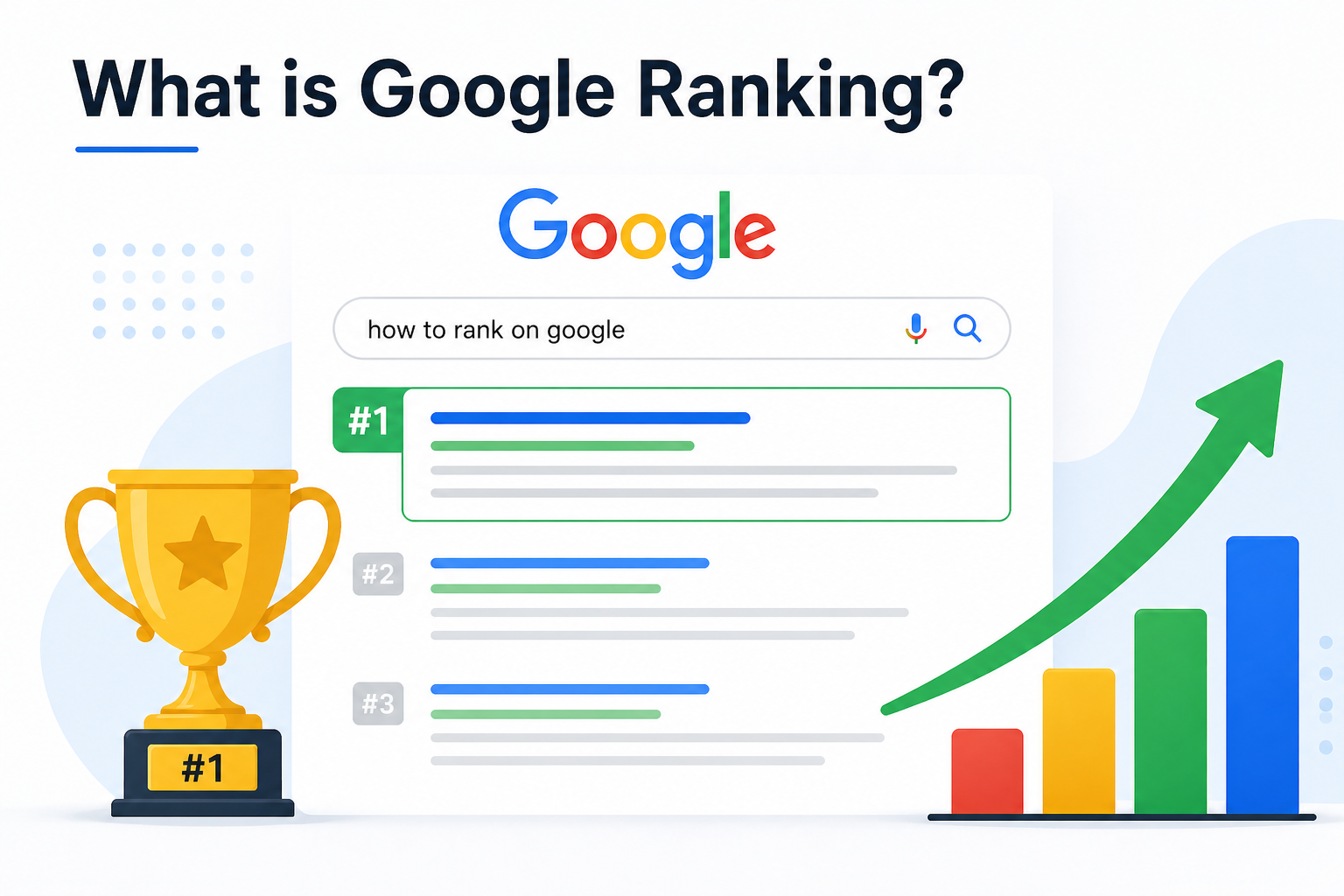
Google ranking refers to the position of a website or webpage in search engine results when a user searches for a specific query. For example, if someone searches “how to rank on google,” the websites that appear on the first page are ranked based on Google’s algorithm, which evaluates content quality, relevance, and user experience.
Understanding Google ranking is essential if you want to learn how to rank on Google effectively. Websites that appear higher in search results usually get more clicks, traffic, and visibility. This is why improving your Google ranking should be a top priority for anyone working on SEO strategies or trying to grow their online presence.
In simple terms, Google ranking depends on how well your content matches user intent, how optimized your website is, and how trustworthy your site appears through factors like backlinks and content quality. By focusing on these elements, you can gradually improve your position and rank your website on Google more successfully.
How Google Ranking Works in 2026
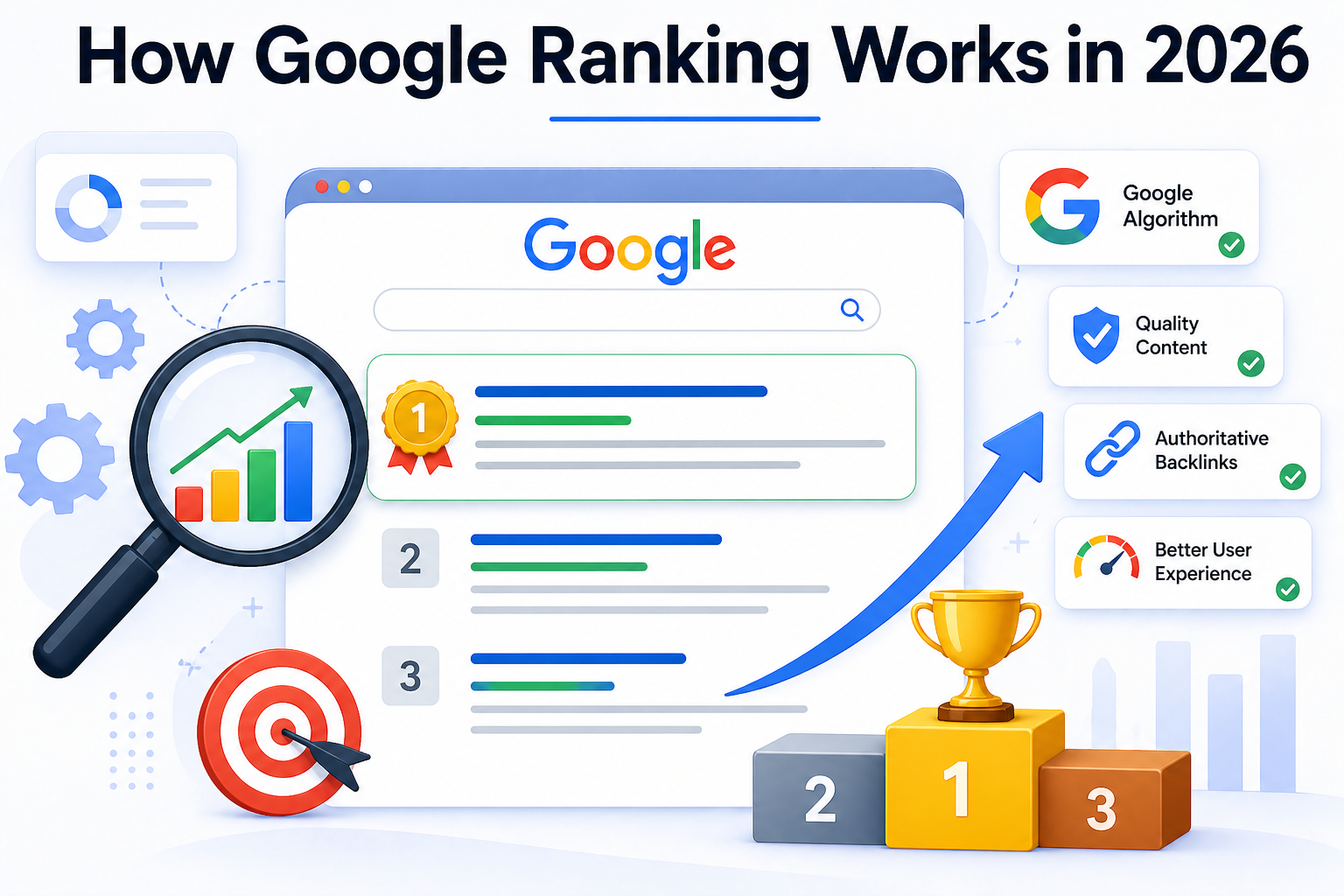
Understanding how Google ranking works is essential if you want to learn how to rank on Google effectively. In 2026, Google uses advanced algorithms and AI systems to analyze billions of web pages and deliver the most relevant results based on user intent.
Google Algorithm Basics
Google’s algorithm is a complex system that determines which websites appear in search results and in what order. It is continuously updated to improve the quality and accuracy of search results.
Google mainly evaluates three key elements:
- Relevance – Does the content match the user’s search query?
- Quality – Is the content useful, informative, and well-written?
- Trust – Is the website reliable and authoritative?
👉 In simple terms, Google always tries to show the best possible answer at the top.
Key Google Ranking Factors (Overview)
To understand how to rank on Google, you need a basic idea of the major ranking signals Google considers.
👉 Important factors include:
- Content relevance
- Website authority
- User experience
- Technical performance
Role of AI in Google Ranking
In 2026, artificial intelligence plays a major role in how Google ranks websites. AI systems help Google better understand both content and user behavior.
👉 AI helps Google to:
- Understand user intent
- Analyze content meaning and context
- Evaluate user engagement (clicks, time on page)
This means:
- 👉 Simply adding keywords like “how to rank on Google” is not enough
- 👉 You must create valuable, user-focused content
How Google Decides Search Rankings
When a user enters a search query, Google follows a structured process:
- Finds relevant web pages
- Analyzes content quality and relevance
- Applies ranking factors
- Displays results in order of usefulness
👉 This process determines how your site will rank on Google.
🎯 Quick Summary
- Google ranking = relevance + quality + trust
- AI has made search smarter and more intent-based
- Understanding this process helps you improve Google ranking effectively
Keyword Research – The Foundation of SEO
Keyword research is the foundation of every successful SEO strategy. If you want to learn how to rank on Google, you must first understand what your audience is searching for and which keywords can bring targeted traffic to your website.
Without proper keyword research, even high-quality content may fail to rank on Google because it does not align with user search behavior.
What is Keyword Research?
Keyword research is the process of identifying the words and phrases that people enter into Google when searching for information, products, or services.
By targeting the right keywords, you can create content that directly matches user queries and increases your chances to rank on Google.
👉 In simple terms:
Keyword research helps you connect your content with what users are actively searching for.
How to Find Low Competition Keywords
If your website is new, targeting low competition keywords is the smartest way to get faster rankings.
✔️ Steps to find low competition keywords:
- Search your topic on Google and analyze top results
- Look at the “People also ask” section
- Use long-tail keywords (e.g., how to rank on Google for beginners)
- Analyze competitor keywords
- Focus on keywords with lower difficulty
👉 Low competition keywords make it easier to rank your website on Google and drive early traffic.
Understanding Search Intent
Search intent defines the purpose behind a user’s query. To successfully rank on Google, your content must match the correct intent.
Types of Search Intent:
Informational
The user wants to learn something
Example: how to rank on Google
Navigational
The user wants to visit a specific website
Example: Serpspur login
Transactional
The user wants to take action (buy, sign up, download)
Example: buy SEO tools
Commercial
The user is researching options before making a final decision.
- affordable sports shoes for daily use
- best running shoes for men
- nike vs adidas running shoes
Tools for Keyword Research
Using the right tools can make keyword research faster and more accurate.
👉 Popular tools include:
👉 You can also use free methods like Google autocomplete, related searches, and forums.
Best Practices for Keyword Research
- Focus on long-tail keywords
- Target one primary keyword per page
- Avoid highly competitive keywords (especially for new sites)
- Use keywords naturally in your content
- Analyze competitors before selecting keywords
👉 Effective keyword research helps you improve Google ranking and attract the right audience.
On-Page SEO Techniques
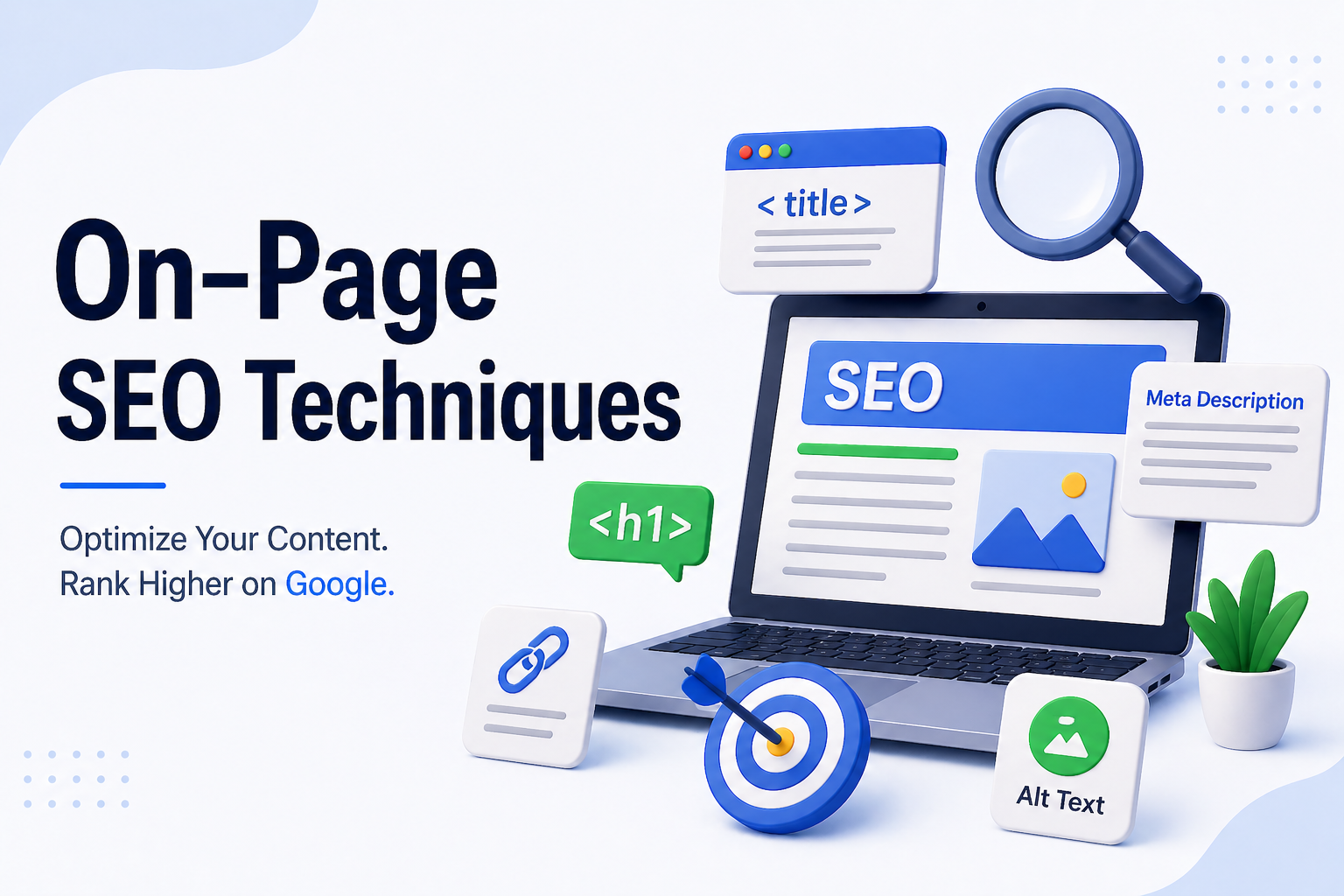
On-page SEO is one of the most important parts of SEO if you want to learn how to rank on Google. It involves optimizing everything inside your website—including content, structure, and HTML elements—so that search engines can clearly understand your page and rank it higher for relevant searches.
Unlike off-page SEO (which focuses on backlinks), on-page SEO gives you full control. By improving your content quality, keyword usage, and page structure, you can directly improve Google ranking and increase organic traffic.
Title and Meta Description Optimization
Your title tag and meta description are critical for both SEO and user engagement. They appear in search results and influence whether users click on your page.
Best practices
- Include your main keyword (how to rank on Google) in the title
- Keep the title under 60 characters
- Write a clear, benefit-driven title
- Use action words like guide, best, proven
Meta description tips
- Keep it between 150–160 characters
- Add your keyword naturally
- Make it compelling to increase clicks
👉 A well-optimized title + meta description improves CTR and rankings.
Proper Keyword Placement
Keyword placement helps search engines understand the topic of your page.
Where to use keywords
- In the H1 (main title)
- Within the first 100 words
- In H2 and H3 subheadings
- Naturally throughout the content
⚠️ Important
- Don’t overuse keywords (keyword stuffing)
- Use variations and LSI keywords instead
👉 Smart keyword usage helps you rank your website on Google without penalties.
Internal Linking Strategy
Internal linking means connecting one page of your website to another.
Why it matters
- Helps Google crawl your website
- Improves user navigation
- Distributes SEO value across pages
Best practices
- Link to relevant blog posts
- Use descriptive anchor text
- Avoid over-linking
👉 Strong internal linking improves site structure and rankings.
Image Optimization
Images make your content more engaging, but they also need SEO optimization.
Best practices
- Use high-quality, relevant images
- Add keyword-rich alt text
- Compress images to reduce load time
- Use proper file names (e.g., google-ranking-tips.png)
👉 Optimized images improve both SEO and user experience.
Content Quality and Readability
Content quality is the most important factor in on-page SEO.
Tips for high-quality content
- Solve user problems clearly
- Write in simple, easy language
- Use short paragraphs and headings
- Add examples where needed
Readability tips
- Avoid complex sentences
- Use bullet points
- Keep structure clean
👉 Better content = better chances to rank on Google faster.
Technical SEO Basics
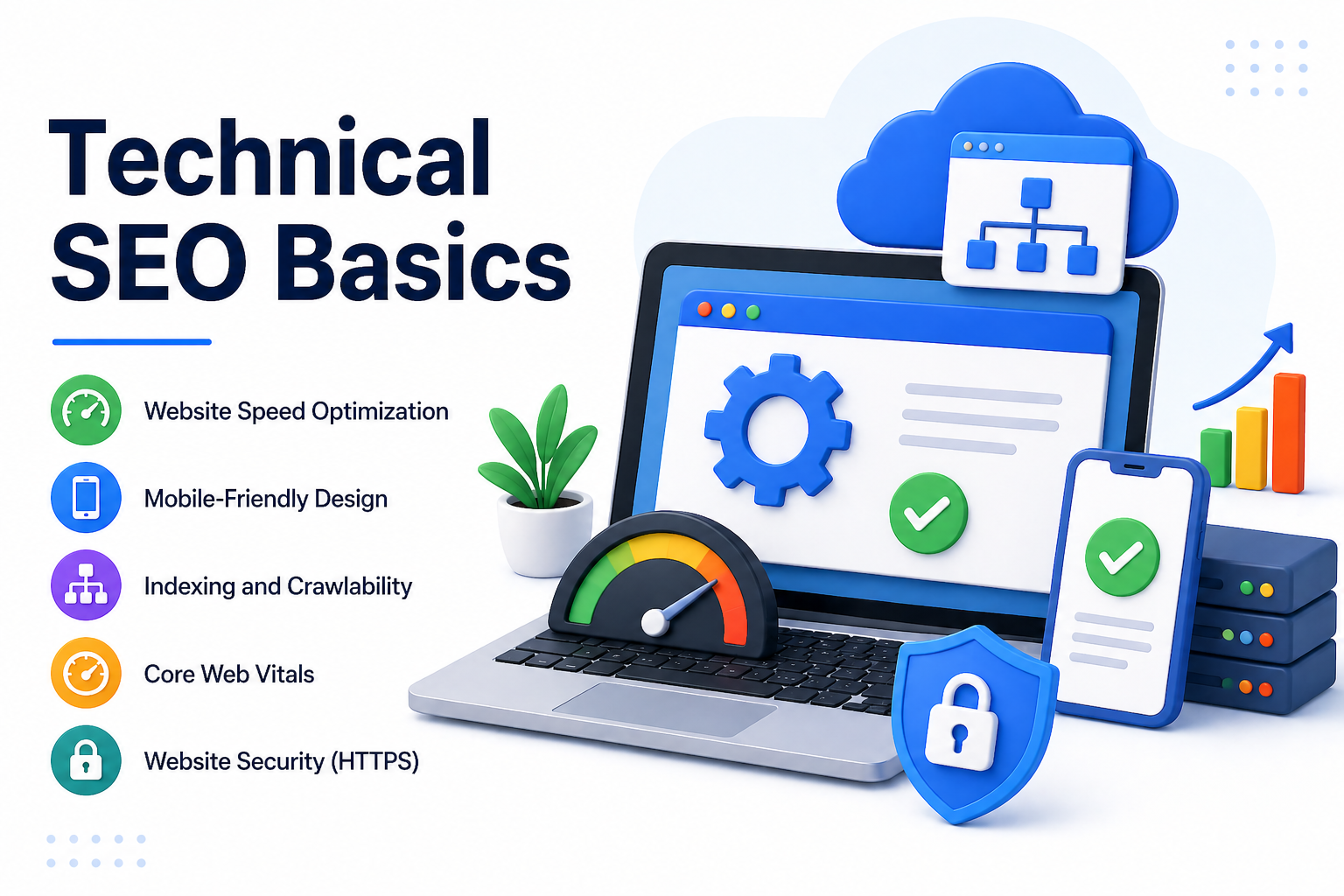
Technical SEO focuses on optimizing the backend and overall performance of your website so that search engines can efficiently crawl, index, and understand your content. It ensures that your website is technically sound and accessible, allowing Google to properly evaluate and rank your pages.
If you want to truly understand how to rank on Google, technical SEO is essential. Even the best content cannot perform well if your website has issues like slow loading speed, poor mobile experience, or indexing problems. These technical factors directly impact your visibility in search results.
In simple terms, technical SEO creates a strong foundation for your website. It helps search engines navigate your site easily, improves user experience, and supports all other SEO efforts like on-page and off-page optimization. Without proper technical SEO, your chances to improve Google ranking become very limited.
Website Speed Optimization
- Faster websites rank higher on Google
- Reduces bounce rate
- Improves user experience
- Compress images
- Use fast hosting
- Enable caching
- Minimize scripts
Mobile-Friendly Design
- Supports mobile-first indexing
- Improves mobile user experience
- Increases engagement
- Use responsive design
- Ensure readable text
- Optimize layout for all devices
Indexing and Crawlability
- Helps Google access your pages
- XML sitemap
- Robots.txt file
- Clean URL structure
- Fix broken links
👉 Pages not indexed cannot rank on Google
Core Web Vitals
- Measures page performance
- Loading speed
- Interactivity
- Visual stability
- Improves user experience
Website Security (HTTPS)
- Builds user trust
- Protects data
- Preferred by Google
- Use HTTPS instead of HTTP
Off-Page SEO & Backlinks Strategy
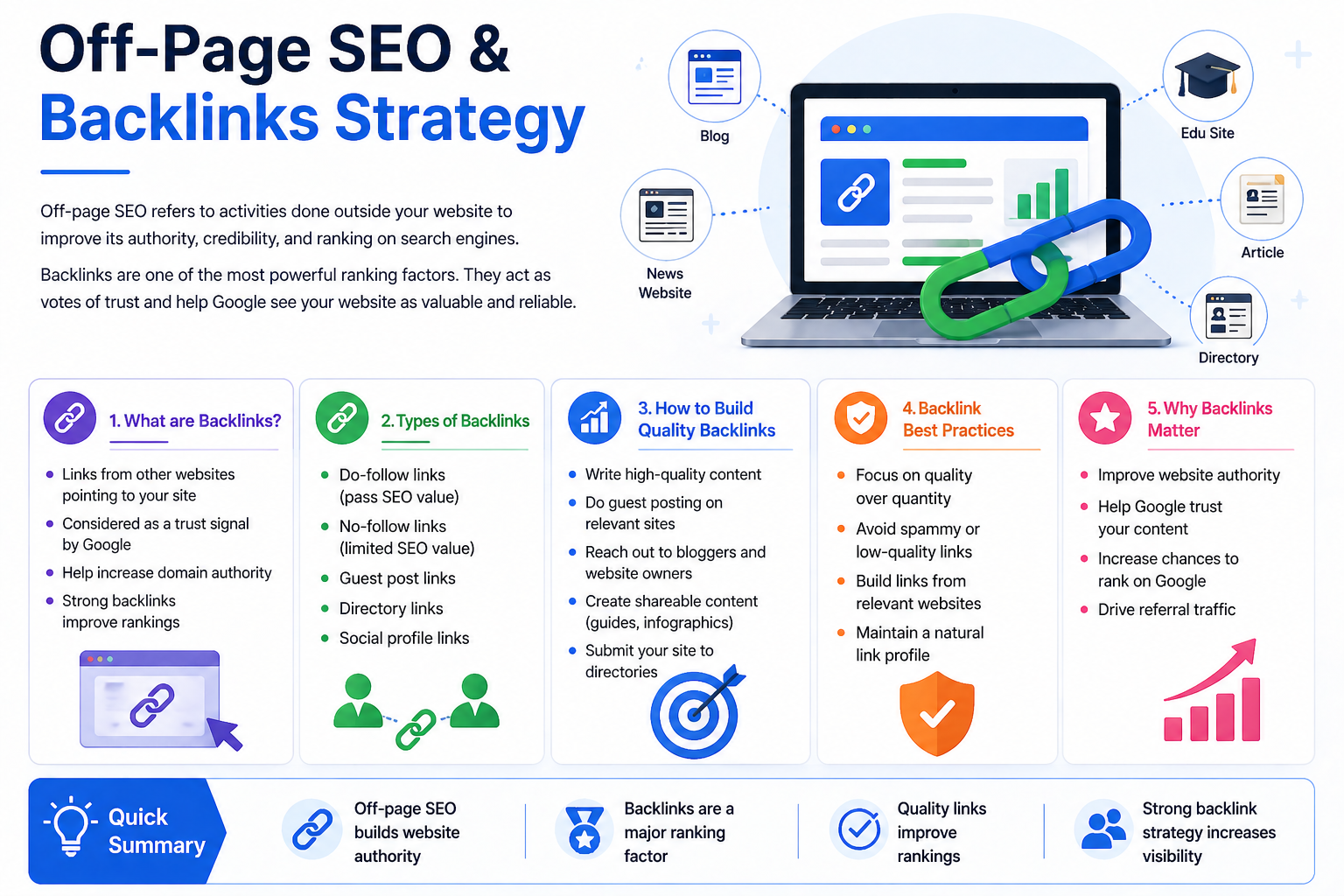
Off-page SEO refers to all the activities you perform outside your website to improve its authority, credibility, and overall ranking in search engines. While on-page SEO focuses on optimizing your content, off-page SEO helps Google understand how trustworthy and valuable your website is compared to others.
If you want to truly learn how to rank on Google, off-page SEO plays a critical role. Search engines use external signals—especially backlinks—to determine whether your content deserves a higher position in search results. The more high-quality and relevant websites that link to your content, the stronger your site’s authority becomes. Backlinks act like votes of confidence from other websites. When a trusted website links to your page, it signals to Google that your content is useful and reliable. However, not all backlinks are equal—links from high-authority and relevant sites carry much more value than low-quality or spammy links.
In simple terms, off-page SEO helps build your website’s reputation across the internet. The stronger your backlink profile and online presence, the higher your chances to rank on Google and drive consistent organic traffic.
What are Backlinks?
- Links from other websites pointing to your site
- Considered as a trust signal by Google
- Help increase domain authority
- Strong backlinks improve rankings
Types of Backlinks
- Do-follow links (pass SEO value)
- No-follow links (limited SEO value)
- Guest post links
- Directory links
- Social profile links
How to Build Quality Backlinks
- Write high-quality content
- Do guest posting on relevant sites
- Reach out to bloggers and website owners
- Create shareable content (guides, infographics)
- Submit your site to directories
Backlink Best Practices
- Focus on quality over quantity
- Avoid spammy or low-quality links
- Build links from relevant websites
- Maintain a natural link profile
Why Backlinks Matter
- Improve website authority
- Help Google trust your content
- Increase chances to rank on Google
- Drive referral traffic
Proven Strategies to Rank on Google Faster
If you want quicker results and truly understand how to rank on Google, you need to apply practical and consistent SEO strategies. Ranking on Google is not just about doing basic SEO—it’s about focusing on what actually works and delivering value to users over time.
By combining the right keywords, quality content, and user-focused optimization, you can significantly improve Google ranking and grow your organic traffic.
Focus on Long-Tail Keywords
Long-tail keywords are more specific and less competitive, which makes them easier to rank for—especially if your website is new. Instead of targeting broad keywords, focus on phrases that match user intent more clearly.
For example, instead of targeting a generic keyword, use something more specific like how to rank on Google for beginners. This approach helps you attract targeted traffic and increases your chances to rank faster.
Create High-Quality Content Consistently
Content is the backbone of SEO. Publishing high-quality and valuable content on a regular basis helps build trust and authority. Your content should focus on solving real problems, answering user questions, and providing clear information.
Consistency also plays a key role. Websites that update regularly are more likely to perform better in search results compared to those that publish occasionally.
Improve User Experience (UX)
User experience is a major ranking factor. If visitors find your website easy to use, they are more likely to stay longer and interact with your content.
A good user experience includes:
- simple navigation
- fast loading speed
- mobile-friendly design
These factors help reduce bounce rate and send positive signals to Google.
Optimize for Featured Snippets
Featured snippets are the highlighted answers that appear at the top of Google search results. To optimize for them, your content should be clear, structured, and directly answer user queries. Using headings, short paragraphs, and well-organized information increases your chances of appearing in featured snippets, which can boost your visibility significantly.
Update and Refresh Old Content
SEO is not a one-time process. Updating your existing content helps maintain its relevance and improve rankings. You can improve old content by adding new information, updating keywords, fixing outdated sections, and improving readability. This signals to Google that your content is fresh and valuable.
Analyze and Improve Performance
Tracking your performance helps you understand what is working and what needs improvement. By analyzing your traffic, rankings, and user behavior, you can make better SEO decisions. Focus on improving pages that are not performing well and optimize them with better content, keywords, and structure.
Common SEO Mistakes to Avoid
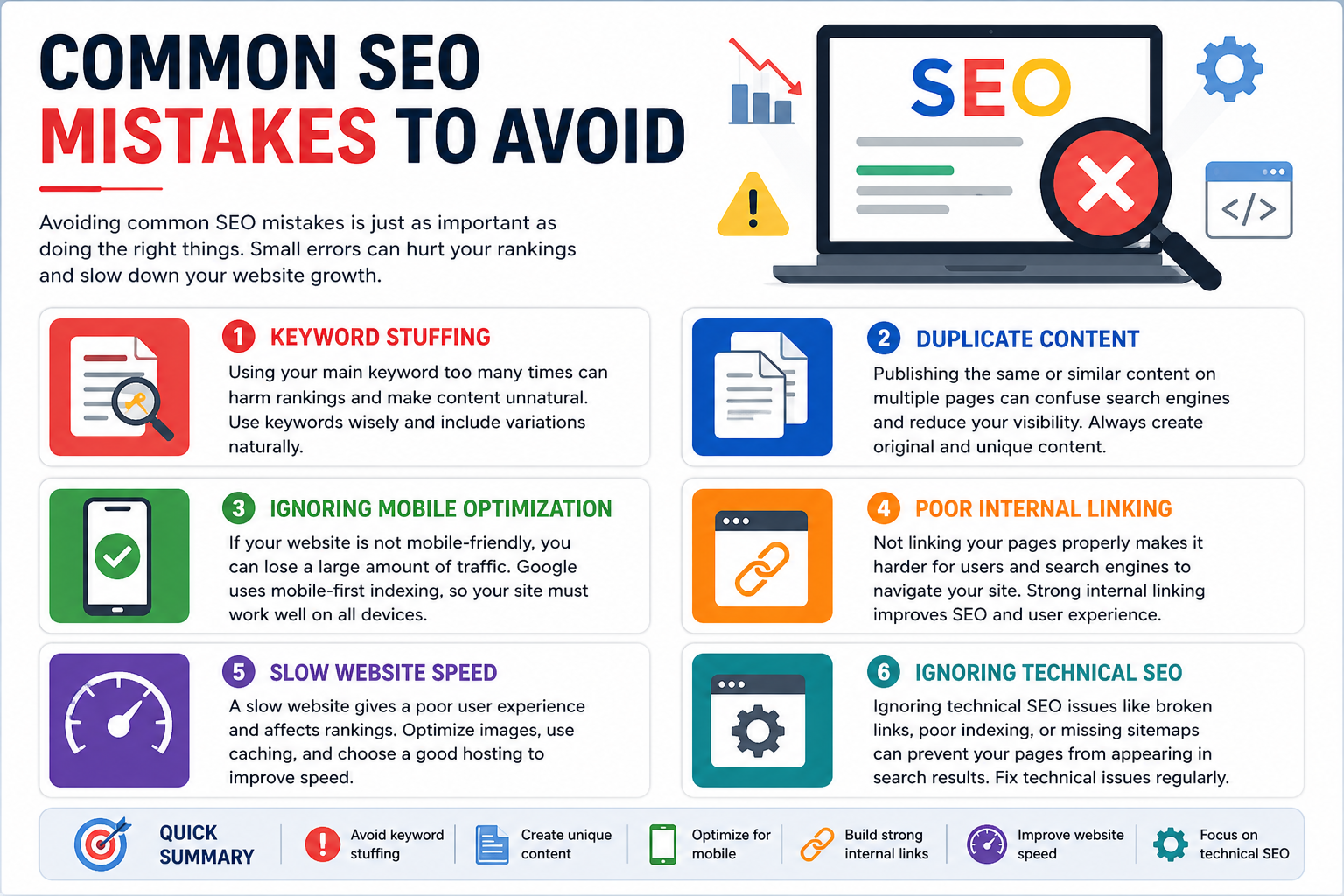
Even if you follow all the right SEO strategies, small mistakes can stop your website from ranking on Google. If you truly want to master how to rank on Google, it’s important to avoid common SEO errors that can hurt your performance.
Many beginners focus only on adding keywords, but SEO is much more than that. Poor practices can lead to lower rankings, less traffic, and even penalties from Google.
Keyword Stuffing
Using your main keyword too many times in your content can harm your rankings instead of improving them. Google prefers natural and user-friendly content. Instead of repeating how to rank on Google again and again, use it wisely and include variations where needed.
Duplicate Content
Publishing the same or very similar content on multiple pages can confuse search engines. Google may not know which page to rank, and this can reduce your visibility. Always create original and unique content for every page on your website.
Ignoring Mobile Optimization
If your website is not mobile-friendly, you will lose a large portion of traffic. Google uses mobile-first indexing, so your site must work properly on all devices. A poor mobile experience can lead to higher bounce rates and lower rankings.
Poor Internal Linking
Not linking your pages properly can make it harder for both users and search engines to navigate your site. A strong internal linking structure helps distribute SEO value and improves overall site performance.
Slow Website Speed
A slow website negatively affects user experience and SEO. Visitors are likely to leave if your page takes too long to load. Improving speed can significantly boost both engagement and rankings.
Ignoring Technical SEO
Many people focus only on content and forget the technical side of SEO. Issues like poor indexing, broken links, or missing sitemaps can prevent your pages from appearing on Google. Technical SEO ensures your website is accessible and properly optimized for search engines.
Conclusion
Ranking on Google in 2026 is not about shortcuts—it’s about following the right strategies consistently. If you truly want to master how to rank on Google, you need to focus on a complete SEO approach that includes keyword research, on-page optimization, technical SEO, and strong backlinks.
Success in SEO comes from creating valuable content, understanding user intent, and continuously improving your website. Google now prioritizes websites that provide real value, a good user experience, and trustworthy information.
Instead of chasing quick results, focus on building a strong foundation. Apply the strategies discussed in this guide, stay consistent, and keep updating your content over time. This approach will help you improve Google ranking and achieve long-term success.