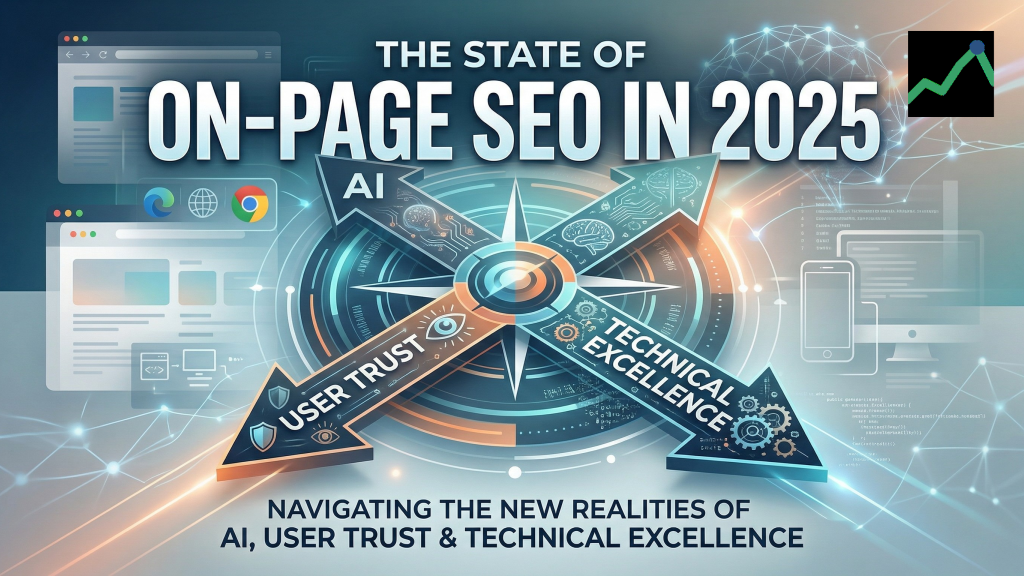
Search is no longer just about ranking on Google—it’s about being understood and selected by AI. The shift from SEO to GEO is transforming how digital visibility works. Traditional SEO focused on optimizing content for search engines using keywords, backlinks, and technical improvements. But with the rise of AI-powered tools like ChatGPT, Google Search Generative Experience, and Microsoft Copilot, the way people discover information is changing rapidly.
Instead of scrolling through multiple links, users now get direct, conversational answers generated by AI. This SEO to GEO transformation has introduced a new concept: GEO (Generative Engine Optimization). GEO focuses on optimizing content so that AI systems choose your information as the best answer, not just rank it on a search results page.
This evolution from SEO to GEO means content creators, marketers, and businesses must rethink their strategies—from writing for algorithms to writing for understanding, context, and trust.
What is Traditional SEO?
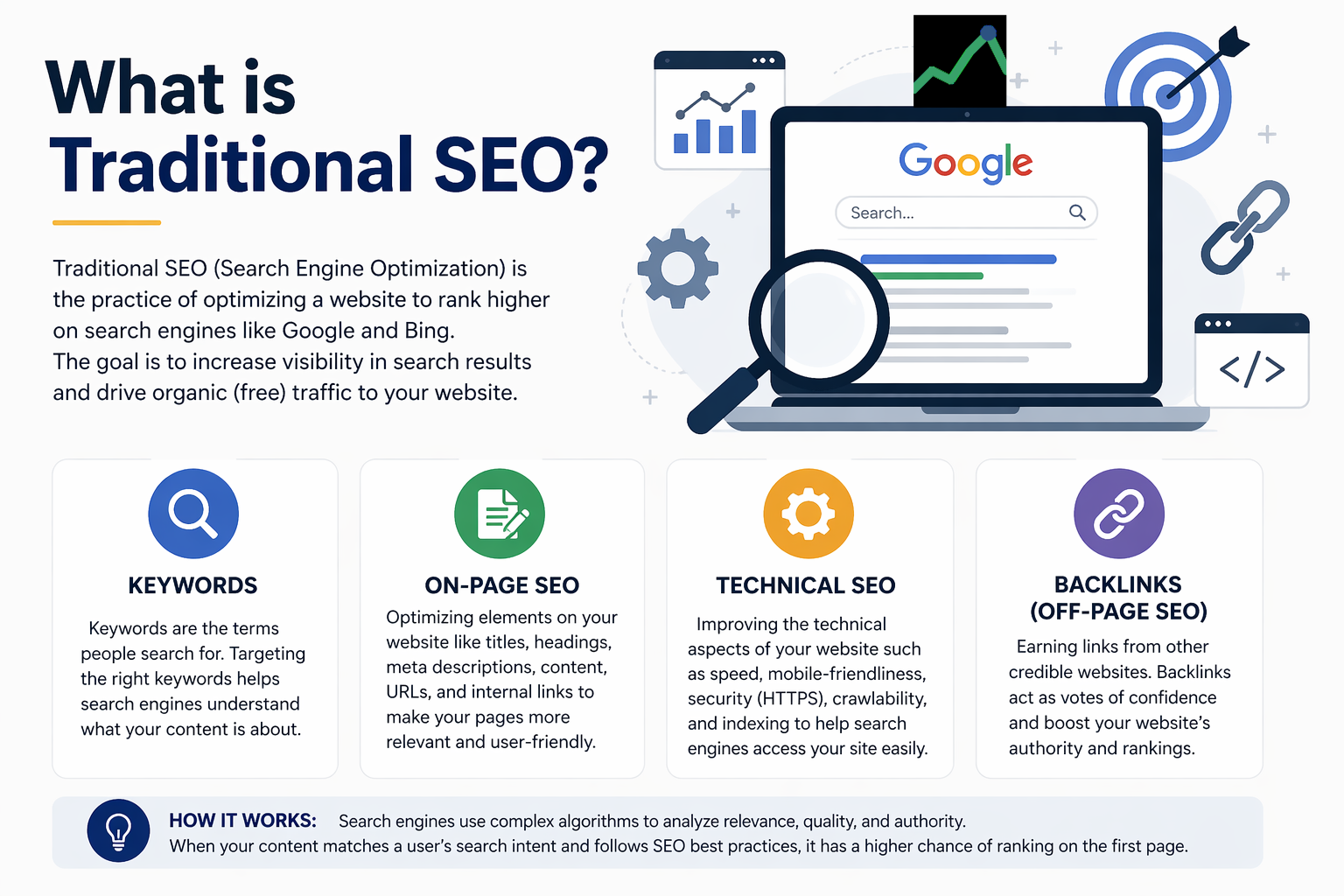
Traditional SEO (Search Engine Optimization) is the practice of improving a website so that it ranks higher on search engines like Google Search and Bing. The main goal is simple: increase visibility in search results and drive organic (free) traffic to your website.
In the traditional model, when a user types a query—like “best digital marketing tips”—search engines scan billions of web pages and display a list of ranked results (often called the “10 blue links”). Websites that follow SEO best practices have a better chance of appearing at the top.
Core Components of Traditional SEO
The foundation of traditional SEO is built on a few key elements that help search engines understand, evaluate, and rank your content. Each component plays a specific role in improving visibility and ensuring your website meets both user needs and search engine requirements.
Keywords
Keywords are the foundation of SEO. These are the words and phrases users type into search engines. Content is optimized by naturally including relevant keywords so search engines can understand what the page is about.
On-Page SEO
This includes optimizing elements directly on your website, such as:
- Titles (H1, H2 headings)
- Meta descriptions
- URL structure
- Internal linking
- Content quality
The goal is to make your content both user-friendly and search-engine-friendly.
Technical SEO
Technical SEO focuses on how well your website functions behind the scenes. This includes:
- Website speed
- Mobile-friendliness
- Secure connection (HTTPS)
- Crawlability and indexing
Search engines prefer websites that are fast, secure, and easy to navigate.
Backlinks (Off-Page SEO)
Backlinks are links from other websites pointing to your site. They act as votes of confidence. The more high-quality backlinks you have, the more trustworthy your website appears to search engines.
How Traditional SEO Works
Search engines use complex algorithms to rank content based on factors like relevance, quality, and authority. When your content matches a user’s search intent and follows SEO best practices, it has a higher chance of ranking on the first page.
However, traditional SEO is largely focused on ranking pages, not necessarily on providing direct answers. This is exactly where the shift toward GEO begins—moving from ranking content to becoming the source of answers.
The Rise of AI in Search
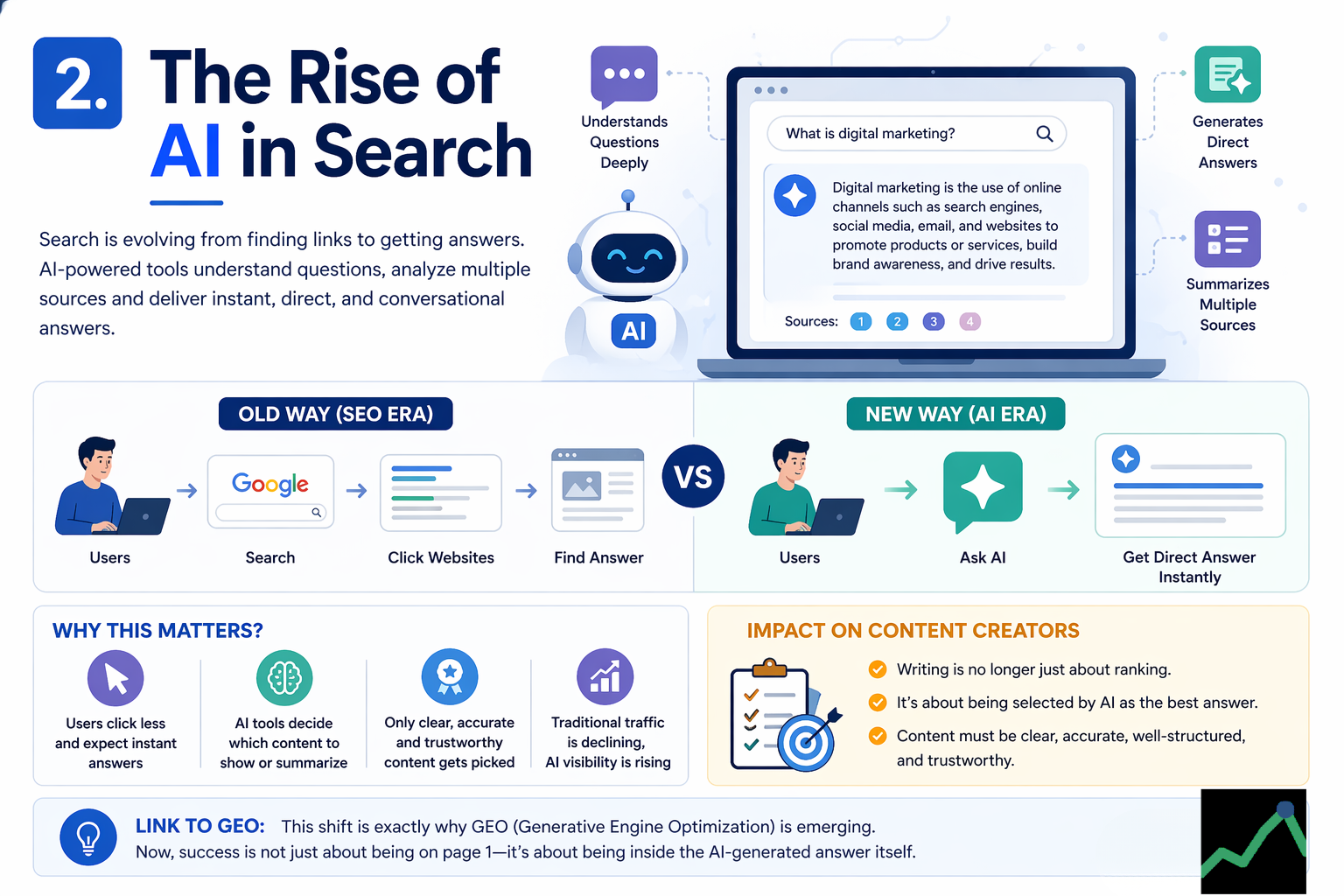
Search behavior is changing fast. Earlier, users would type a query into search engines like Google Search and scroll through multiple links to find the best answer. Now, with AI-powered tools like ChatGPT and Microsoft Copilot, users expect instant, direct, and conversational answers.
What’s Changing?
Instead of showing a list of websites, modern search systems are now:
- Understanding questions deeply (not just matching keywords)
- Generating direct answers
- Summarizing multiple sources into one response
For example, when someone asks a question today, they don’t always want to click 10 links—they want a clear answer immediately.
From Search Engine to Answer Engine
This is the biggest shift:
- Old way (SEO era):
Users → Search → Click websites → Find answer - New way (AI era):
Users → Ask AI → Get direct answer instantly
This transformation is turning search engines into “answer engines.”
Why This Matters
Because of this shift:
- Users spend less time clicking websites
- AI tools decide which content to show or summarize
- Only the most clear, trusted, and well-structured content gets picked
Impact on Content Creators
For bloggers and marketers (like you), this means:
- Writing content is no longer just about ranking
- It’s about being selected by AI as the best answer
- Content must be:
- Clear
- Accurate
- Well-structured
- Trustworthy
Link to GEO
This shift is exactly why GEO (Generative Engine Optimization) is emerging.
Now, success is not just about being on page 1—it’s about being inside the AI-generated answer itself.
What is GEO (Generative Engine Optimization)?
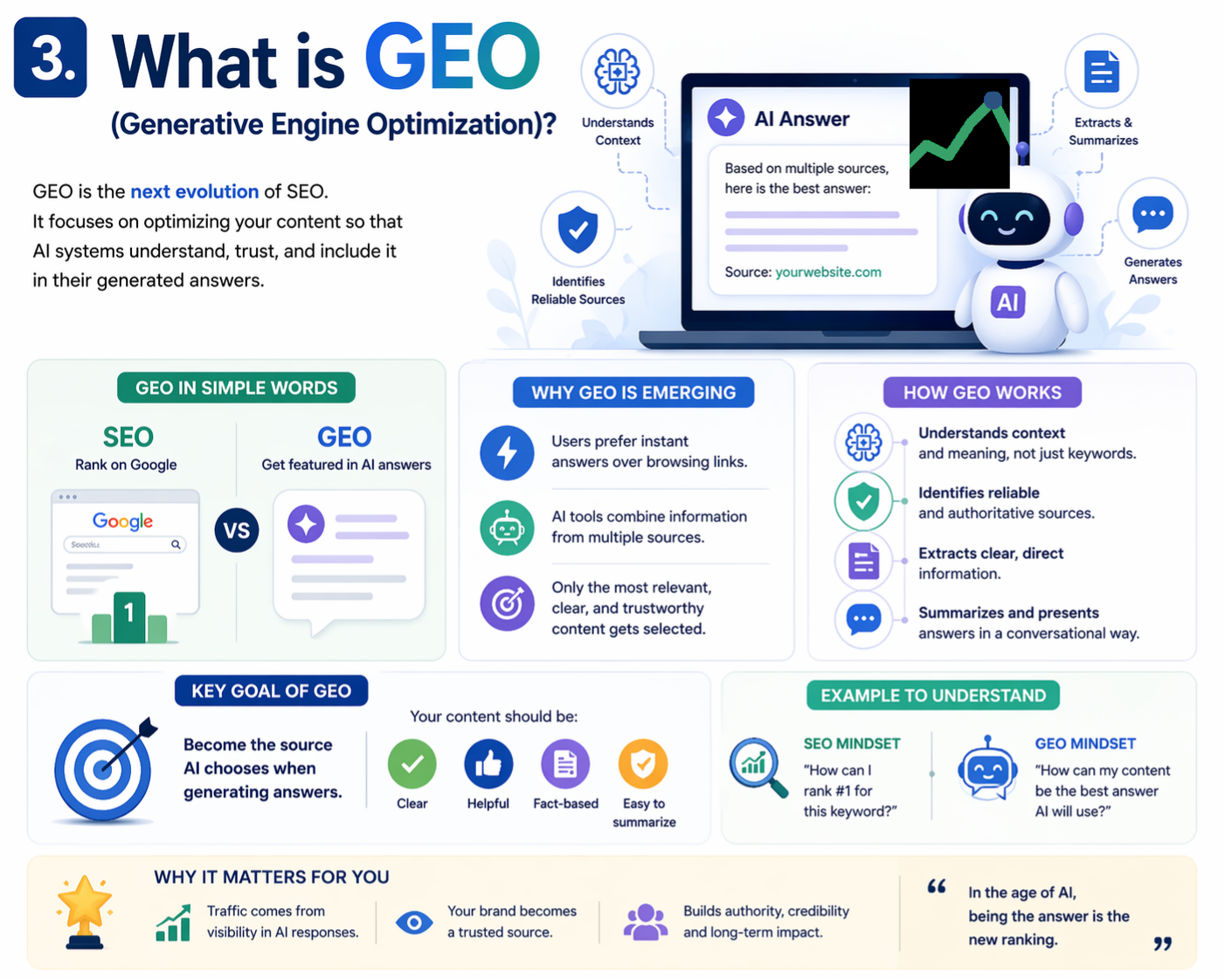
GEO (Generative Engine Optimization) is the next evolution of SEO. Instead of optimizing content just to rank on search engines, GEO focuses on optimizing content so that AI systems—like ChatGPT and Microsoft Copilot—select, understand, and present your content as part of their generated answers.
Simple Definition
GEO is the process of making your content:
- Easy for AI to understand
- Trustworthy and accurate
- Structured in a way that AI can summarize and use
👉 In short:
SEO = Rank on Google
GEO = Get featured in AI answers
Why GEO is Emerging
GEO is growing because search behavior is changing:
- Users now prefer instant answers instead of browsing links
- AI tools combine information from multiple sources
- Only the most relevant and clear content gets picked
This means ranking #1 is no longer enough—you also need to be the best source for AI to trust.
How GEO Works
AI systems don’t just scan for keywords. They:
- Understand context and meaning
- Identify reliable sources
- Extract clear and direct answers
- Summarize information in a conversational way
So, your content must:
- Answer questions directly
- Be well-structured (headings, bullet points)
- Show expertise and credibility
Key Goal of GEO
The main goal is simple but powerful:
👉 Become the source AI chooses when generating answers
That means your content should be:
- Clear
- Helpful
- Fact-based
- Easy to summarize
Example to Understand
- SEO mindset:
“How can I rank #1 for this keyword?” - GEO mindset:
“How can my content be the best answer AI will use?”
SEO vs GEO: Key Differences
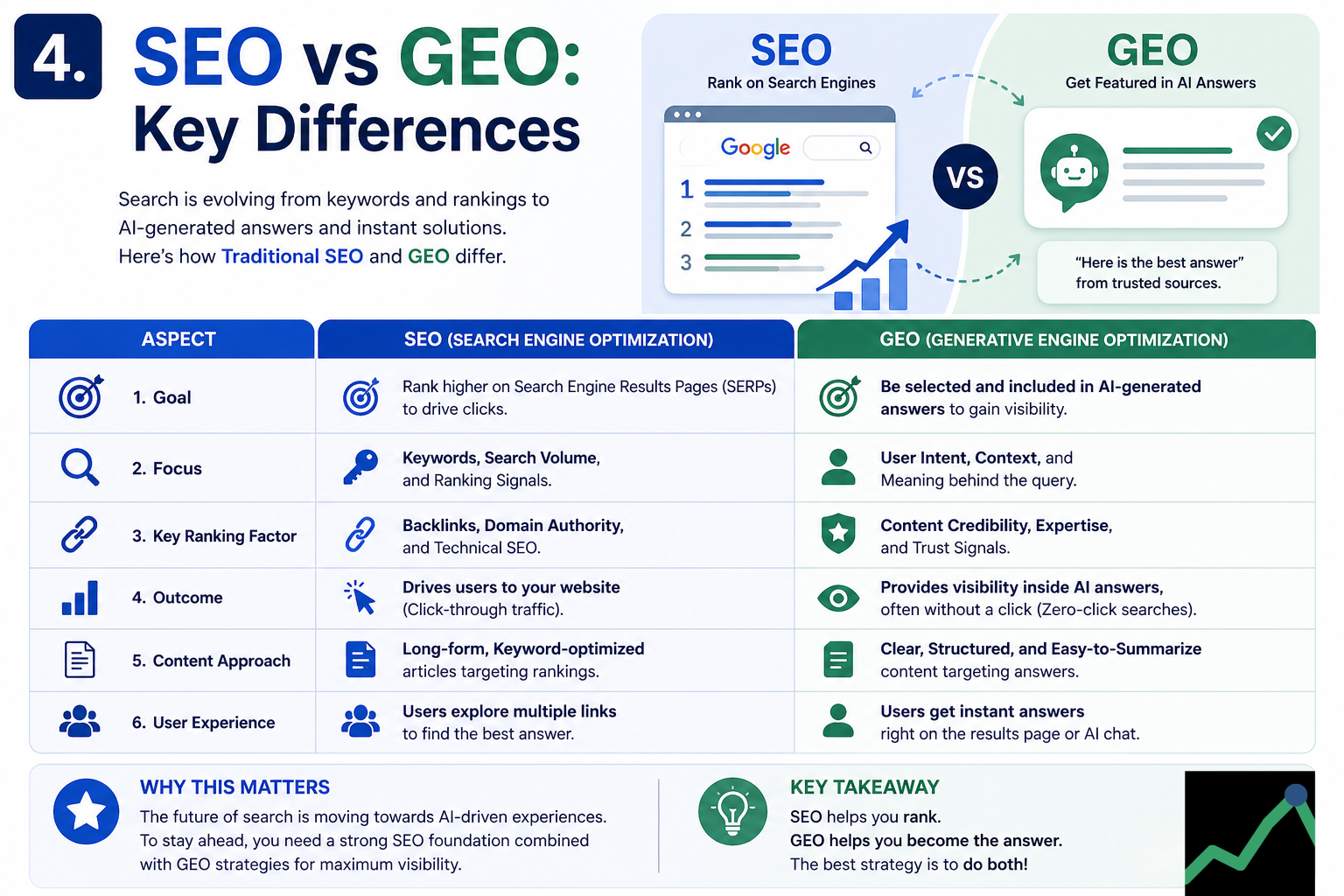
As search continues to evolve, understanding the difference between traditional SEO and modern GEO is essential for anyone working in digital marketing. With the rise of AI-driven platforms like ChatGPT and Google Search Generative Experience, the focus is shifting from search engine optimization techniques to AI search optimization.
Core Difference in Simple Words
Traditional SEO focuses on improving your website’s rankings through keyword research methods and on-page SEO strategies, while GEO is all about optimizing content for AI-generated responses and conversational search.
- SEO helps you gain organic traffic growth
- GEO helps you achieve AI content visibility
Detailed Comparison
Ranking vs Answer Inclusion
In traditional SEO, the goal is to rank higher on search engines using technical SEO checklists and backlinks. In GEO, the goal is to become part of answer engine optimization, where your content is directly used in AI-generated answers.
Keywords vs Context & Intent
SEO relies heavily on keyword optimization, but GEO focuses more on user intent, semantic search, and how well your content fits into AI-generated responses.
Backlinks vs Authority Signals
While backlinks remain important for SEO, GEO prioritizes content credibility, expertise, and trust signals—key elements for being selected in AI search optimization systems.
Traffic vs Visibility
SEO is designed to bring users to your website through organic traffic growth, whereas GEO often works in zero-click searches, where users get answers instantly without visiting a site.
Content Style
Traditional SEO content often focuses on long-form writing with search engine optimization techniques, but GEO prefers content that is:
- Clear
- Structured
- Optimized for conversational search
- Easy for AI to summarize
Why This Difference Matters
This shift is redefining the future of search marketing. Businesses that only rely on traditional SEO may struggle as AI in search engines continues to grow. To stay competitive, content creators must adapt by combining answer engine optimization with strong foundational SEO.
How Content Strategy is Changing
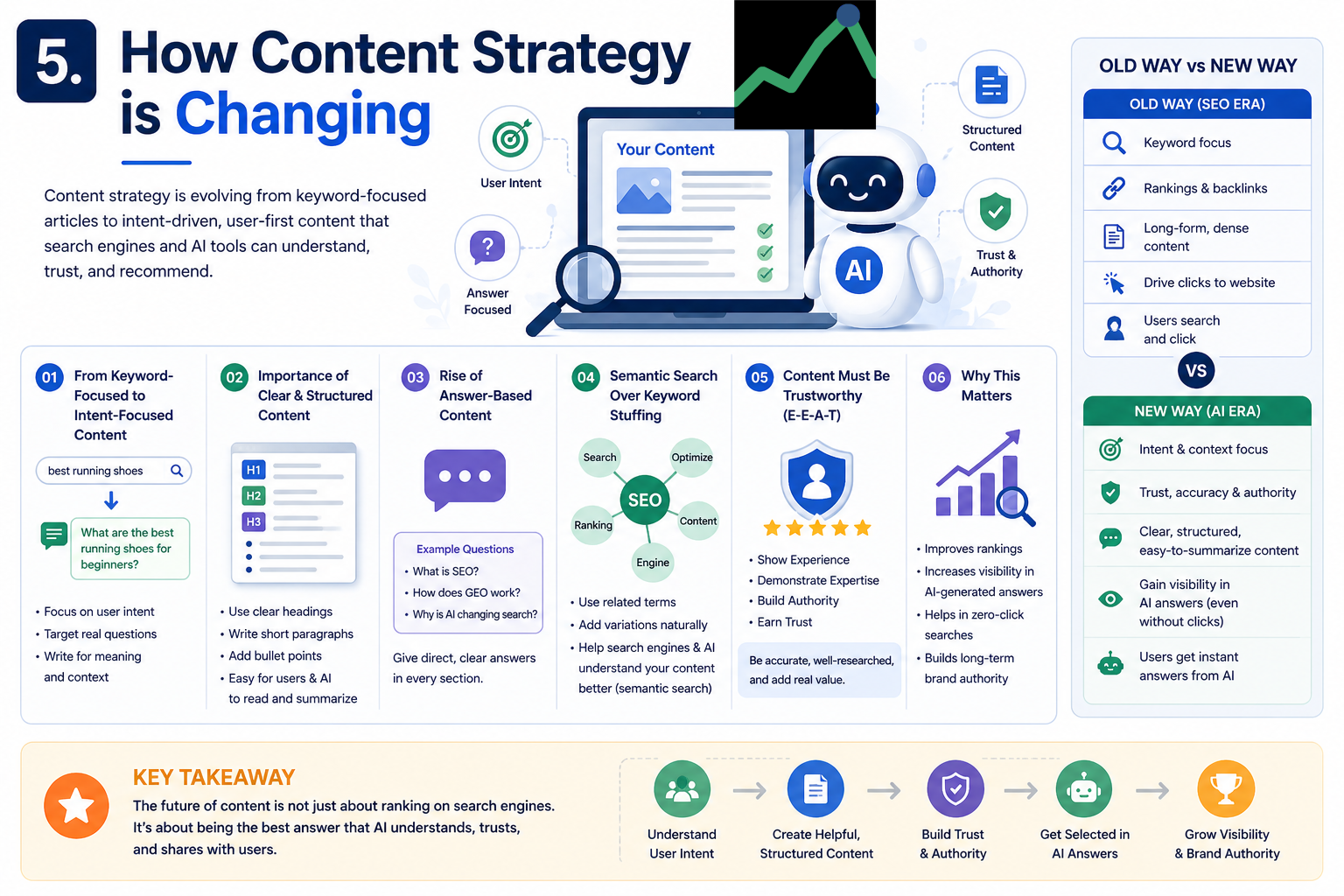
Content strategy is no longer just about inserting keywords and writing long articles. With the rise of AI-driven platforms like ChatGPT and Google Search Generative Experience, content must now be optimized for both search engines and AI understanding.
This shift is pushing marketers to move from traditional search engine optimization techniques toward smarter, more user-focused AI search optimization strategies.
From Keyword-Focused to Intent-Focused Content
In traditional SEO, content was built around keyword research methods and placing those keywords throughout the article.
Now, content must focus on:
- User intent
- Conversational search queries
- Real questions people ask
👉 Instead of writing for keywords, you now write for meaning and context.
Importance of Clear & Structured Content
AI tools prefer content that is easy to read and summarize. That’s why structure matters more than ever.
Content should include:
- Clear headings (H1, H2, H3)
- Short paragraphs
- Bullet points
- Direct answers
This improves both on-page SEO strategies and AI content visibility.
Rise of Answer-Based Content
Modern content strategy focuses on answering questions directly. This is key for answer engine optimization and appearing in AI-generated responses.
Examples:
- “What is SEO?”
- “How does GEO work?”
👉 Each section should feel like a clear answer, not just general information.
Semantic Search Over Keyword Stuffing
Search engines and AI now understand relationships between words. This is called semantic search.
So instead of repeating the same keyword:
- Use variations
- Use related terms
- Write naturally
This improves your chances in both organic traffic growth and AI search optimization.
Content Must Be Trustworthy (E-E-A-T)
AI systems prioritize content that shows:
- Experience
- Expertise
- Authority
- Trust
That means your content should:
- Be accurate
- Be well-researched
- Avoid fluff
This is critical for success in both search marketing and GEO.
The Role of E-E-A-T in GEO
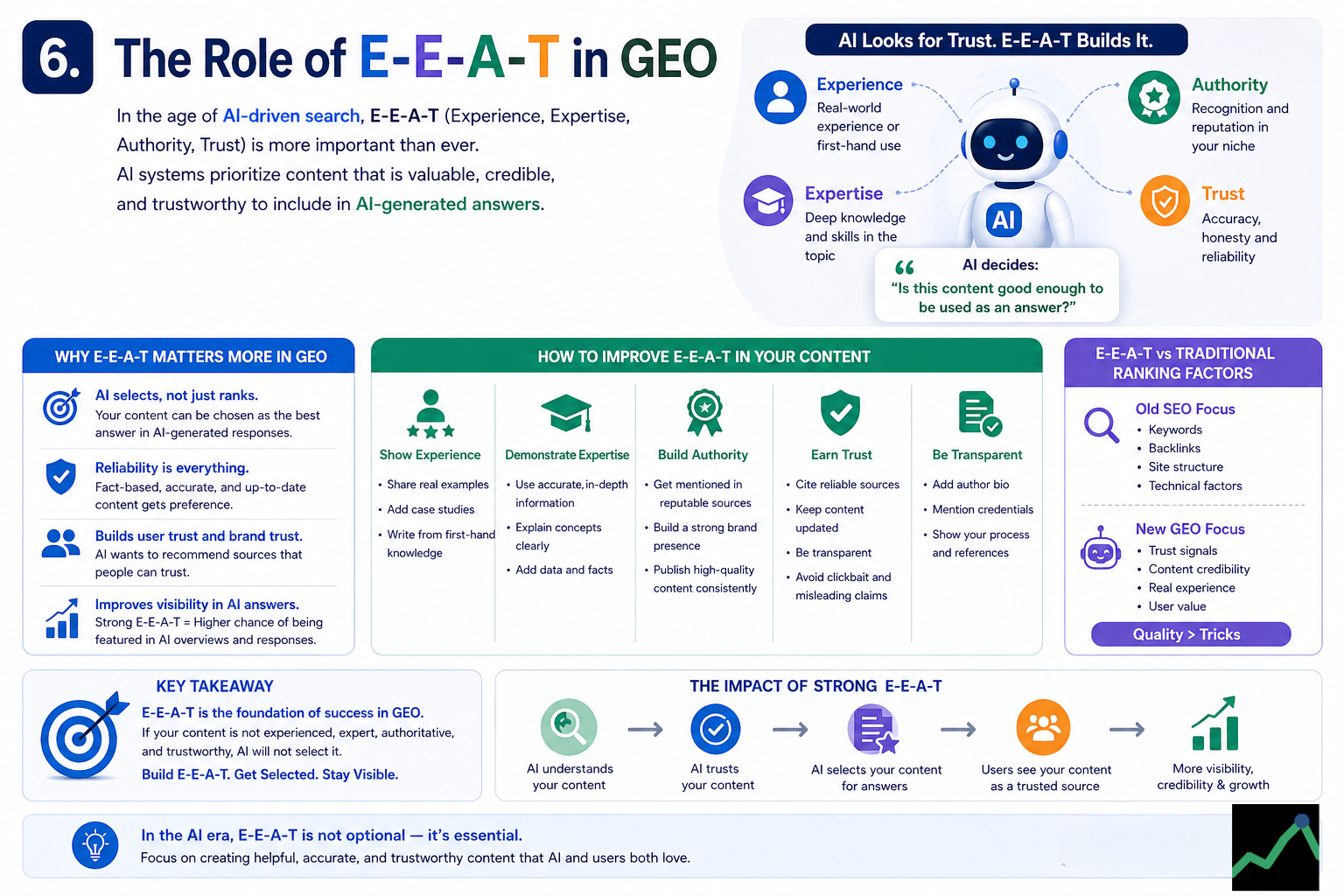
In the era of AI-driven search, content is no longer judged on keywords or backlinks. Instead, AI systems like ChatGPT and Google Search Generative Experience prioritize content that demonstrates strong E-E-A-T (Experience, Expertise, Authority, Trust).
This concept has always been important in search engine optimization techniques, but now it plays an even bigger role in AI search optimization and answer engine optimization.
What is E-E-A-T?
E-E-A-T stands for:
- Experience → Real-world knowledge or first-hand use
- Expertise → Deep understanding of the topic
- Authority → Recognition in your niche
- Trust → Accuracy, honesty, and reliability
👉 In GEO, these signals help AI decide:
“Is this content good enough to be used as an answer?”
Why E-E-A-T Matters More in GEO
AI doesn’t just rank content—it selects and presents it. That’s why:
- Content must be fact-based and accurate
- Sources must show credibility and expertise
- Information must be trustworthy and verifiable
This directly impacts your AI content visibility and presence in AI-generated responses.
How to Improve E-E-A-T in Your Content
To succeed in both SEO and GEO, your content should:
- Show real experience (examples, case studies)
- Use clear and accurate information
- Avoid misleading or clickbait content
- Be written with authority in search marketing topics
- Build trust through consistency and quality
E-E-A-T vs Traditional Ranking Factors
- Old SEO: Focus on backlinks and keyword research methods
- New GEO: Focus on trust signals and content credibility
👉 This doesn’t mean SEO is dead—it means quality matters more than tricks.
Why This Matters
As AI in search engines continues to grow, only content that demonstrates strong E-E-A-T will be:
- Selected by AI
- Featured in answers
- Trusted by users
👉 In simple words:
If your content is not trustworthy, it won’t be visible in the AI era.
Technical Foundations for GEO
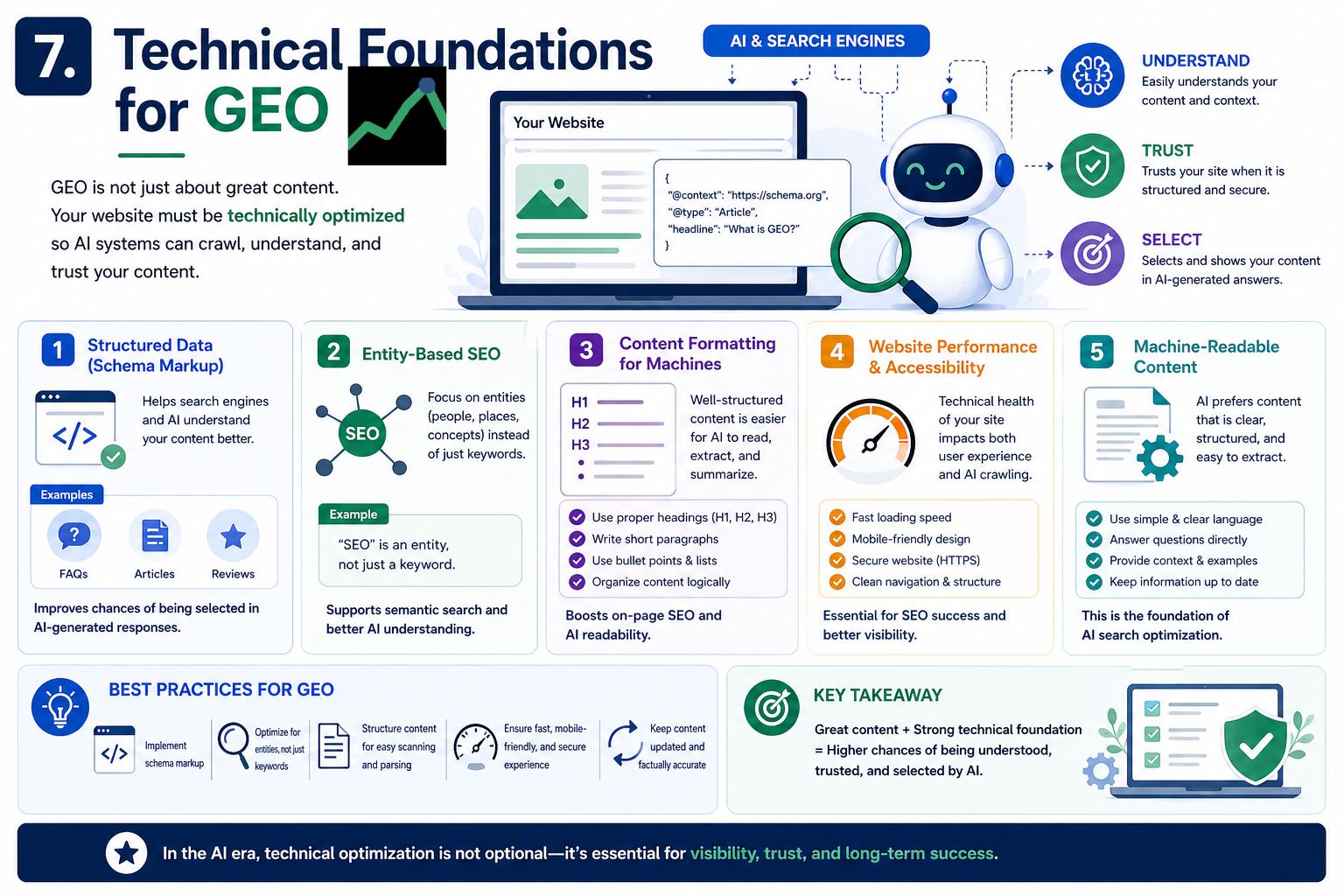
As search moves toward AI-driven experiences, the technical side of your website becomes just as important as your content. GEO is not only about writing better—it’s also about making your content easily understandable for machines like ChatGPT and Google Search Generative Experience.
This is where technical SEO evolves into a more advanced role in AI search optimization.
Why Technical Foundations Matter
AI systems don’t read content like humans—they rely on structure, signals, and data.
👉 If your content isn’t technically optimized, it may:
- Not be properly understood
- Not be selected by AI
- Lose visibility in AI-generated responses
Key Technical Elements for GEO
Structured Data (Schema Markup)
Structured data helps search engines and AI understand your content better.
For example:
- FAQs
- Articles
- Reviews
Using schema improves your chances in answer engine optimization and increases AI content visibility.
Entity-Based SEO
Instead of just keywords, search engines now focus on entities (people, places, concepts).
👉 Example:
- “SEO” is not just a keyword—it’s a defined concept in search systems
This improves your performance in:
- semantic search
- AI-generated responses
Content Formatting for Machines
Your content should be:
- Well-structured (H1, H2, H3)
- Easy to scan
- Logically organized
This supports both on-page SEO strategies and AI understanding.
Website Performance & Accessibility
Technical factors still matter:
- Fast loading speed
- Mobile-friendly design
- Secure website (HTTPS)
These are essential for search engine optimization techniques and overall user experience.
Machine-Readable Content is the Future
AI prefers content that is:
- Clearly structured
- Context-rich
- Easy to extract and summarize
👉 This is the foundation of AI search optimization.
Why This Matters
Even great content can fail if it’s not technically optimized.
To succeed in GEO:
- Combine strong content with solid technical setup
- Focus on both humans and machines
👉 In simple words:
If AI can’t understand your content, it won’t use it.
Impact on Businesses and Marketers
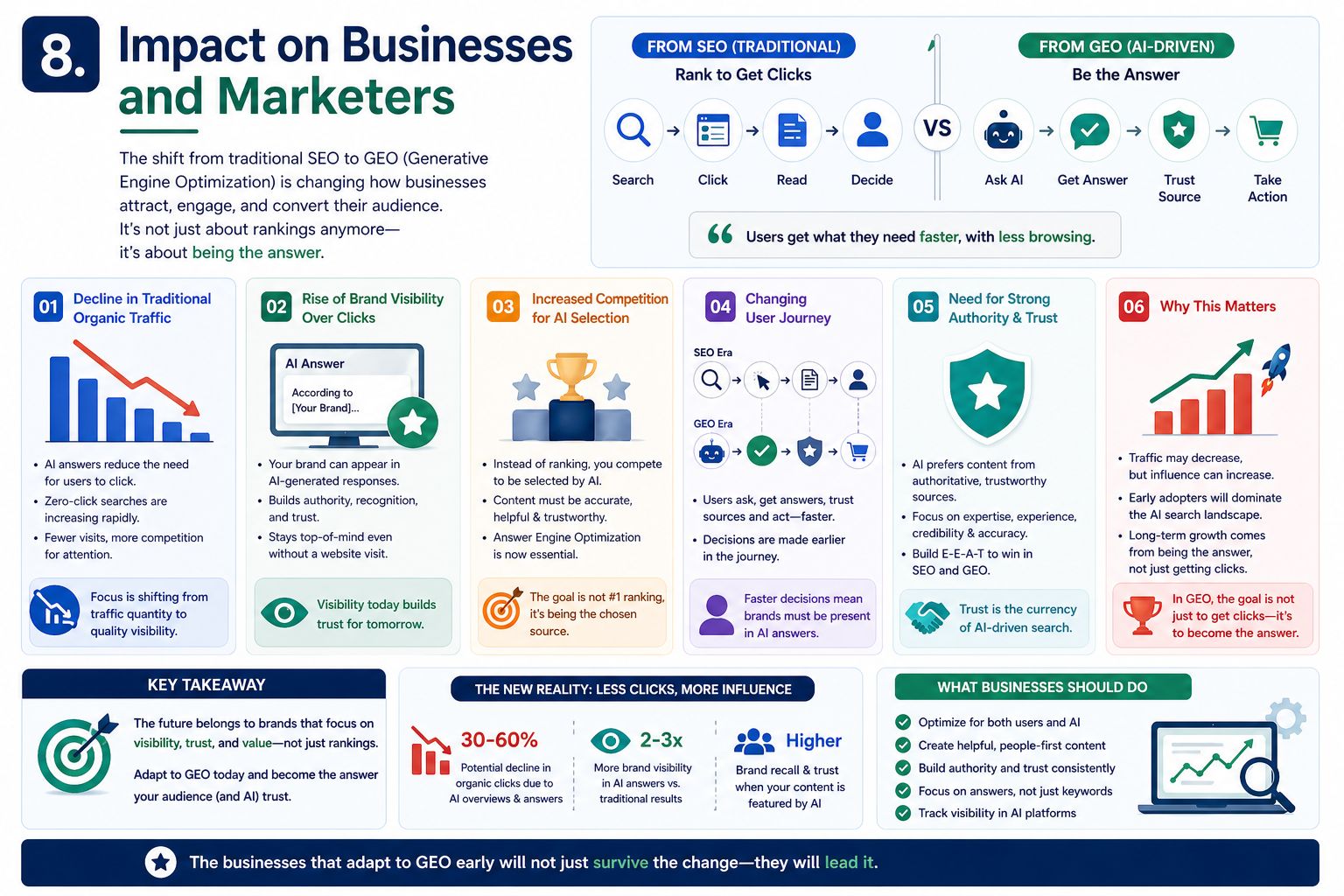
The shift from traditional SEO to GEO is not just a technical change—it’s transforming how businesses attract, engage, and convert their audience. With AI-powered platforms like ChatGPT and Google Search Generative Experience, the entire search marketing landscape is evolving.
Decline in Traditional Organic Traffic
In the past, businesses relied heavily on organic traffic growth through rankings. But now, with the rise of zero-click searches, users often get answers without visiting a website.
👉 This means:
- Fewer clicks from search engines
- More competition for attention
- Greater importance of AI content visibility
Rise of Brand Visibility Over Clicks
In GEO, success is not فقط about clicks—it’s about being seen and trusted.
Even if users don’t visit your site:
- Your brand can appear in AI-generated responses
- You build authority and recognition
- You stay top-of-mind for users
👉 Visibility is becoming more valuable than traffic.
Increased Competition for AI Selection
Instead of competing for rankings, businesses now compete to:
- Be selected by AI
- Be included in answers
- Be considered a trusted source
This makes answer engine optimization a critical part of modern strategy.
Changing User Journey
The traditional customer journey is changing:
Old Journey (SEO era):
Search → Click → Read → Decide
New Journey (GEO era):
Ask AI → Get Answer → Trust Source → Take Action
👉 Users make decisions faster with less browsing.
Need for Strong Authority & Trust
To succeed in this new environment, businesses must:
- Build strong content credibility
- Focus on expertise and trust signals
- Create high-quality, helpful content
This aligns with both AI search optimization and long-term brand growth.
Why This Matters
The impact is clear:
- Traffic may decrease
- But influence and authority can increase
- Businesses that adapt early will dominate
👉 In simple words:
In GEO, the goal is not just to get clicks—it’s to become the answer.
Challenges and Risks of GEO
While GEO (Generative Engine Optimization) offers new opportunities, it also brings several challenges that businesses and content creators must understand. As AI platforms like ChatGPT and Google Search Generative Experience continue to grow, relying only on GEO without understanding its risks can be problematic.
Loss of Website Traffic
One of the biggest concerns is the decline in organic traffic growth.
With the rise of zero-click searches:
- Users get answers directly from AI
- They don’t always visit your website
- Your traffic may decrease even if your content is used
👉 This challenges traditional search engine optimization techniques.
Lack of Content Attribution
AI often summarizes content from multiple sources, but:
- Your website may not always get proper credit
- Users may not know where the information came from
This affects:
- Brand recognition
- Trust building
- Long-term search marketing value
Dependence on AI Platforms
With GEO, your visibility depends on AI systems.
That means:
- You don’t fully control how your content is used
- AI decides what to show and what to ignore
- Algorithm changes can impact your visibility
👉 This makes AI search optimization less predictable than traditional SEO.
Increased Competition for Selection
Earlier, you competed for rankings.
Now, you compete to be selected by AI.
This means:
- Only top-quality content gets picked
- Competition is higher than ever
- You need strong content credibility and authority
Content Misinterpretation Risks
AI systems can sometimes:
- Misinterpret content
- Provide incomplete answers
- Combine information incorrectly
Even if you follow answer engine optimization, your message might not always be delivered exactly as intended.
The Future: SEO + GEO Together
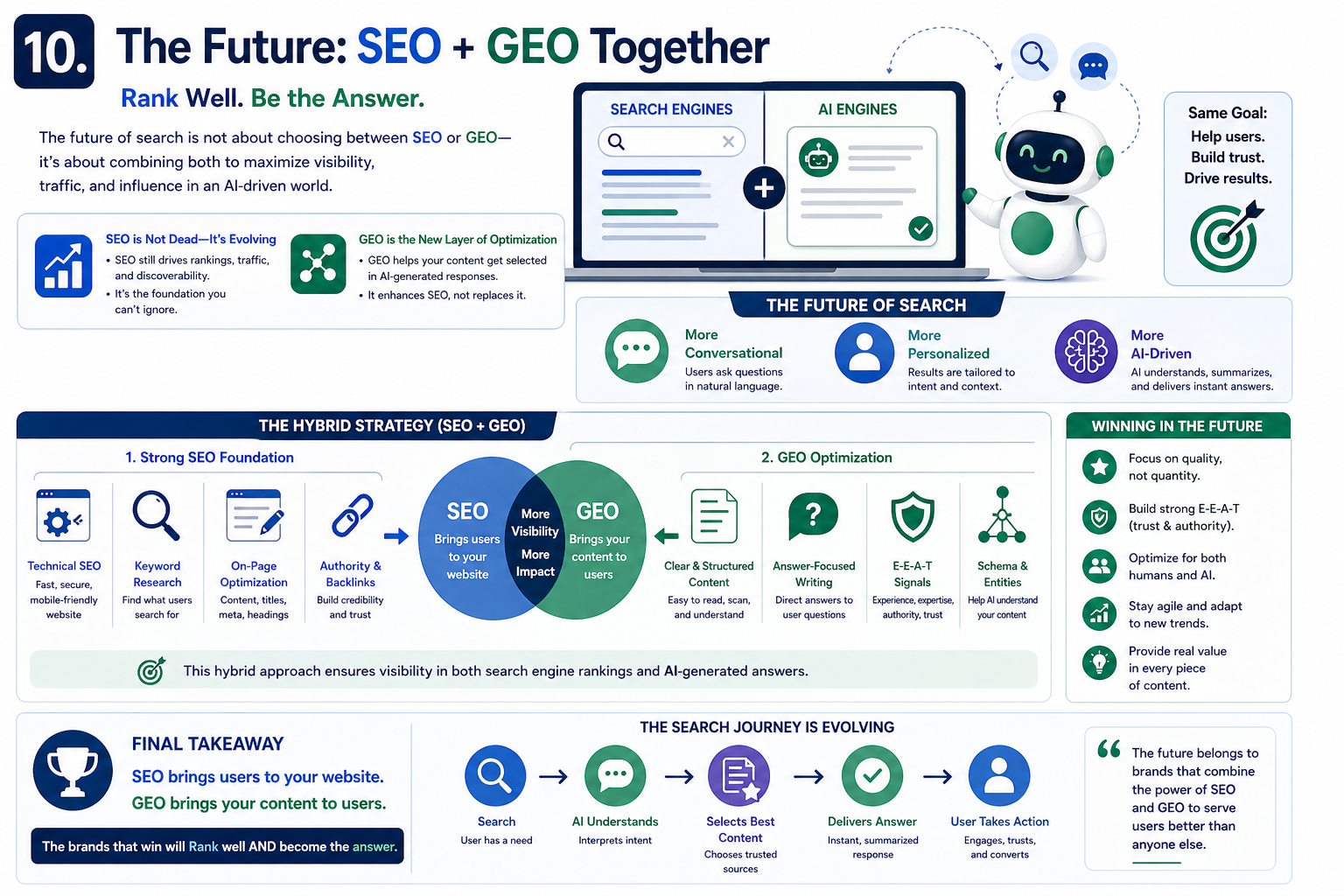
The future of search is not about choosing between SEO or GEO—it’s about combining both. As AI platforms like ChatGPT and Google Search Generative Experience continue to evolve, successful strategies will require a balance of search engine optimization techniques and AI search optimization.
SEO is Not Dead—It’s Evolving
There’s a common misconception that SEO is becoming irrelevant. That’s not true.
👉 SEO still matters for:
- Website rankings
- Organic traffic growth
- Technical performance
- Discoverability
But now, it must work alongside GEO to stay effective in modern search marketing.
GEO is the New Layer of Optimization
GEO adds a new dimension:
- Optimizing for AI-generated responses
- Improving AI content visibility
- Focusing on answer engine optimization
👉 It doesn’t replace SEO—it enhances it.
The Hybrid Strategy (SEO + GEO)
To succeed in today’s environment, your strategy should include:
1. Strong SEO Foundation
- Technical SEO
- Keyword research
- On-page optimization
2. GEO Optimization
- Clear, structured content
- Answer-focused writing
- Trust and authority building
👉 This hybrid approach ensures visibility in both:
- Search engine rankings
- AI-generated answers
What the Future Looks Like
The future of search will be:
- More conversational
- More personalized
- More AI-driven
Users will rely heavily on:
- Conversational search
- Instant answers
- Trusted sources
Winning in the Future
To stay ahead:
- Focus on content quality over quantity
- Build strong E-E-A-T (trust & authority)
- Optimize for both humans and AI
- Adapt continuously to new trends
Final Takeaway
- SEO brings users to your website
- GEO brings your content to users
The brands that win will be those who:
- Rank well
- AND become the answer
Conclusion
The evolution from SEO to GEO represents a fundamental shift in how digital visibility works. Traditional search engine optimization techniques focused on rankings, keywords, and driving organic traffic growth, but today the focus is moving toward AI search optimization, where content must be clear, trustworthy, and easily understood by AI systems. Platforms like ChatGPT and Google Search Generative Experience are changing how users interact with information, prioritizing AI-generated responses over traditional search results. This means success is no longer just about getting clicks—it’s about becoming the answer. To stay competitive in modern search marketing, businesses and content creators must combine SEO with answer engine optimization, focus on user intent, and build strong authority and trust. In the end, the future belongs to those who don’t just rank—but provide real value, clear answers, and content that both humans and AI can rely on.
FAQs (Frequently Asked Questions)
What is the main difference between SEO and GEO?
The main difference is that SEO (search engine optimization techniques) focuses on ranking your website in search engines, while GEO focuses on getting your content included in AI-generated responses. SEO brings traffic, whereas GEO builds visibility inside answers.
Is SEO becoming outdated with the rise of AI?
No, SEO is not outdated—it’s evolving. Traditional SEO still helps with organic traffic growth, but it now needs to work alongside AI search optimization to stay effective in modern search.
What is Generative Engine Optimization (GEO)?
GEO is the process of optimizing content so that AI systems like ChatGPT and Google Search Generative Experience can understand, trust, and use your content in their answers.
What are zero-click searches?
Zero-click searches happen when users get their answers directly on the search page or through AI without clicking any website. This is increasing with the rise of AI in search engines.
Why is E-E-A-T important in GEO?
E-E-A-T (Experience, Expertise, Authority, Trust) helps AI determine whether your content is reliable. Strong E-E-A-T improves your chances of appearing in AI-generated responses and boosts overall AI content visibility.
Will GEO reduce website traffic?
It can reduce direct traffic due to zero-click searches, but it increases brand visibility and authority. Your content may still influence users even if they don’t visit your site.
What is the future of search marketing?
The future of search marketing is a combination of SEO and GEO, where businesses focus on both rankings and becoming the best answer for users through AI.