What is E-E-A-T? E-E-A-T stands for Experience, Expertise, Authoritativeness, and Trustworthiness, four concepts that help explain what makes online content genuinely useful and credible. In modern SEO, simply targeting keywords or publishing more content is not enough. Search engines and users both need reasons to believe that the information comes from a reliable source.
E-E-A-T becomes stronger when content demonstrates real experience, subject knowledge, credible sources, recognized authority, and trustworthy information. For example, a product review is more useful when it shows that the product was actually tested, while an SEO guide becomes more valuable when it includes real workflows, original observations, data, screenshots, or practical results rather than simply repeating information found elsewhere. Google specifically encourages creators to make it clear who created the content and how the content was produced, including evidence of first-hand work where appropriate.
For website owners and SEO professionals, E-E-A-T is therefore less about adding a few trust badges to a website and more about proving the quality behind the content. This guide explores the four parts of E-E-A-T, the trust signals that support them, and practical ways to make your website more credible for both users and search.
Why Does E-E-A-T Matter for SEO?
E-E-A-T matters because search visibility is not only about matching a keyword to a search query; the quality, reliability, and usefulness of the information also matter. Google says its automated systems are designed to prioritize helpful, reliable, people-first content and use a mix of signals to identify content that demonstrates Experience, Expertise, Authoritativeness, and Trustworthiness. Google also clarifies that E-E-A-T itself is not a single ranking factor or an E-E-A-T score.
Consider two articles targeting the same keyword. The first simply summarizes information already available online, provides no clear author information, uses no original examples, and gives readers little evidence behind its claims. The second explains the topic through first-hand experience, original observations, reliable sources, practical examples, and transparent authorship. The second gives users much stronger reasons to trust the information.
This difference is becoming particularly important as the amount of generic and AI-assisted content continues to grow. Google encourages creators to provide original information, research, analysis, and substantial value rather than simply copying or rewriting existing sources. It also recommends making clear who created the content and, where relevant, how the content was produced.
E-E-A-T also helps explain why experience should not be confused with expertise. A professional expert may be the best source for highly technical or sensitive information, while first-hand experience can be especially valuable for topics such as product reviews, travel experiences, tutorials, or practical recommendations. Google added the additional “E” for Experience to its E-A-T framework in 2022 specifically to better recognize first-hand knowledge.
For SEO, the practical lesson is simple: don’t create content just because a keyword has search volume. Create content that gives users a reason to believe, use, and recommend your information. That means showing real experience where possible, demonstrating subject knowledge, building legitimate authority, and making the website and its information trustworthy.
And this is where E-E-A-T becomes more than an SEO concept—it becomes a content quality strategy. The stronger the evidence behind your content, the easier it is for users to understand why your page deserves their attention.
What Are the Four Elements of E-E-A-T?
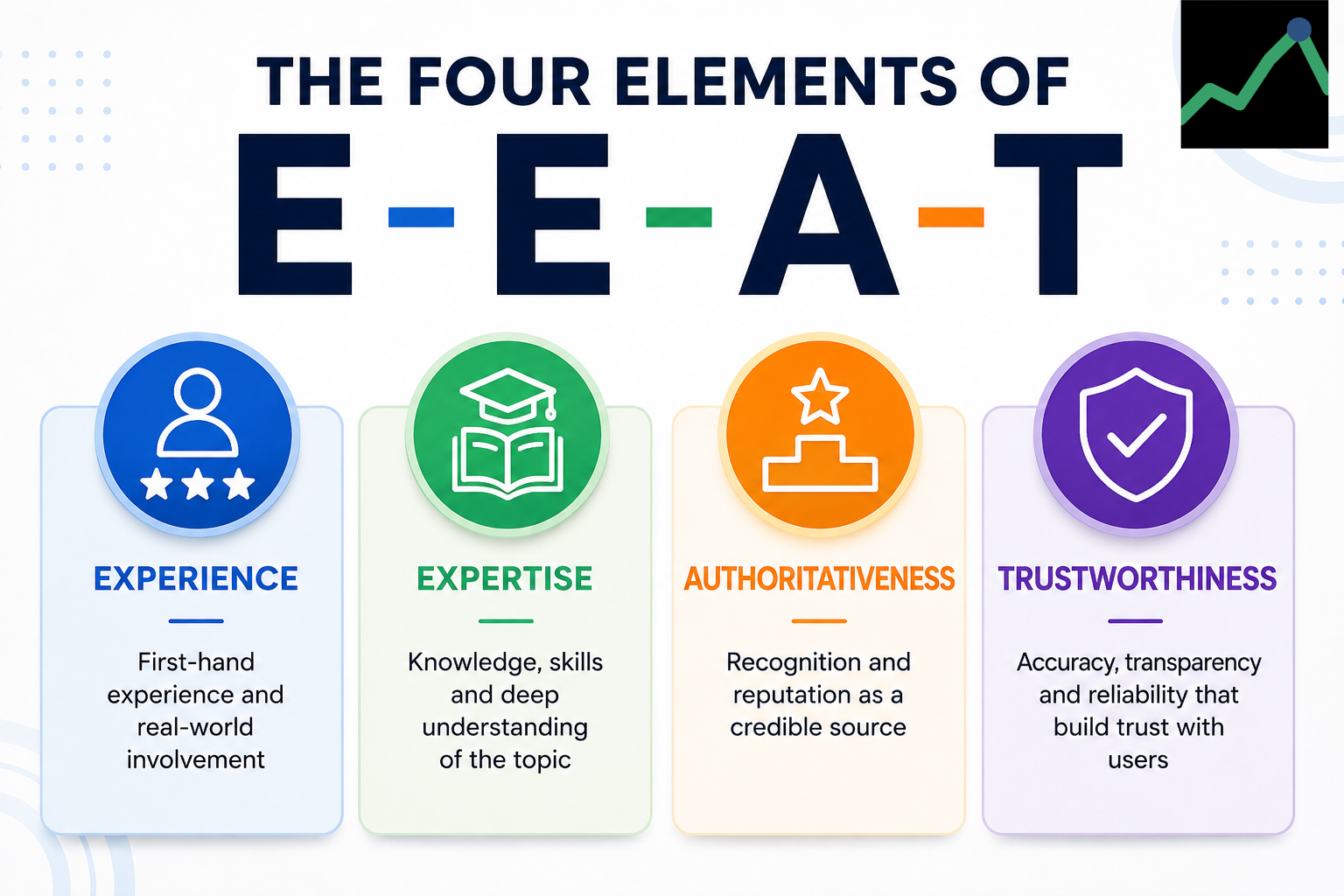
E-E-A-T is made up of four connected elements: Experience, Expertise, Authoritativeness, and Trustworthiness. Each one answers a different question about the quality of content and the source behind it. Google explains that its systems look at a mix of signals that can help identify content demonstrating these qualities, while also emphasizing that E-E-A-T itself is not a single ranking factor.
The four elements are closely related, but they are not interchangeable. A person can have extensive first-hand experience with a subject without being a formal expert. Likewise, a website can have strong authority but still lose trust if its content contains inaccurate claims or hides important information.
Experience
Experience refers to first-hand involvement with the topic. It shows that the creator has actually done, used, tested, visited, or experienced what they are discussing.
For example, an SEO professional explaining a keyword research process can demonstrate experience by showing the workflow they actually use, screenshots from real research, practical problems they encountered, and how they solved them.
Google specifically highlights first-hand experience such as actually using a product or visiting a place as an example of the type of experience that can make content more useful.
Expertise
Expertise refers to the knowledge and skill needed to explain a subject accurately and meaningfully.
The level of expertise required depends on the topic. A technical SEO article may benefit from someone with extensive SEO experience, while medical or financial content may require appropriately qualified professionals.
Expertise can be demonstrated through:
- Relevant qualifications
- Professional experience
- Accurate explanations
- Original research
- Detailed analysis
- Practical case studies
- Reliable sources
The goal is not simply to call someone an “expert.” The content itself should give readers a reason to believe that the creator understands the subject.
Authoritativeness
Authoritativeness is about recognition. It asks whether the author, website, or organization is considered a credible source within its particular field.
Authority can develop through:
- Relevant industry mentions
- Quality backlinks
- Citations
- Original research
- Expert contributions
- Strong reputation
- Consistent coverage of a subject
For example, an SEO website that repeatedly publishes useful research, practical SEO guides, original data, and expert analysis can gradually establish stronger authority within the SEO industry.
Trustworthiness
Trustworthiness is the foundation that connects the other three elements.
Google identifies trust as the most important aspect of E-E-A-T, while experience, expertise, and authoritativeness can contribute to establishing that trust.
Trust can be strengthened when a website provides:
- Clear authorship
- Accurate information
- Reliable sources
- Transparent business information
- Easy-to-find contact details
- Evidence supporting important claims
- Honest product or service information
- Clear information about how content was created
For example, if an article makes a specific claim about SEO performance, simply stating the claim is less convincing than explaining the methodology, showing relevant evidence, and clearly identifying who created the analysis.
How the Four Elements Work Together
The strongest content often combines all four.
Imagine a website publishing an SEO case study. The author has Experience because they actually carried out the SEO work. They demonstrate Expertise by explaining the strategy and reasoning behind their decisions. The website develops Authoritativeness as other relevant sources reference its research. Finally, transparent methodology, accurate data, and honest reporting help establish Trustworthiness.
This is the real value of E-E-A-T: it is not about adding four labels to a page. It is about demonstrating why the information deserves to be trusted.
Google’s people-first guidance similarly encourages creators to provide original information, research, analysis, first-hand expertise, and clear information about who created the content.
Why Is Trust the Most Important Part of E-E-A-T?
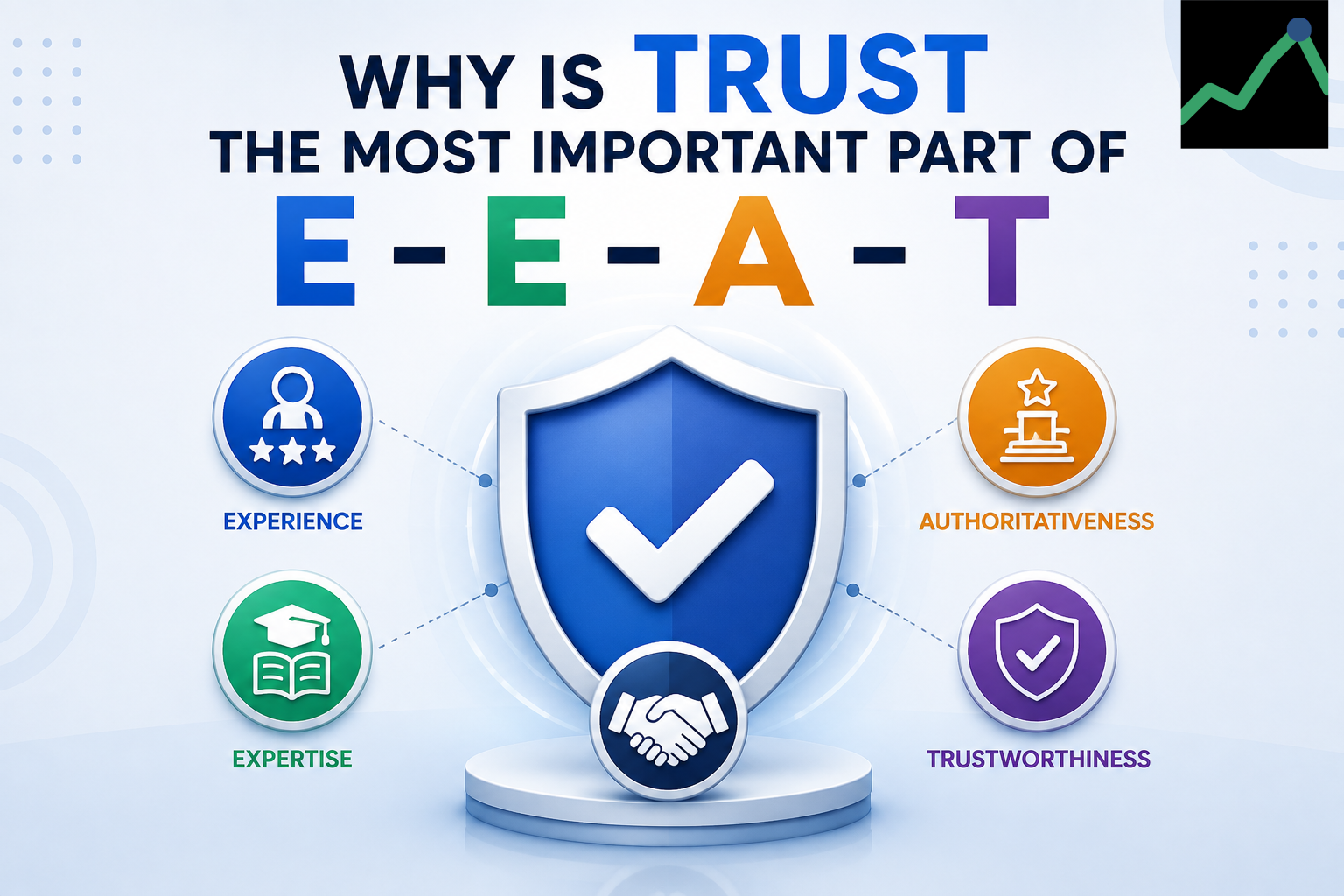
Trust is the foundation of E-E-A-T because users need to feel confident that the information they are reading is accurate, transparent, and reliable. Google explicitly states that among Experience, Expertise, Authoritativeness, and Trustworthiness, trust is the most important aspect, while the other three can contribute to establishing it.
Think about a practical example. A website may have an experienced writer, strong expertise, and many backlinks, but if the page contains outdated information, unsupported claims, misleading statements, or unclear authorship, users still have a reason to question it. On the other hand, a page that clearly identifies its author, explains how information was gathered, provides evidence, and openly acknowledges limitations gives visitors stronger reasons to believe what they are reading.
Trust Connects Experience, Expertise, and Authority
The other three elements become more valuable when they help establish trust.
- Experience shows that the creator has actually dealt with the subject.
- Expertise shows that the creator understands the subject.
- Authoritativeness shows that the creator or website has earned recognition in that field.
- Trustworthiness shows that the information can be relied upon.
For example, an SEO professional may publish a case study based on work they actually performed. Their first-hand experience makes the case study more useful. Their SEO knowledge helps them explain why particular decisions were made. If other relevant websites reference their research, that can strengthen their authority. But transparent methodology, accurate reporting, and evidence behind the results are what help readers trust the case study.
This is why E-E-A-T should not be approached as four separate boxes to check. They work together to answer a much more important question:
“Why should I trust this information?”
Transparency Makes Content More Trustworthy
One of the simplest ways to strengthen trust is to make the content creation process clear.
Google recommends thinking about the “Who, How, and Why” of content. This includes making it clear who created the content, providing appropriate authorship information, and, where useful, explaining how the content was produced.
For example, an article can become more credible when it includes:
- A genuine author name and relevant background
- Original screenshots or photographs
- Information about testing or research methods
- Links to primary sources
- Real examples and observations
- Clear explanations of how conclusions were reached
- Updates when important information changes
Google’s own review guidance similarly recommends providing evidence of first-hand experience, such as visuals, measurements, testing details, and original research where appropriate.
Trust Is Especially Important for Sensitive Topics
The importance of trust becomes even greater when incorrect information could affect someone’s health, finances, safety, or well-being. Google refers to these as YMYL topics and says its systems give greater weight to strong E-E-A-T for such subjects.
For example, readers are likely to expect a higher level of credibility from a page discussing medical treatment or financial decisions than from a casual article about a hobby.
The standard should therefore match the potential impact of the information.
Trust Is About More Than Rankings
It’s important not to misunderstand this concept as simply another trick for improving rankings. Google says E-E-A-T itself is not a specific ranking factor. Instead, its systems use various signals that can help identify content demonstrating strong E-E-A-T.
From a user-experience perspective, this makes sense. If visitors can quickly understand who created the content, where the information came from, what evidence supports it, and why the source is qualified to discuss the topic, they have less reason to question the page.
So the practical goal is not to “add trust signals for Google.”
The goal is to build enough real evidence and transparency that users naturally trust the content.
That user-first approach also aligns with Google’s broader guidance to create original, helpful, people-first content rather than content produced primarily to attract search-engine traffic.
What Are the Most Important E-E-A-T Trust Signals?
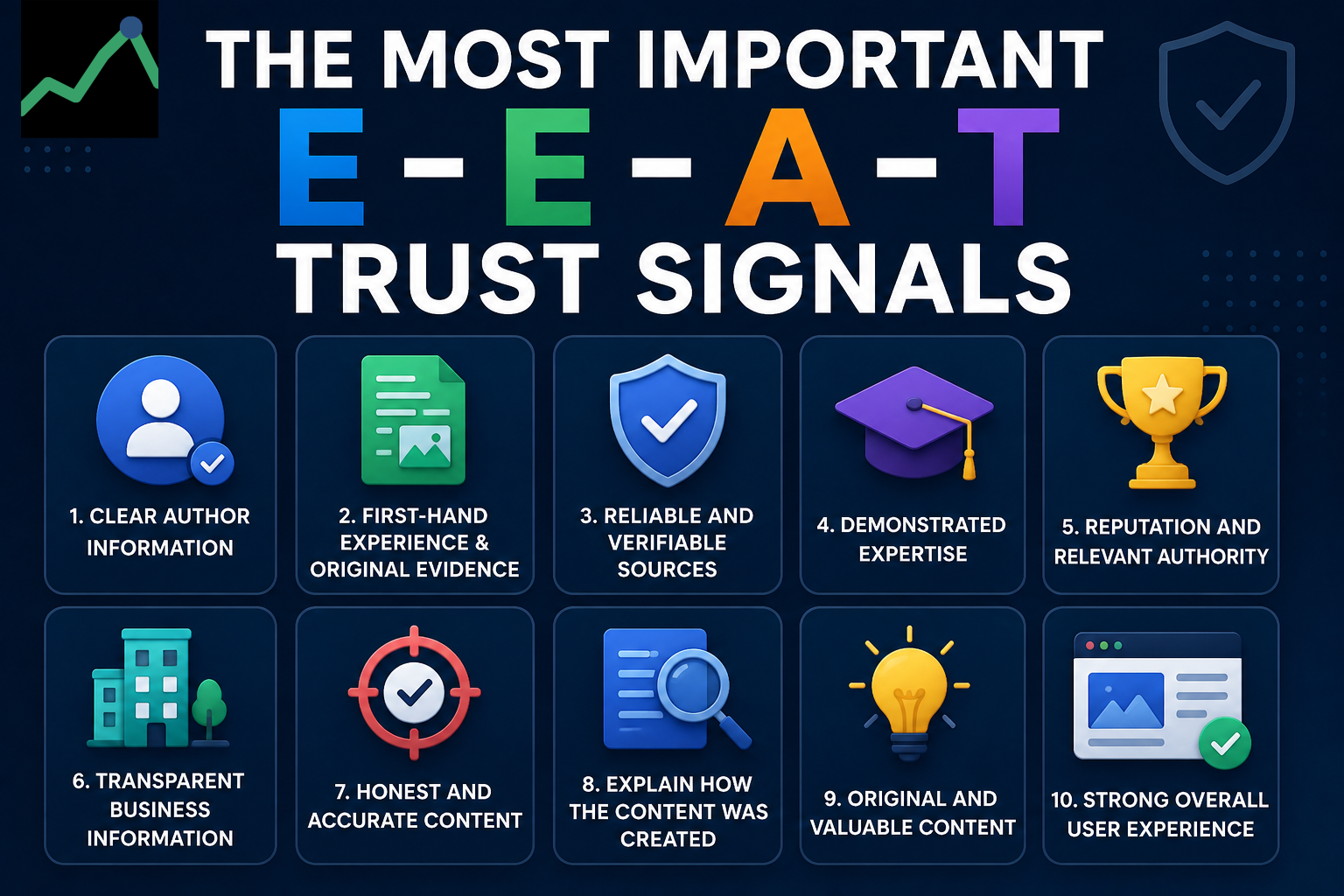
Trust signals are the visible and verifiable elements that help users understand who created the content, how it was produced, where the information came from, and why the source should be trusted. Google recommends thinking about content through the “Who, How, and Why” framework, which closely aligns with demonstrating E-E-A-T.
The strongest trust signals are not decorative badges or generic statements such as “We are experts.” They are evidence. A reader should be able to look at your website and find genuine reasons to believe the information you provide.
Clear and Genuine Author Information
A clear author byline is one of the simplest ways to improve transparency.
Where readers would reasonably want to know who wrote an article, provide:
- Real author name
- Relevant professional background
- Experience in the subject
- Author profile
- Links to relevant credentials or work
Google specifically recommends accurate authorship information and bylines where appropriate.
For example, an SEO article written by someone who has actually worked on SEO campaigns becomes more credible when the author profile explains that experience rather than simply displaying a generic “Admin” byline.
First-Hand Experience and Original Evidence
This is especially important for demonstrating the first E — Experience.
Instead of simply repeating information available elsewhere, show what you actually did.
Depending on the topic, this could include:
- Screenshots
- Product testing
- Original photographs
- Test results
- Case studies
- Real workflows
- Data collected from your own research
- Practical observations
Google’s product-review guidance specifically recommends demonstrating first-hand experience through evidence such as testing details, results, and photographs.
For an SEO software website, for example, saying “rank tracking helps monitor keyword positions” is generic. Showing an actual workflow, explaining what was monitored, discussing the results, and sharing practical observations provides substantially more value.
Reliable and Verifiable Sources
Trust increases when readers can verify important claims themselves.
When appropriate, cite:
- Original research
- Government sources
- Academic publications
- Official documentation
- Industry organizations
- Primary data
Google also notes that linking to external sites can help establish trustworthiness when the links are used to cite sources and provide useful context.
The important point is quality over quantity. Ten weak sources do not automatically make an article more trustworthy than two highly relevant primary sources.
Expertise That Is Demonstrated, Not Just Claimed
Simply writing “Our team consists of SEO experts” is not strong evidence of expertise.
Demonstrate expertise through the actual content:
- Detailed explanations
- Accurate terminology
- Original analysis
- Practical examples
- Case studies
- Relevant credentials
- Expert reviews
- Well-supported conclusions
Google’s self-assessment guidance specifically asks whether content provides background about the author or site and whether it is written or reviewed by someone who demonstrably knows the topic well.
Reputation and Relevant Authority
Authority is built through recognition from others.
Useful signals can include:
- Relevant backlinks
- Industry citations
- Expert contributions
- Independent mentions
- Original research being referenced
- Positive reputation within the relevant community
But authority should be relevant.
For example, 50 unrelated websites mentioning an SEO company do not necessarily demonstrate stronger topical authority than a few respected SEO or technology publications referencing its original research.
Transparent Business Information
For commercial websites, users should be able to understand who is behind the website.
Depending on the business, useful trust elements can include:
- About page
- Contact information
- Company information
- Customer support details
- Editorial policies
- Privacy policy
- Terms and conditions
These elements don’t magically create E-E-A-T, but they reduce uncertainty and make the organization behind the content easier to understand.
Honest and Accurate Content
Accuracy is one of the most fundamental trust signals.
Avoid:
- Unsupported statistics
- Misleading claims
- Fake testimonials
- Exaggerated promises
- Outdated recommendations
- Misrepresented research
Google’s guidance encourages creators to evaluate whether content contains easily verifiable factual errors and whether it provides substantial value beyond what is already available elsewhere.
If reliable data isn’t available, it’s better to clearly state the limitation and provide relevant practical experience than to invent a statistic simply to make the article appear authoritative.
Explain How the Content Was Created
This is an increasingly useful trust signal, particularly when content involves testing, research, automation, or AI.
Google recommends thinking about the “How” of content creation. For example, if a product was tested, readers may benefit from knowing what was tested, how it was tested, and what evidence supports the conclusions.
For AI-assisted content, Google does not say that using AI automatically makes content untrustworthy. Its focus remains on whether the final content is useful, original, high-quality, and created for people.
Content That Provides Something Original
A page that simply rewrites the top-ranking results gives users little reason to choose it over the original sources.
Stronger content can add:
- Original research
- Unique examples
- New data
- First-hand observations
- Expert commentary
- Better explanations
- Real case studies
- Practical frameworks
Google specifically asks creators to consider whether their content provides insightful analysis or information beyond the obvious and whether it adds substantial value instead of simply copying or rewriting other sources.
A Strong Overall User Experience
Trust is also affected by how easily people can use and evaluate your content.
A page can contain excellent information but still create a poor impression if it is:
- Difficult to navigate
- Overloaded with intrusive elements
- Hard to read
- Poorly structured
- Difficult to use on mobile
- Slow or confusing
Google’s guidance for AI Search also emphasizes providing a good page experience alongside unique, satisfying content.
The key is to remember that trust signals work together. A professional author profile alone won’t establish trust. Neither will backlinks, an About page, or citations by themselves.
The strongest signal is the combination of real experience, demonstrated expertise, relevant authority, transparent sourcing, accurate information, and a good user experience.
How Does First-Hand Experience Strengthen Content?
First-hand experience makes content more useful because it shows that the information comes from actual involvement with the subject, rather than simply repeating what other websites have already published. This is the first “E” in E-E-A-T and an important way to make content more authentic and valuable.
For example, a generic article about an SEO tool might explain what the tool does. But content becomes much stronger when the writer has actually used the tool and can explain how it works in practice, what the workflow looks like, what results were observed, and where the tool may have limitations.
What First-Hand Experience Looks Like
Depending on the topic, first-hand experience can be demonstrated through:
- Original screenshots
- Product testing
- Real examples
- Case studies
- Before-and-after results
- Personal observations
- Testing methodology
- Original photographs or videos
- Data collected through actual use
- Practical problems and solutions
For example, if you’re writing about keyword research, don’t only explain what keyword research is. Show how you approached a real keyword research task, what you discovered, which keywords were useful, and how the findings influenced the content strategy.
Experience Adds Information That Other Sources May Not Have
One of the biggest advantages of first-hand experience is that it can produce original insights.
Two articles may explain the same SEO process, but an experienced practitioner can add details such as:
“During testing, we found that…”
or:
“This approach worked well for X, but created problems when…”
These observations are difficult to produce through simple content rewriting because they come from actually doing the work.
This is particularly valuable for product reviews, tutorials, case studies, travel content, software guides, and other subjects where practical experience can significantly improve the reader’s understanding.
Don’t Confuse Experience With Expertise
Experience and expertise are related, but they are not the same.
Someone may have extensive first-hand experience using a product without being a recognized industry expert. Likewise, an expert may understand a subject deeply without personally experiencing every situation they discuss.
The best content often combines both.
For example, an SEO professional who has actually implemented a technical SEO strategy can provide:
- Experience: They performed the work.
- Expertise: They understand why the strategy works.
- Evidence: They can show what happened.
- Trust: Readers can evaluate the methodology and results.
Google’s guidance specifically encourages creators to demonstrate first-hand experience where appropriate and to provide original information rather than simply summarizing what already exists.
What If You Don’t Have Direct Data?
You should never invent statistics, test results, or case studies simply to make content appear more authoritative.
If original data isn’t available, you can still provide value through genuine practical experience, clearly explain the limitations, and use reliable external sources for claims that require supporting evidence.
For example:
- Use official documentation for technical specifications.
- Use original research for statistics.
- Use your own testing when you have actually tested something.
- Clearly label personal observations as observations.
- Explain when evidence is limited.
This approach is more trustworthy than presenting an unsupported number as fact.
Why First-Hand Experience Matters for Modern SEO
Search results contain enormous amounts of content that repeats the same basic information. Simply rewriting existing articles doesn’t necessarily give users a reason to choose your page.
First-hand experience gives content something original to contribute.
Instead of asking:
“How can I rewrite what other websites have said?”
Ask:
“What can I show, test, explain, or share that comes from actually doing this?”
That shift helps create content that is more useful to readers and better aligned with the people-first approach to content quality.
How Do Authors and Experts Build Content Credibility?
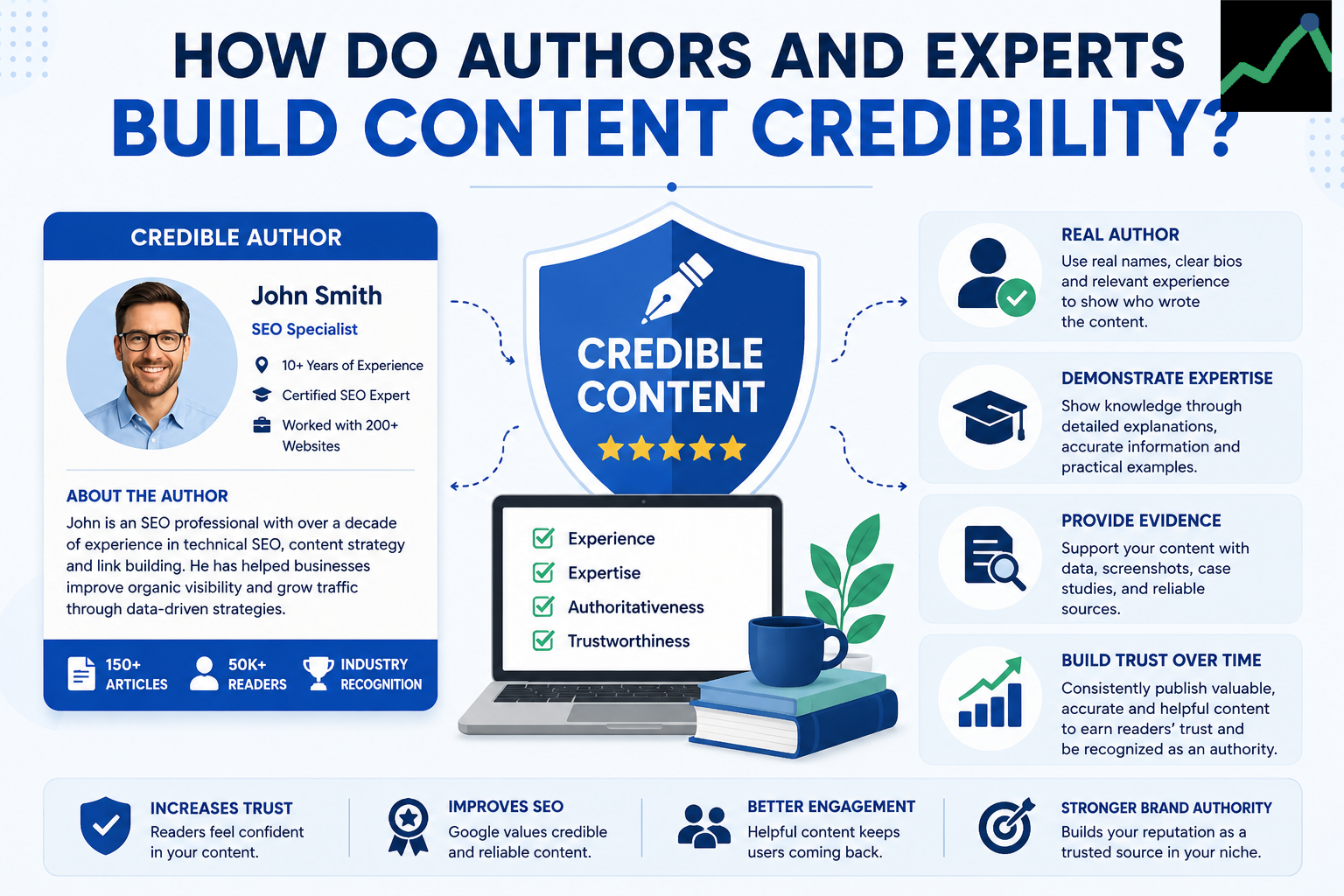
The credibility of content starts with who is behind it. Readers are more likely to trust an article when they can understand who created it, what experience or knowledge that person has, and why they are qualified to discuss the subject. Google recommends making authorship clear through accurate bylines and providing additional information about the author when readers would reasonably expect it.
But simply adding an author’s name is not enough. Credibility should be demonstrated through the content itself.
Start With a Real Author
A page should make it clear who wrote the content when authorship is relevant to the topic.
A useful author profile can include:
- Full name
- Professional role
- Relevant experience
- Qualifications or certifications when applicable
- Areas of specialization
- Links to previous work
- Author profile page
For example, an article about technical SEO becomes more credible when the author profile explains their actual SEO experience rather than simply displaying a generic “Admin” label.
Google specifically recommends using accurate authorship information and bylines where readers would expect them.
Show Expertise Through the Content
An author doesn’t become credible simply by calling themselves an expert.
The content should demonstrate the expertise.
This can happen through:
- Detailed explanations
- Accurate technical information
- Original analysis
- Practical examples
- Relevant case studies
- Data interpretation
- First-hand observations
- Properly cited sources
Google’s guidance asks whether content is written or reviewed by an expert or enthusiast who demonstrably knows the topic well.
This distinction is important. A bio might claim that someone has ten years of SEO experience, but readers should be able to see that knowledge reflected in the quality and depth of the article.
Use Experience as Evidence
Experience can make expertise easier to understand.
Suppose an SEO professional writes about technical SEO. Instead of only explaining what a technical SEO issue is, they could describe:
- How they identified the issue
- What tools they used
- What they found
- What changes they made
- What happened afterward
- What they would do differently next time
That gives readers something they cannot get from a generic definition.
Google’s guidance encourages content creators to demonstrate first-hand expertise and original information rather than simply summarizing what other websites have already published.
Support Expertise With Evidence
Strong expertise is easier to trust when readers can verify it.
Depending on the subject, evidence can include:
- Original research
- Screenshots
- Test results
- Data
- Case studies
- References to primary sources
- Original photographs
- Methodology
- Examples from real projects
For product reviews, Google specifically recommends providing evidence of personal experience, such as visuals, testing information, and quantitative measurements where appropriate.
The same principle can be applied beyond product reviews: show the work behind your conclusions whenever practical.
Keep Author Credentials Relevant
More credentials do not automatically mean more credibility.
The important question is:
Does the author’s background match the subject they’re discussing?
For example, a qualified financial professional may be an appropriate source for an investment article, while a software developer may be better suited to explain a programming topic.
The relevance of expertise matters more than simply filling an author bio with impressive-sounding qualifications.
Make AI-Assisted Content Transparent When Appropriate
AI can help with research, organization, and drafting, but it should not replace genuine expertise or original value. Google says it focuses on the quality of the final content rather than whether AI was used to produce it. However, using automation to mass-produce pages without adding value can create problems, and Google recommends providing context about how content was created when readers would reasonably want to know.
For an E-E-A-T-focused article, the strongest approach is therefore:
AI can assist the process, but human experience, verification, analysis, and originality should add the real value.
Build Credibility Over Time
Content credibility is not created by one article or one author bio.
It develops through a consistent pattern of:
Relevant expertise → useful content → original insights → accurate information → positive reputation.
When authors consistently publish content that demonstrates genuine knowledge and experience, and other people begin referencing or recognizing that work, the overall credibility of the author and website can become stronger.
Google also encourages creators to consider whether their website would be perceived as a trusted or recognized authority on its topic and whether the content provides original information, research, or analysis.
How Do Backlinks and Brand Mentions Support Authority?
Backlinks and brand mentions can help strengthen a website’s authority because they show that other people, websites, or organizations are recognizing, referencing, or discussing your content. However, authority should not be reduced to simply counting backlinks. The relevance, context, and credibility of those references matter.
Google explains that links help its systems discover pages and understand the relationship between pages. It also recommends linking to relevant resources and using descriptive anchor text so that both users and Google can understand what a linked page is about.
Relevant Backlinks Matter More Than Random Links
Not every backlink provides the same value from a credibility perspective.
Imagine an SEO website receives two links:
- One from a respected SEO publication discussing its original research
- One from an unrelated website that has no connection to SEO
The first mention provides much stronger contextual relevance. It tells readers that someone within the same field found the research useful enough to reference.
This is why a good link-building strategy should focus less on:
“How many backlinks can we get?”
and more on:
“Which relevant websites would genuinely benefit from referencing our work?”
Earn Links Through Something Worth Referencing
The strongest approach to link acquisition is to create something that other websites want to cite naturally.
This can include:
- Original research
- Industry data
- Surveys
- Case studies
- Unique tools
- Detailed guides
- Expert analysis
- Original statistics
- Useful frameworks
- Proprietary findings
For example, instead of publishing another generic article about SEO trends, an SEO platform could analyze its own dataset, identify a meaningful trend, explain the methodology, and publish the findings.
If other marketers or publications use those findings in their own articles, the resulting references can help establish recognition around the brand and its research.
Brand Mentions Build Recognition
Authority isn’t limited to clickable links.
A brand can also be mentioned in:
- Industry articles
- News publications
- Podcasts
- Expert interviews
- Research papers
- Community discussions
- Social platforms
- Professional publications
A mention can introduce people to your brand even when it doesn’t contain a traditional backlink.
This is especially valuable when the mention occurs in a relevant context. For example, an SEO company being discussed in an article about keyword research is much more meaningful for topical recognition than the same company being mentioned in an unrelated article.
Don’t Chase Links at the Expense of Trust
Aggressive link building can work against the goal of building genuine authority if it produces irrelevant, manipulative, or low-quality references. Google’s Search Essentials emphasize creating helpful, reliable, people-first content and avoiding tactics designed primarily to manipulate search rankings. A website with thousands of artificial or irrelevant links does not automatically become an authority.
Instead, focus on creating content that is useful enough to earn recognition.
Internal Links Also Matter
Authority isn’t only about links coming to your website. Your internal linking structure also helps users and search engines understand how your content is connected. Google recommends linking important pages from other relevant pages and using concise, descriptive anchor text.
For example, an SEO website could connect:
Keyword Research → Competitor Analysis → Content Optimization → Rank Tracking → SEO Reporting
This creates a logical content ecosystem where users can move naturally from one related topic to another.
Use External Sources to Strengthen Trust
External links can also work in the opposite direction. When you reference reliable sources, you give readers a way to verify important information. Google explicitly notes that linking to external sites can help establish trustworthiness when you’re using those links to cite sources.
For example, if an article makes a claim about Google’s search documentation, linking directly to the relevant Google documentation is more useful than simply writing “Google says…”
This creates a transparent information trail:
Claim → Source → Evidence → Reader verification
Build Authority Through Recognition, Not Numbers
The most important lesson is that authority is earned through relevance and recognition, not simply through backlink volume.
A strong authority-building strategy combines:
Original content + real expertise + useful research + relevant mentions + quality backlinks + consistent topical coverage
Over time, this creates a stronger reputation around the website. So rather than treating backlinks as a standalone SEO metric, think of them as one part of a bigger question:
“Are other credible people and organizations recognizing our website as a useful source?”
That approach is much closer to building genuine authority than simply trying to increase a backlink counter.
How Can You Build Trust on Your Website?

Building trust on a website is not about adding a few badges, testimonials, or trust icons and assuming visitors will believe everything you publish. Real trust comes from transparency, accuracy, evidence, and a consistently good user experience.
A visitor should be able to quickly understand who operates the website, who created the content, where important information came from, and whether the claims can be verified. Google’s people-first content guidance encourages creators to make clear who created content and to provide original, useful information rather than content produced primarily to manipulate search rankings.
Make Your Website Transparent
Start by making basic business and organizational information easy to find.
Depending on the website, this can include:
- A detailed About page
- Clear Contact information
- Real author profiles
- Company information
- Customer support details
- Privacy policy
- Terms and conditions
- Editorial or content policies where appropriate
For a commercial website, transparency reduces uncertainty. Users should not have to guess who is behind the website or whether the business is legitimate.
Show Who Creates Your Content
Anonymous content can make it harder for users to evaluate credibility, particularly when the subject requires specialized knowledge.
Use clear bylines and relevant author information where appropriate. An author page can explain:
- Who the writer is
- Their professional background
- Relevant experience
- Areas of expertise
- Previous work
However, don’t add impressive-looking credentials that cannot be verified. Trust increases when author information is genuine and relevant to the subject.
Support Important Claims With Evidence
If you make an important factual claim, give readers a way to verify it.
For example, instead of writing:
“This SEO strategy increases organic traffic.”
Explain the evidence behind the statement. You might provide a case study, testing methodology, original data, or link to a reliable source.
Google’s guidance encourages creators to provide original research, analysis, and substantial value rather than simply rewriting information already available elsewhere.
Use First-Hand Experience
Trust becomes stronger when readers can see evidence that you actually understand or have tested what you’re discussing.
Depending on the topic, include:
- Original screenshots
- Testing results
- Case studies
- Real examples
- Photographs
- Data
- Practical observations
- Step-by-step workflows
For example, an SEO software company discussing rank tracking can demonstrate credibility by showing an actual workflow, explaining how rankings were monitored, and sharing relevant observations rather than providing only a generic definition.
Keep Information Accurate and Updated
Outdated information can quickly damage credibility, especially in industries where information changes frequently.
Review important pages when there are changes to:
- Products
- Pricing
- Software features
- SEO practices
- Regulations
- Research
- Statistics
- Technical documentation
But updating an article should mean improving its usefulness, not simply changing the date. Verify the information, replace outdated claims, add genuinely useful material, and remove information that is no longer accurate.
Avoid Exaggerated Claims
Trust can disappear faster than it is built.
Avoid unsupported statements such as:
- “Guaranteed #1 Google ranking”
- “Instant traffic growth”
- “100% guaranteed results”
- “The world’s best SEO tool”
unless the claim can genuinely be substantiated. Clear and realistic statements are more credible than promises designed only to persuade visitors.
Give Users a Good Experience
Trust is also influenced by how easily people can interact with your website.
Make sure visitors can:
- Navigate the site easily
- Find important information
- Read content comfortably
- Use the website on mobile devices
- Identify important links and buttons
- Access contact information
- Understand who is responsible for the content
A technically impressive website cannot compensate for content that feels misleading, confusing, or difficult to verify.
Build Trust Consistently
Trust is not something you establish on one page.
It develops through repeated positive experiences:
Accurate information → transparent authorship → useful content → supporting evidence → good user experience → stronger reputation
Over time, these elements create a website that users have more reason to rely on.
How Does E-E-A-T Apply to YMYL Content?
E-E-A-T becomes especially important when content can have a meaningful impact on a person’s health, financial stability, safety, or overall well-being. Google refers to these subjects as YMYL, or “Your Money or Your Life,” topics, and says its systems give more weight to strong E-E-A-T for these areas.
The reason is straightforward: the potential consequences of inaccurate information are much higher.
For example, a mistake in an article about a hobby may be inconvenient, but incorrect information about medical treatment, an investment decision, or personal safety could have serious consequences. Because of this, content in these areas needs a stronger foundation of evidence, relevant expertise, accuracy, and trust.
What Topics Are Considered YMYL?
YMYL is not limited to one specific industry. It can include subjects related to:
- Health and medical information
- Personal finance and investments
- Insurance
- Legal information
- Safety
- Major life decisions
- Government and civic information
- Other subjects that can significantly affect people’s well-being
The important factor is not simply the category of the website. It is the potential impact the information can have on people.
Why Expertise Matters More in YMYL Content
For sensitive subjects, readers need more than a confident explanation. They need to know that the information comes from someone who actually understands the subject.
For example, an article explaining a medical condition should ideally involve appropriately qualified medical expertise. Similarly, detailed investment information benefits from knowledgeable financial professionals and reliable financial sources.
This doesn’t mean every piece of content must come from a formal credentialed expert. The appropriate level of expertise depends on the topic and the purpose of the content. But the more significant the potential consequences of incorrect information, the more important demonstrable knowledge and reliable evidence become. Google’s guidance specifically asks creators to consider whether content is written or reviewed by someone who demonstrably knows the topic well and whether the information contains easily verifiable factual errors.
Evidence Is Critical
YMYL content should avoid unsupported claims wherever possible. Instead of simply saying something is effective, safe, profitable, or recommended, explain why.
Depending on the topic, useful evidence may include:
- Primary research
- Government information
- Academic studies
- Official documentation
- Professional guidance
- Expert review
- Relevant statistics
- Clearly explained methodology
For example, a financial article discussing an economic statistic should ideally point readers toward the original or authoritative source rather than repeating a number from another blog.
Experience Still Has a Role
Expertise does not make first-hand experience irrelevant. In some situations, personal experience can provide valuable context. Google itself gives the example that someone looking for information about filing taxes may want expert guidance, while someone researching a tax-preparation product may also find first-hand experiences from people who have actually used the software useful.
The key is to understand what type of information the user needs.
Personal experience can describe what happened to one person, but it should not automatically be presented as universal professional advice.
Be Especially Careful With AI-Generated YMYL Content
AI can be useful for research, organization, and drafting, but YMYL content requires careful human verification. Google says its systems aim to surface high-quality information from reliable sources regardless of whether content was produced by humans or AI. However, for topics where information quality is particularly important—such as health, civic, and financial information—Google says its systems place greater emphasis on reliability signals.
That means AI-assisted content should be:
Fact-checked → reviewed → supported by reliable sources → improved with relevant expertise → written for the user
The goal should never be to use AI to produce large volumes of sensitive content without proper verification.
Trust Should Be Visible
For YMYL pages, visitors should have clear answers to questions such as:
- Who created this content?
- What experience or expertise do they have?
- Where did the information come from?
- Is the information supported by reliable evidence?
- When was it last reviewed or updated?
- Is the website transparent about who operates it?
These questions align closely with Google’s broader “Who, How, and Why” approach to evaluating helpful content.
The Practical Takeaway
For YMYL content, don’t try to look authoritative. Build content that can withstand scrutiny. Use qualified expertise where appropriate, cite reliable evidence, demonstrate relevant experience, clearly identify authors, verify important claims, and keep sensitive information up to date.
The higher the potential impact of the information, the higher the standard for trust should be.
How Does E-E-A-T Affect AI Search and GEO?
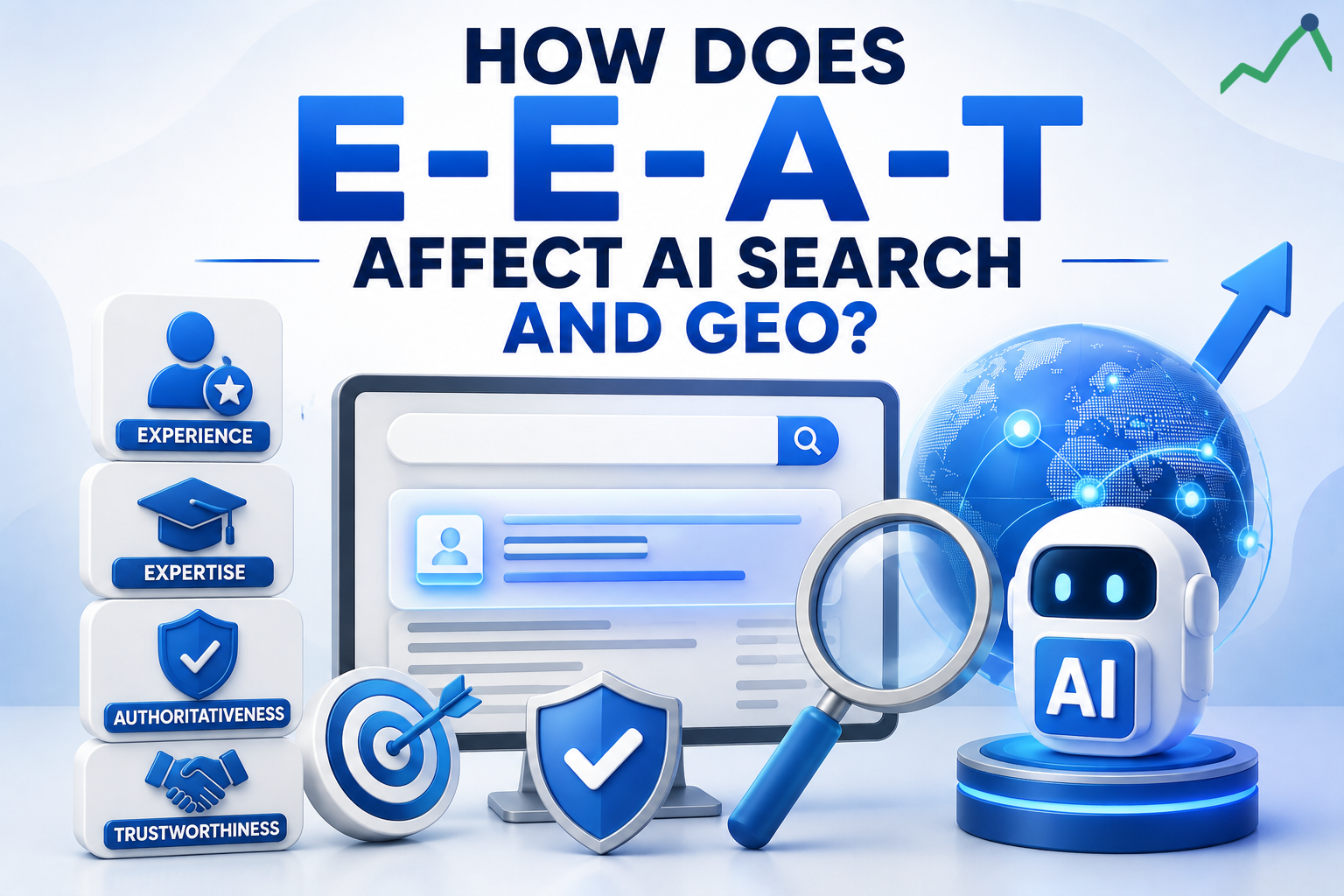
As search evolves from traditional blue links toward AI-generated answers, E-E-A-T becomes even more relevant to the way content establishes credibility. Google’s AI experiences, including AI Overviews and AI Mode, are designed to help users explore more complex questions and connect them with useful sources. Google says the same core principles that apply to traditional Search also apply to its AI search experiences: create unique, satisfying, people-first content that provides real value.
This is important for GEO (Generative Engine Optimization) because AI systems need useful information to build answers from. Content that simply repeats information found across hundreds of websites offers little unique value. Content backed by first-hand experience, original research, reliable sources, expert analysis, and clear evidence gives AI-powered search systems more meaningful information to work with.
E-E-A-T Gives AI Search More Context
Consider two articles covering the same SEO topic. The first provides a generic definition and repeats commonly available information.
The second includes:
- Original research
- First-hand testing
- Expert analysis
- Specific examples
- Supporting data
- Clear authorship
- Reliable references
- Practical observations
The second article gives readers—and potentially search systems—much more context about why the information should be considered credible.
This is particularly relevant as AI search increasingly handles longer and more specific questions. Google says users in its AI search experiences are asking more complex questions and follow-up questions, making unique and valuable content increasingly important.
Original Information Becomes More Valuable
AI can summarize information that already exists, so simply rewriting existing articles is a weak long-term content strategy. Instead, websites should aim to contribute something that isn’t easily found elsewhere.
That could be:
- Original data
- Industry research
- First-hand testing
- Unique case studies
- Expert opinions
- Original screenshots
- Proprietary insights
- Practical experiments
- Detailed analysis
For example, an SEO platform could publish original findings from analyzing thousands of keywords or websites. That information can provide something substantially different from another generic article explaining what keyword research means.
Google’s current guidance for AI search specifically recommends focusing on unique, non-commodity content that satisfies users rather than creating content simply because it might attract search traffic.
Trust Still Matters When AI Is Involved
AI-generated answers can make it harder for users to see where information originally came from. This makes trustworthy sources and clear evidence increasingly valuable.
A strong content page should make it possible to understand:
- Who created it?
- How was the information produced?
- What evidence supports it?
- Why was the content created?
Google’s people-first guidance uses this exact “Who, How, and Why” framework when discussing content quality and E-E-A-T.
AI-Assisted Content Needs Real Value
Using AI to help create content does not automatically make the content low quality. Google’s guidance says its focus is on the quality of the content rather than simply how it was produced. AI can be useful for research, organization, and adding structure to original content. However, generating large numbers of pages with little original value can violate Google’s spam policies.
A better workflow is:
AI assistance → Human expertise → First-hand experience → Fact-checking → Original insights → Final useful content
The AI can help with the process, but the human experience, verification, and unique value should make the final content worth reading.
GEO Is Not About Finding a Secret AI Ranking Trick
There is no single “E-E-A-T score” or secret GEO switch that guarantees that an AI system will mention your website.
Instead, the fundamentals remain familiar:
Create useful content → demonstrate expertise → provide original value → support claims → build authority → make information trustworthy.
Google’s May 2026 documentation updates also emphasize that traditional SEO best practices remain relevant for generative AI search features.
The Practical Takeaway for GEO
If you want your content to have a better chance of being useful in AI-powered search experiences, don’t write only for keywords or try to predict exactly what an AI system wants to see. Build content that contains information worth citing. That means adding things other sources don’t have: real experience, original data, expert interpretation, useful examples, clear evidence, and trustworthy sourcing.
What Are the Common E-E-A-T Mistakes to Avoid?
Building E-E-A-T is not about adding a few author bios, backlinks, or trust badges to a website. The bigger challenge is avoiding practices that make content look credible without actually providing evidence, experience, or value.
Google’s current guidance focuses on helpful, reliable, people-first content and warns against creating content primarily to manipulate Search. Its spam policies also apply to Google’s generative AI search experiences.
Creating Content Without First-Hand Experience
One common mistake is writing about a product, tool, service, or process without actually experiencing it.
For example, a software article that simply repeats the manufacturer’s feature list may contain technically correct information, but it doesn’t demonstrate much first-hand experience.
Where experience is relevant, add:
- Actual testing
- Screenshots
- Practical workflows
- Original observations
- Case studies
- Real examples
- Test results
If you haven’t personally tested something, don’t pretend that you have.
Claiming Expertise Without Demonstrating It
Calling someone an “industry expert” doesn’t automatically establish expertise. Readers should be able to see that expertise through the depth, accuracy, reasoning, and usefulness of the content. A strong author profile can help, but the article itself should support the claim through meaningful analysis and relevant knowledge.
Publishing Generic Content That Already Exists Everywhere
Another major mistake is simply rewriting the same information already available in the top search results. Google’s guidance encourages creators to ask whether their content provides original information, research, analysis, or substantial additional value.
If ten websites already explain the same basic concept, your article should contribute something more:
Original data + practical experience + unique examples + better analysis
rather than another slightly different version of the same explanation.
Using AI to Produce Large Amounts of Low-Value Content
AI itself isn’t the problem. Google states that generative AI can be useful for research and structuring original content. The problem occurs when AI or other automation is used to generate large volumes of pages without adding meaningful value for users, particularly when the purpose is to manipulate Search rankings.
A better approach is:
AI assistance → human expertise → verification → original insight → useful final content
The final article should offer something beyond what an AI system could produce by simply summarizing existing sources.
Using Fake Authors or Credentials
Adding a fictional author, fake qualification, or exaggerated experience can seriously damage credibility.
Author information should be:
- Genuine
- Relevant
- Verifiable where appropriate
- Consistent with the subject
If an article requires specialist expertise, involve someone who genuinely has that expertise rather than creating a fictional profile.
Making Unsupported Claims
Statements such as:
- “This strategy guarantees rankings.”
- “This method always increases traffic.”
- “Our tool is the best.”
- “This technique works for every website.”
can weaken trust when there is no evidence behind them. If you have data, show the methodology and results. If you don’t have sufficient data, say so rather than inventing statistics or presenting assumptions as facts.
Using Backlinks as a Substitute for Authority
Having thousands of backlinks doesn’t automatically make a website authoritative. A stronger approach is to earn recognition through relevant, useful, and original work. Google’s spam policies specifically address manipulative practices intended to influence Search rankings, so building authority should focus on genuine value rather than simply increasing link numbers.
Ignoring the User Experience
Even high-quality information can become difficult to trust when the website is confusing or frustrating to use.
Google’s guidance for AI Search emphasizes providing a good page experience alongside unique and satisfying content.
Watch for:
- Difficult navigation
- Poor mobile experience
- Slow or confusing pages
- Excessive intrusive elements
- Hard-to-read content
- Important information hidden from users
The goal is to make the information easy to find, understand, and evaluate.
Leaving Out Important Sources or Methodology
If your article contains original research, testing, surveys, or data, readers should understand where the information came from.
Explain relevant details such as:
- What was tested
- How it was tested
- What data was used
- How conclusions were reached
- What limitations exist
This makes your claims easier to evaluate and strengthens transparency.
Optimizing for Search Before People
Perhaps the biggest E-E-A-T mistake is creating content with the primary goal of getting search traffic rather than helping the person who visits the page. Google’s guidance is explicit: the primary purpose of content should be to help people, not primarily to attract search-engine visits. Keywords still matter, but they should support the content rather than control it.
The better workflow is:
Understand the user → provide the answer → add experience and evidence → optimize naturally → make the page easy to use.
The Main Lesson
E-E-A-T mistakes usually happen when websites try to signal credibility instead of actually building it.
- A badge doesn’t replace evidence.
- A backlink doesn’t replace expertise.
- An author bio doesn’t replace experience.
- AI-generated volume doesn’t replace original value.
The strongest approach is to consistently create content that is accurate, useful, original, transparent, and supported by genuine experience or reliable evidence. That is much more sustainable than trying to manufacture the appearance of authority.
How Can You Improve E-E-A-T Step by Step?
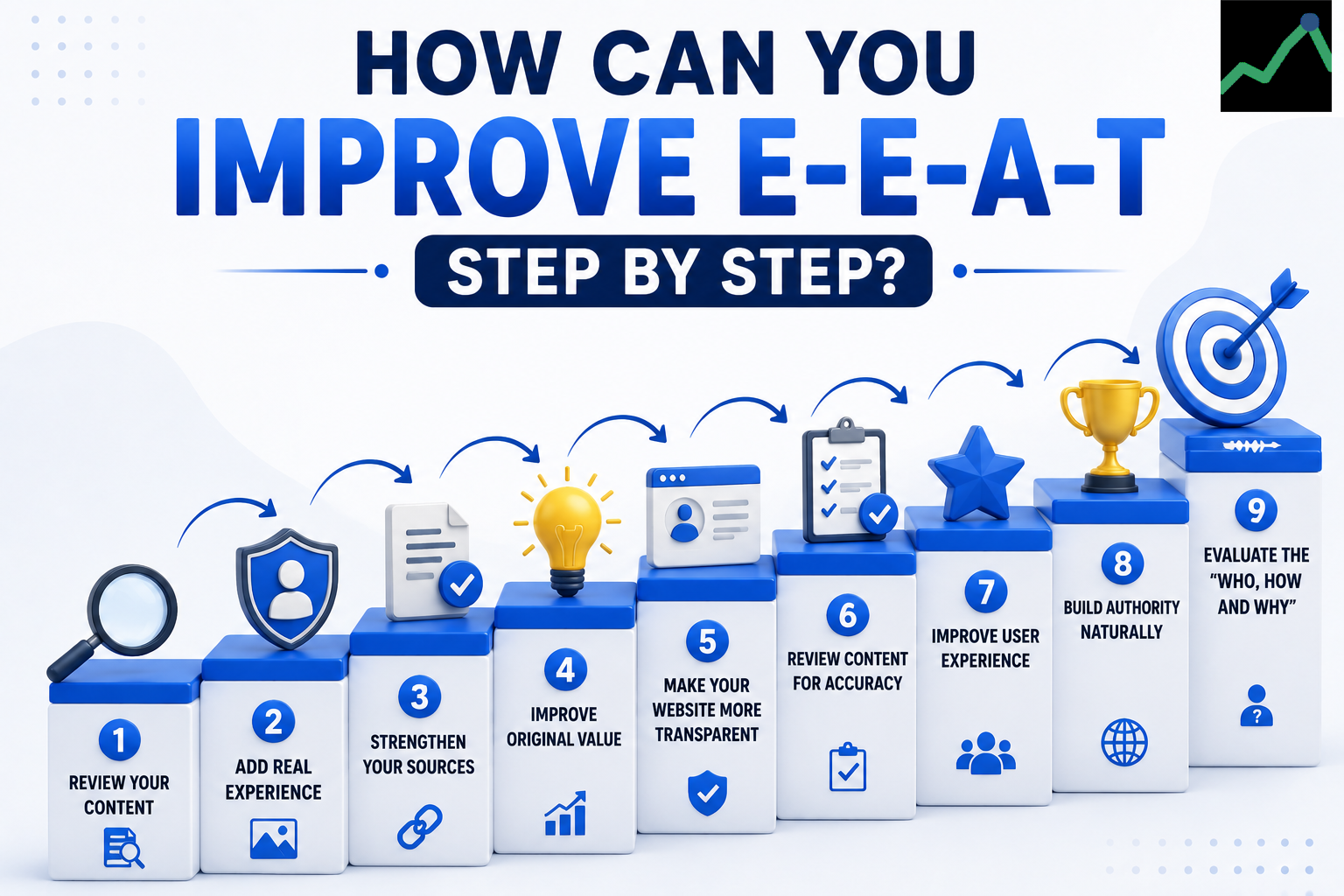
Improving E-E-A-T is not about making one quick change and expecting immediate ranking improvements. It is a process of making your content, authorship, evidence, website transparency, and overall user experience more trustworthy over time. Google recommends evaluating content through questions around originality, first-hand experience, expertise, authorship, sourcing, and whether the content genuinely satisfies the visitor.
Step 1: Review Who Creates Your Content
Start by checking your important pages.
Ask:
- Is there a real author?
- Is the author’s background relevant?
- Is there an author profile where appropriate?
- Can readers understand why this person is qualified to discuss the subject?
Google specifically recommends accurate authorship information and bylines when readers would reasonably expect them.
Step 2: Add Real Experience
Look for opportunities to replace generic explanations with actual experience.
Add:
- Original screenshots
- Testing results
- Case studies
- Practical examples
- First-hand observations
- Original research
- Real workflows
If you don’t have your own data, don’t manufacture it. Use reliable external sources and clearly distinguish sourced information from your own observations.
Step 3: Strengthen Your Sources
Review important claims and ask:
“Can the reader verify this?”
Use relevant primary and authoritative sources wherever appropriate. Avoid building an article entirely from secondary sources that simply repeat one another.
Step 4: Improve Original Value
Compare your article with competing pages.
Ask:
“What does my article provide that the reader cannot easily get from the other results?”
That could be original data, better explanations, practical experience, unique examples, expert analysis, or a useful framework. Google specifically recommends evaluating whether content provides original information, research, analysis, or substantial additional value rather than simply rewriting existing material.
Step 5: Make Your Website More Transparent
Review your:
- About page
- Contact information
- Author pages
- Business information
- Privacy policy
- Terms and conditions
- Editorial information where relevant
The goal is to reduce uncertainty about who is behind the website and how the information is produced.
Step 6: Review Your Content for Accuracy
Check important pages for:
- Outdated statistics
- Broken references
- Incorrect information
- Old product details
- Unsupported claims
- Misleading statements
Google recommends checking content for easily verifiable factual errors and keeping useful information up to date.
Step 7: Improve the User Experience
Good content should also be easy to consume.
Make sure users can:
- Find the main answer quickly
- Navigate between related topics
- Read comfortably on mobile
- Understand your page structure
- Identify important information
- Contact you when necessary
Google’s guidance for AI search also emphasizes a good page experience alongside unique and satisfying content.
Step 8: Build Authority Naturally
Instead of chasing random backlinks, create things that other people genuinely want to reference. Original research, useful tools, case studies, expert analysis, and unique data can create natural opportunities for relevant mentions and links.
Step 9: Evaluate the “Who, How, and Why”
Google’s framework provides a useful final check:
- Who: Who created the content?
- How: How was it researched, tested, or produced?
- Why: Was it created primarily to help people?
If the answers are clear and convincing, you’re moving in the right direction.
E-E-A-T Checklist for SEO
Before publishing or updating an important page, use this checklist to evaluate whether the content demonstrates genuine experience, expertise, authority, and trustworthiness.
Experience
- Does the content include first-hand experience where relevant?
- Have you added original examples, screenshots, testing, or observations?
- Are you avoiding claims of experience that you cannot genuinely support?
Expertise
- Does the content demonstrate real knowledge of the subject?
- Is the author or reviewer appropriately qualified when the topic requires specialist knowledge?
- Are technical or important claims explained accurately?
Authoritativeness
- Is your website recognized within its relevant industry?
- Are other credible and relevant websites mentioning or referencing your content?
- Are you publishing original research, analysis, tools, or useful resources?
Trustworthiness
- Is the author clearly identified?
- Can readers understand who operates the website?
- Are important claims supported by reliable sources?
- Is your contact and business information easy to find?
- Are your claims honest and free from exaggerated promises?
- Is the information accurate and up to date?
Content Quality
- Does the page provide something genuinely useful?
- Does it offer original value beyond competing content?
- Does it answer the user’s actual question?
- Have you removed unnecessary or repetitive information?
- Is the content created primarily to help people rather than manipulate rankings?
User Experience
- Is the page easy to read and navigate?
- Is important information easy to find?
- Does it work properly on mobile devices?
- Are intrusive elements kept under control?
- Can users easily understand the source and credibility of the information?
The most important point is that E-E-A-T should be demonstrated, not simply claimed. A checklist can help identify weaknesses, but genuine experience, accurate information, relevant expertise, original value, and transparency are what ultimately make a website more trustworthy.
Conclusion
E-E-A-T is ultimately about building content that people have a genuine reason to trust. Experience, Expertise, Authoritativeness, and Trustworthiness work together to show that your content is created with real knowledge, supported by evidence, and designed to provide useful information rather than simply attract search traffic. The strongest approach is to demonstrate what you know instead of simply claiming expertise. Add first-hand experience where possible, support important claims with reliable sources, identify the people behind your content, build relevant authority, and keep your website transparent and easy to use.
As search continues to evolve toward AI-powered experiences and GEO, publishing generic information is becoming less valuable. Original research, practical experience, expert analysis, unique insights, and trustworthy information give your content something meaningful to offer both users and modern search experiences.
Remember, E-E-A-T is not about finding a shortcut to higher rankings. It is about creating a website that deserves to be trusted, referenced, and recommended.
The simplest principle to follow is:
Don’t just create content that ranks. Create content that people can trust.
Frequently Asked Questions About E-E-A-T
Is E-E-A-T a Google ranking factor?
No. E-E-A-T is not a single Google ranking factor or an E-E-A-T score. Google explains that its systems use various signals to identify content that demonstrates strong Experience, Expertise, Authoritativeness, and Trustworthiness.
Which Part of E-E-A-T Is Most Important?
Trustworthiness is the most important aspect of E-E-A-T according to Google’s guidance. Experience, Expertise, and Authoritativeness can all contribute to establishing trust.
Does Every Article Need an Expert Author?
Not necessarily. The appropriate level of expertise depends on the topic. Some subjects benefit strongly from first-hand experience, while sensitive or highly technical topics may require relevant professional expertise.
For example, someone who has genuinely used a product can provide valuable first-hand experience in a review, while medical or financial topics generally require a higher level of subject knowledge and reliable supporting evidence.
Does AI-Generated Content Hurt E-E-A-T?
Not automatically. Google says its focus is on the quality and usefulness of content, rather than simply whether AI was used to create it. AI can assist with research, organization, and drafting, but the final content should still provide genuine value, accuracy, originality, and appropriate human oversight.
Is E-E-A-T Important for AI Search and GEO?
Yes, the underlying principles are highly relevant. Google recommends creating unique, satisfying, people-first content for AI search experiences rather than producing content specifically to manipulate visibility in AI results. Original research, first-hand experience, expert analysis, and reliable evidence can make content more valuable to both users and modern search experiences.
How Long Does It Take to Improve E-E-A-T?
There is no fixed timeframe. Improving E-E-A-T involves improving the quality and credibility of your content, authors, website, and reputation over time. Search systems may take time to recognize broader improvements, so E-E-A-T should be treated as a long-term content and SEO strategy rather than a quick ranking tactic.