Search is evolving beyond traditional search engine results. With AI-powered platforms such as ChatGPT, Google’s AI search experiences, Perplexity, and other generative tools, people can now ask complex questions and receive direct, AI-generated answers. This change is creating a new way for businesses and websites to compete for online visibility.
So, what is GEO? GEO stands for Generative Engine Optimization, an approach focused on improving a website’s visibility across AI-driven search experiences. It involves creating clear, relevant, authoritative, and useful content that helps generative engines understand your information and potentially mention, reference, or cite it in their responses.
For businesses, GEO represents a shift from focusing only on traditional search rankings toward building visibility wherever people discover information. A strong GEO strategy can help brands increase their presence in AI-generated answers while complementing their existing SEO efforts.
In this beginner’s guide, we’ll explore what GEO is, how generative engine optimization works, why GEO matters, how it differs from SEO, and practical ways to optimize your content for AI-powered search.
Understanding Generative Engine Optimization
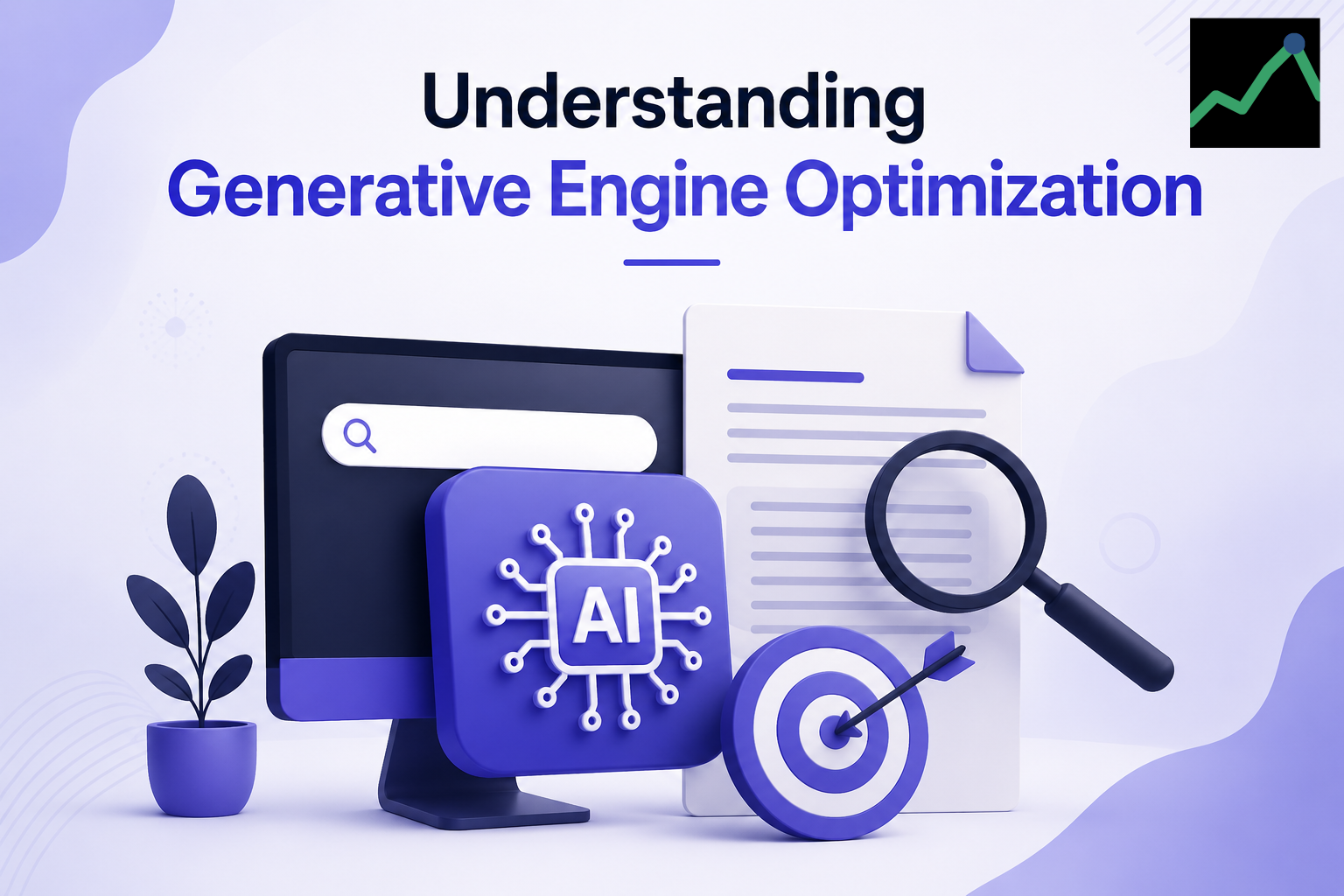
Generative Engine Optimization (GEO) is an approach to improving a website’s content and online presence so that AI-powered search systems can better understand, interpret, and potentially reference its information. Instead of focusing only on where a webpage appears in traditional search results, GEO aims to improve how a brand or source is represented within AI-generated responses.
Generative engines analyze information from different sources to create answers based on a user’s query. For this reason, content needs to be more than keyword-focused. It should provide clear answers, accurate information, relevant context, and evidence that helps establish credibility.
A strong GEO strategy focuses on making content easy to understand and valuable enough to be considered as a potential source. This can include publishing in-depth resources, answering specific questions, demonstrating expertise, providing original information, and maintaining consistent and trustworthy brand information across the web.
The goal of generative engine optimization is not simply to make content visible to AI systems. It is to build a strong digital presence that increases the likelihood of a brand being mentioned, referenced, or cited in AI-generated answers when its expertise or information is relevant to a user’s query.
Why Is GEO Important for Businesses?
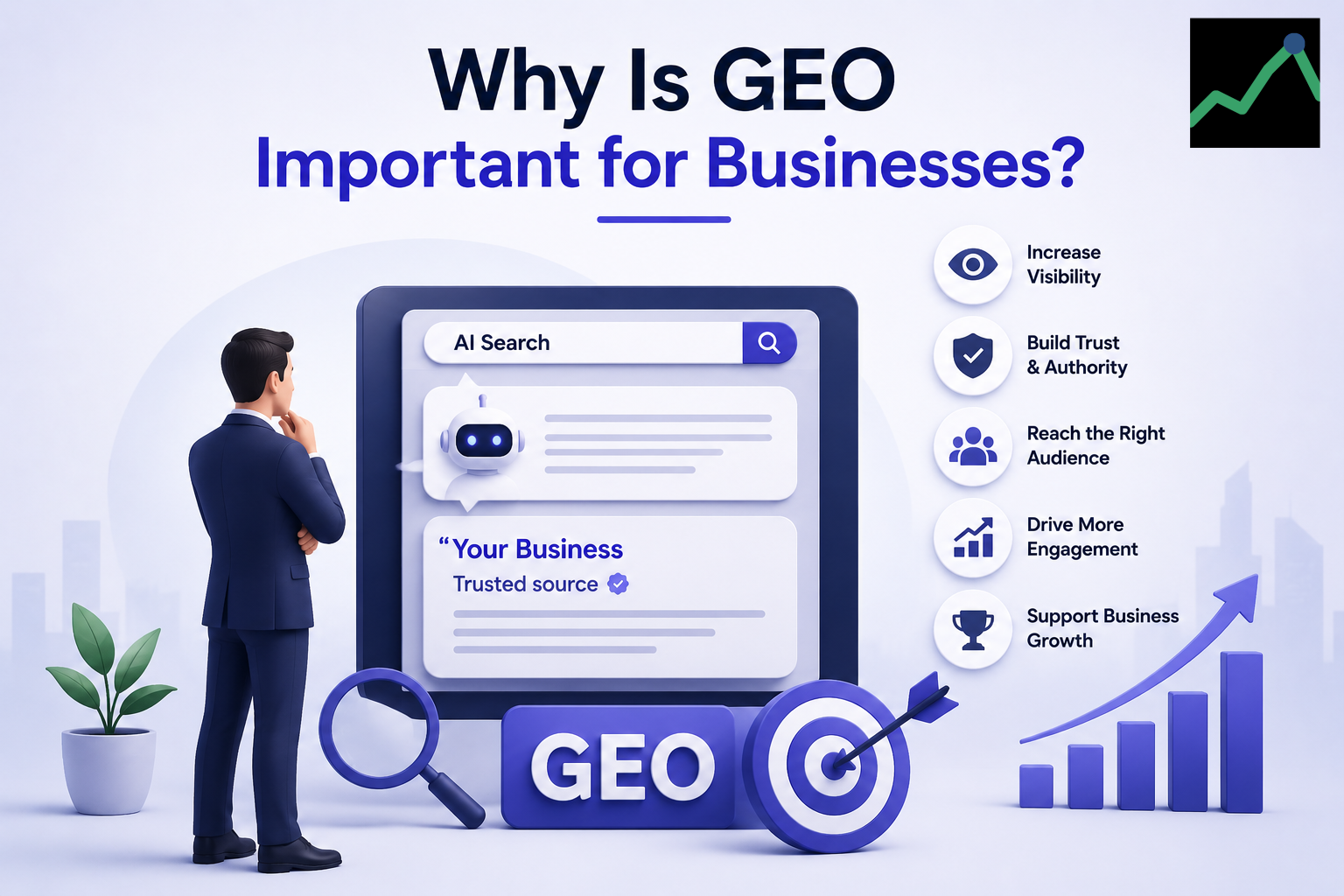
Search is evolving from traditional search results toward AI-generated answers. When users ask questions on AI-powered platforms, they may receive a direct response instead of a list of webpages to browse. For businesses, this means visibility is no longer limited to search engine rankings.
Generative Engine Optimization (GEO) helps businesses adapt to this changing search environment. By creating clear, relevant, authoritative, and trustworthy content, businesses can improve how easily generative engines understand their expertise and information. This can increase the chances of a brand being mentioned, referenced, or cited in AI-generated responses.
GEO is also important because AI-generated answers can influence what users discover, consider, and choose. A brand that consistently appears as a useful and reliable source can build stronger visibility and awareness among people searching for products, services, or information within AI-powered platforms.
Another benefit of GEO optimization is that it encourages businesses to focus on the quality and credibility of their online presence. Original information, expert insights, accurate facts, and well-structured content can make a website more valuable not only to users but also to generative search systems.
For this reason, GEO strategy should be viewed as an extension of modern search optimization rather than a replacement for SEO. Traditional SEO remains important for website visibility, while GEO helps businesses prepare for a search landscape where AI-generated answers play an increasingly important role.
How Does GEO Work?
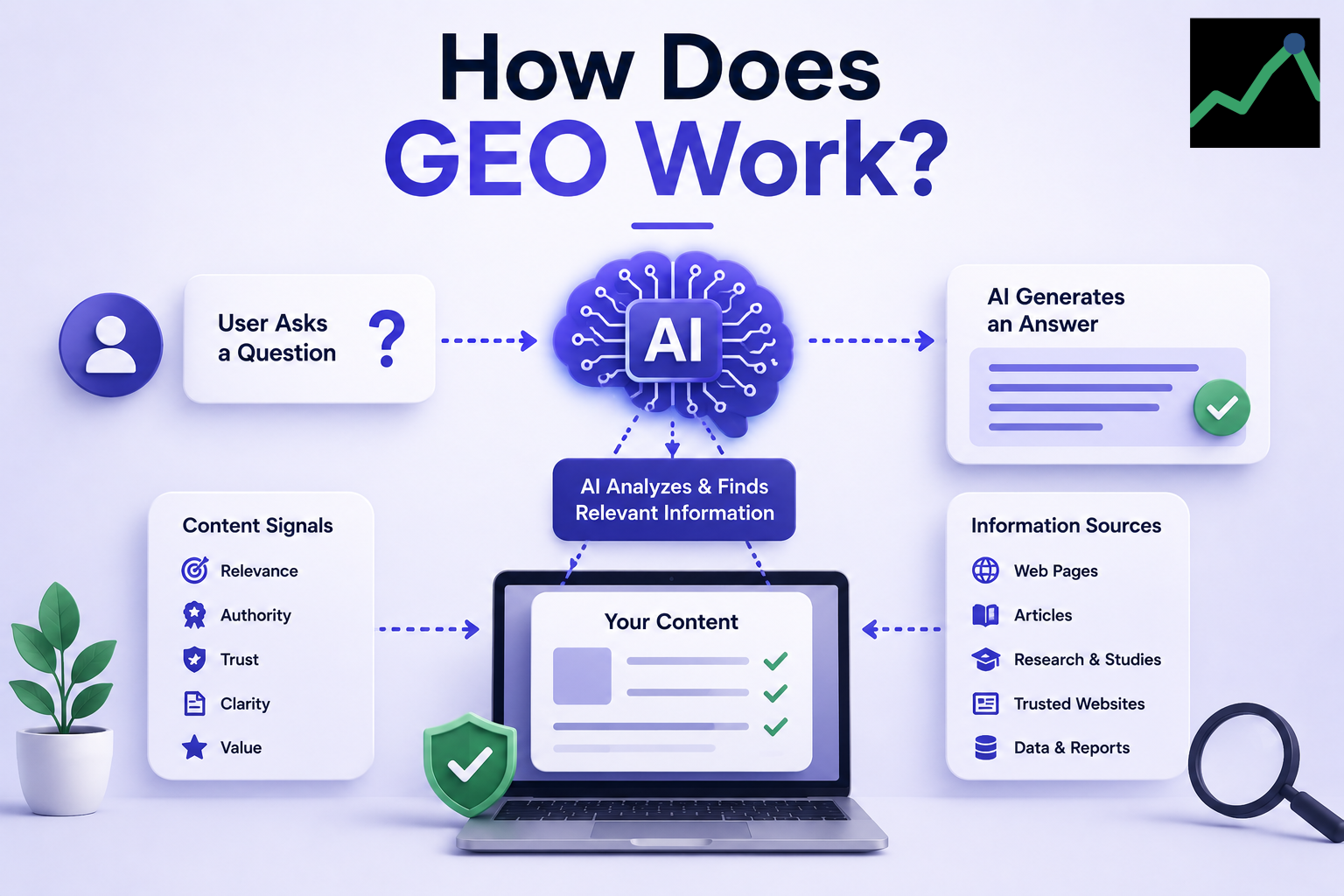
Generative Engine Optimization (GEO) works by making your content easier for AI-powered search systems to understand, evaluate, and use when generating answers. Instead of simply trying to achieve a higher position in traditional search results, GEO focuses on providing information that is relevant, reliable, clear, and useful enough to be considered within an AI-generated response.
When a user submits a query, a generative engine interprets the meaning and intent behind the question and looks for relevant information from available sources. It may then combine information from multiple sources to create a response. This is why content quality, context, expertise, and authority are important parts of a successful GEO strategy.
Well-structured content can make it easier for generative systems to identify important information. Clear explanations, direct answers, descriptive headings, factual statements, relevant examples, and supporting evidence help establish the context of a page and make its information easier to interpret.
Authority also plays an important role in GEO optimization. Content supported by reliable sources, original research, expert knowledge, and a consistent online presence can provide stronger signals of credibility. When the information closely matches a user’s query and demonstrates strong relevance and trust, it may have a better opportunity to be referenced or cited in an AI-generated answer.
The exact systems and signals used by different generative engines can vary, so there is no single formula that guarantees a citation or mention. However, the core principle of GEO remains consistent: create high-quality, trustworthy, well-structured content that genuinely helps answer the questions people are asking.
GEO vs SEO: What’s the Difference?
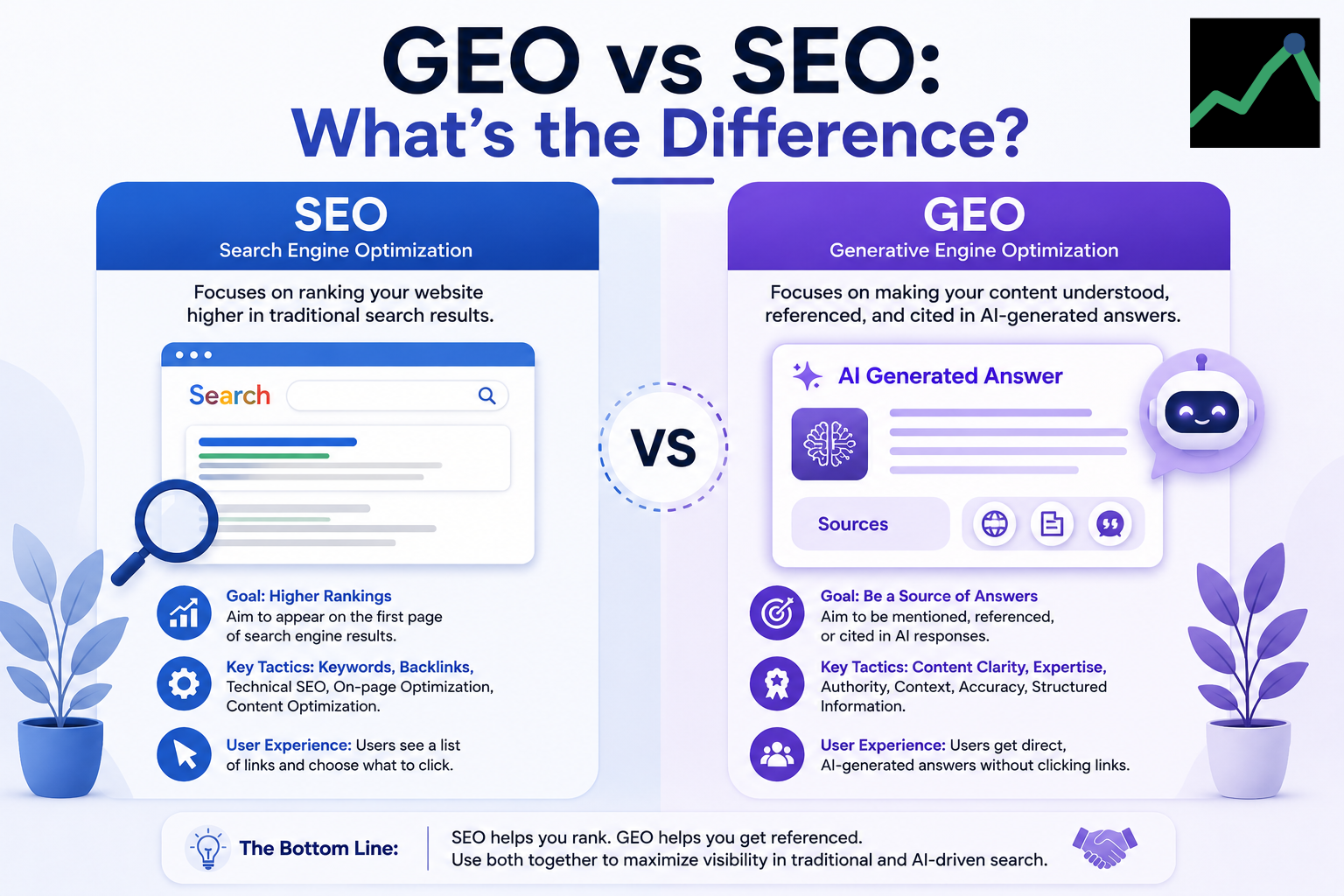
GEO and SEO are both focused on improving online visibility, but they work differently. SEO (Search Engine Optimization) is the process of optimizing content and websites to rank higher in traditional search engine results. GEO (Generative Engine Optimization) focuses on optimizing content so it has a better chance of being recognized, referenced, or cited by AI-powered search engines and generative AI platforms.
The main difference is the type of search result they target. SEO aims to improve a website’s position in search engine results pages (SERPs), while GEO aims to increase a brand’s visibility within AI-generated answers.
| SEO | GEO |
| Focuses on traditional search engines | Focuses on generative AI and AI search |
| Targets higher rankings | Targets AI mentions and citations |
| Optimizes for keywords and search intent | Optimizes for clear, relevant, and contextual information |
| Measures rankings, clicks, and organic traffic | Measures AI visibility, mentions, and citations |
| Primarily targets search result pages | Primarily targets AI-generated responses |
SEO commonly relies on keywords, backlinks, technical optimization, internal linking, and search intent to help pages rank. GEO focuses more on content clarity, authority, factual accuracy, context, and information that AI systems can easily understand and use.
For example, SEO might help a page rank when someone searches for “best accounting software.” GEO focuses on making that page or brand more likely to be included when an AI search tool generates an answer to the same question.
In simple terms, SEO helps your website rank in search results, while GEO helps your content get recognized and referenced in AI-generated answers. Both have the same broader purpose—improving visibility—but they are designed for different search environments.
What Are the Key GEO Ranking Factors?
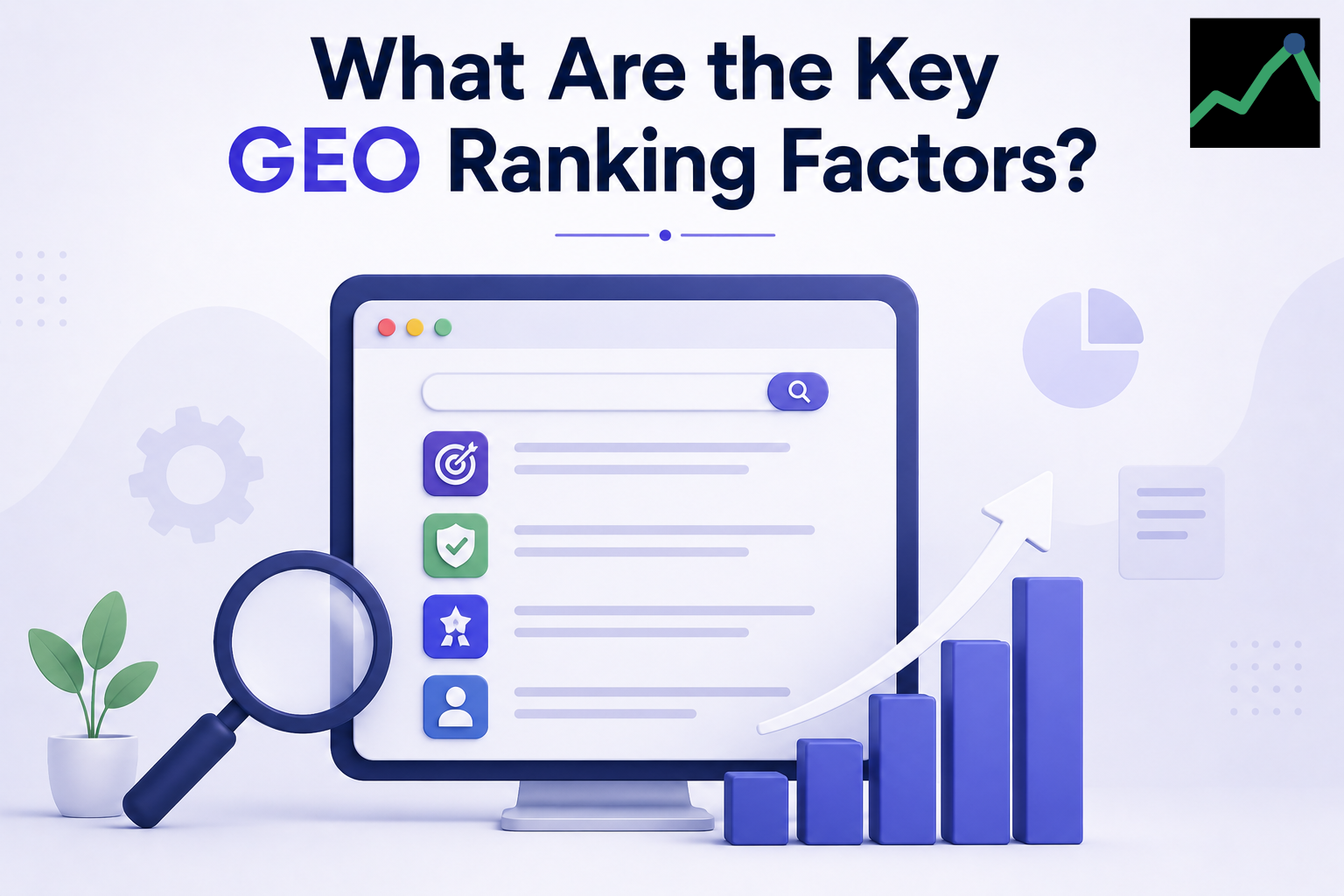
There is no single formula that guarantees a website will appear in an AI-generated response. Different generative engines may evaluate content in different ways. However, several core qualities can improve how easily AI systems understand a page and determine whether its information is useful for a particular query.
Content Relevance
Relevant content directly addresses what the user is looking for. A page should stay focused on its main subject and provide information that matches the search intent. Clear topical relevance helps generative engines understand when a piece of content may be useful for a specific question.
Content Quality and Accuracy
High-quality content should be informative, accurate, and easy to understand. Avoid unnecessary information and unsupported claims. Provide specific explanations, reliable facts, and useful context that genuinely answers the reader’s question.
Topical Authority
Consistently creating valuable content around a particular subject can help establish topical authority. Covering related questions, subtopics, and concepts in depth gives search systems a clearer understanding of a website’s expertise within its niche.
Expertise and Trust
Trust is an important part of Generative Engine Optimization. Content can become more credible when it demonstrates real expertise, uses reliable references, identifies knowledgeable authors, and supports important claims with evidence.
Original Research and Insights
Unique information can give content an advantage. Original research, proprietary data, expert analysis, case studies, surveys, and first-hand experiences provide information that may not be easily found elsewhere. This can make a source more useful when an AI system is forming an answer.
Brand and Source Authority
A website’s reputation can extend beyond its own pages. Relevant brand mentions, industry recognition, expert references, and coverage from reputable sources can contribute to a stronger overall authority profile.
Clear Content Structure
Well-organized content makes information easier to understand. Use descriptive headings, concise paragraphs, bullet points where appropriate, definitions, examples, and direct answers. A logical structure helps readers navigate the page and makes key information easier for systems to interpret.
Ultimately, strong GEO ranking factors are centered on usefulness, relevance, credibility, and clarity. Rather than trying to optimize for a single algorithm, businesses should focus on creating authoritative content that genuinely provides the best possible answer to the questions their audience is asking.
How to Optimize Your Website for GEO
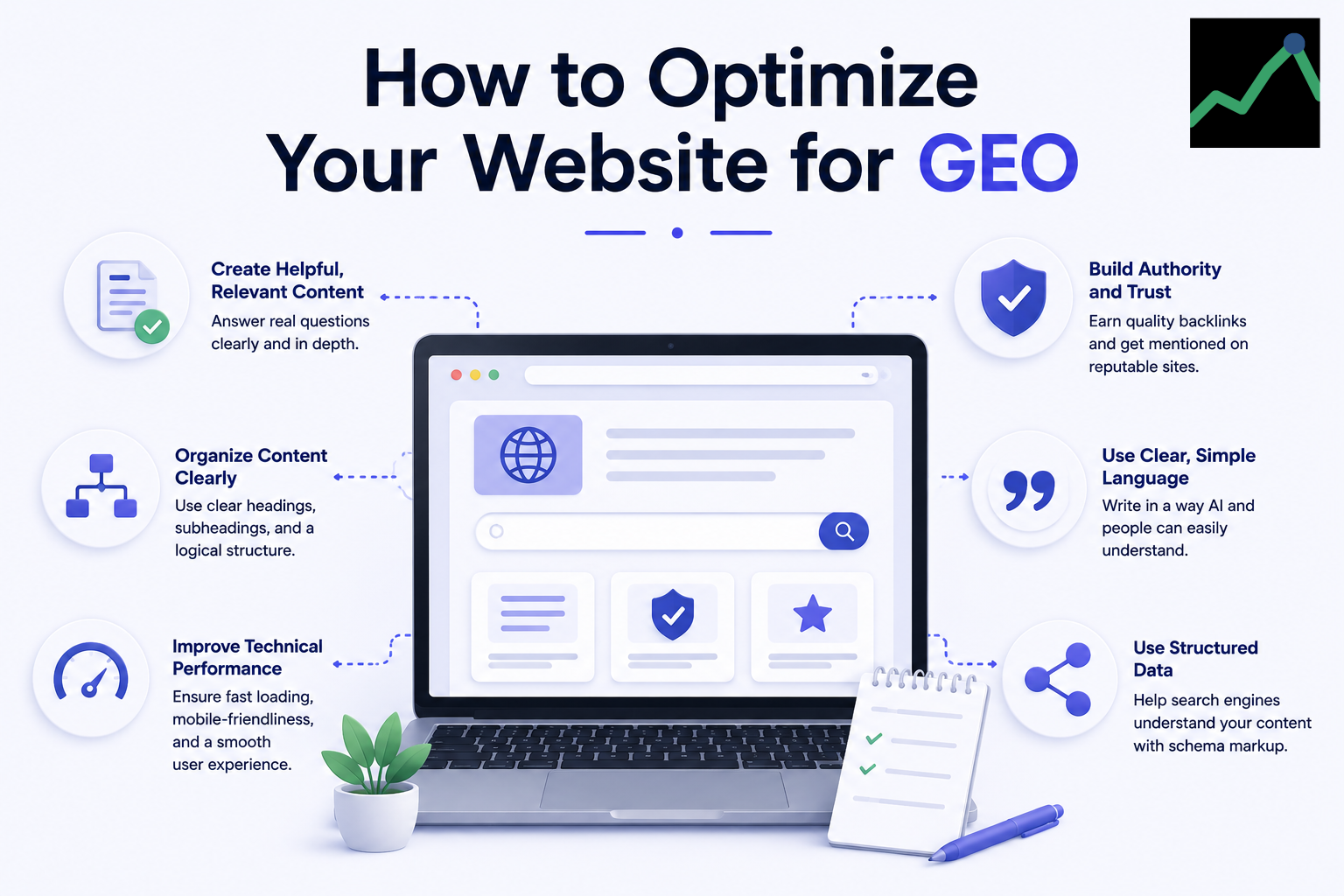
Optimizing a website for Generative Engine Optimization (GEO) starts with creating content that is genuinely useful, easy to understand, and supported by credible information. The goal is not to manipulate AI systems, but to make your website a strong and reliable source when generative engines look for answers to relevant questions.
Create Helpful, In-Depth Content
Focus on answering the questions your audience actually asks. Cover the topic thoroughly, explain important concepts clearly, and provide practical information rather than filling pages with repetitive text. High-quality content gives generative engines more useful context to understand your expertise.
Answer Questions Directly
Use clear, direct answers when addressing common questions. Avoid unnecessary introductions before reaching the main point. Question-based headings followed by concise explanations can make important information easier for both users and AI systems to identify.
Use a Clear Content Structure
Organize information with descriptive headings, short paragraphs, lists, tables, examples, and summaries where appropriate. A logical structure helps readers navigate the page and makes the relationship between different concepts easier to understand.
Demonstrate Expertise and Credibility
Include accurate information, relevant sources, expert insights, author credentials, case studies, and first-hand experience when available. Strong credibility signals can support your GEO strategy by showing that the information comes from a knowledgeable and trustworthy source.
Include Original Data and Insights
Add something unique to your content whenever possible. Original research, statistics, surveys, case studies, expert opinions, and proprietary insights can make a page more valuable than content that simply repeats information found elsewhere.
Keep Information Accurate and Updated
Outdated or incorrect information can reduce the usefulness of a page. Review important content regularly and update statistics, examples, references, product details, and other time-sensitive information so that your website remains a reliable resource.
Strengthen Your Website’s Topical Authority
Create related content that covers your main subject from different angles. Connecting supporting articles to core pages through relevant internal links can help establish depth around a topic and create a stronger overall GEO optimization strategy.
Make Your Website Easy to Understand
Your content should be accessible to both users and search systems. Use descriptive page titles, meaningful headings, organized information, relevant internal links, and a technically accessible website so important content can be discovered and interpreted effectively.
Ultimately, successful GEO optimization comes from consistently publishing useful, authoritative, accurate, and well-structured content. Instead of trying to optimize for a single AI platform, focus on building a strong information source that can serve users across different search environments.
GEO Content Strategy: What Should You Publish?

A strong GEO content strategy is built around content that answers real questions, demonstrates expertise, and provides information that is genuinely useful. Rather than creating separate pages for every possible keyword, businesses should develop a focused content library that covers important topics and related questions in depth.
Publish Detailed Topic Guides
Create comprehensive guides that explain a subject clearly from beginning to end. Cover the main topic, related concepts, common questions, and practical examples so readers can find the information they need without searching across multiple pages.
Add Original Research and Data
Original information can make content more valuable and distinctive. Consider publishing surveys, statistics, industry research, case studies, experiments, or proprietary findings. Unique data can also give other websites and AI systems a stronger reason to reference your content.
Create Comparison Content
Comparison and evaluation content can address highly specific user needs. Compare products, services, tools, or different approaches using accurate information and clear criteria. Avoid biased claims and focus on helping readers make informed decisions.
Showcase Expert Knowledge
Expert-led content can strengthen the credibility of your GEO content. Include expert opinions, professional experience, interviews, case studies, and practical insights that add information beyond what can be found in generic articles.
Answer Frequently Asked Questions
Create FAQ content around genuine questions your audience asks. Provide direct, useful answers and avoid repeating the same information across multiple pages. Well-written FAQs can also help cover specific search intents that broader articles may not address.
Build Content Around Topic Clusters
A successful GEO strategy should go beyond individual articles. Create a central resource for an important topic and support it with related pages covering specific subtopics. Use relevant internal links to connect these resources and create stronger topical depth.
Keep Every Piece Useful
Every article or page should have a clear purpose. Avoid publishing large amounts of repetitive or low-value content simply to increase page count. A smaller collection of accurate, authoritative, and genuinely helpful resources can be more valuable than a large library of similar articles.
Ultimately, effective GEO content strategy means creating content that people want to read and AI systems can clearly understand. Focus on depth, originality, expertise, and relevance, while making sure every page provides a meaningful answer or solution.
How to Measure GEO Success
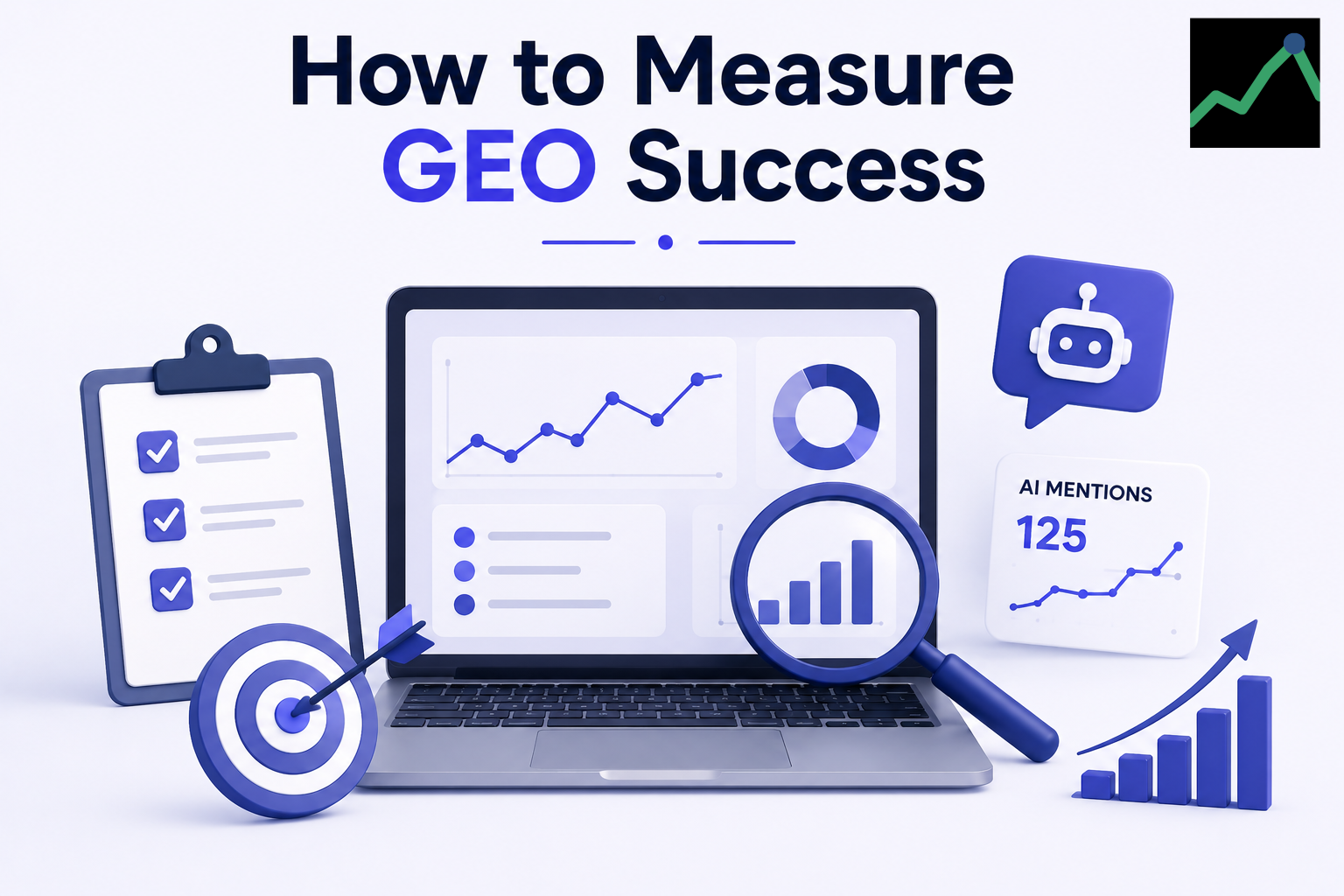
Measuring GEO success is different from tracking traditional SEO rankings. A page may not receive a conventional ranking position in an AI-generated response, so businesses need to look at how often their brand or content appears, is referenced, or is cited across relevant generative search experiences.
Track AI Mentions
Monitor how frequently your brand, products, services, or website are mentioned in AI-generated answers for relevant queries. Increasing mentions can indicate stronger AI search visibility and growing recognition within your target topic.
Monitor Citations and Sources
Track when AI-generated responses link to or reference your website as a source. The number, relevance, and quality of these citations can provide useful insight into how often your content is being used to support AI-generated answers.
Measure AI Referral Traffic
When AI platforms send users to your website, analyze that traffic separately where your analytics setup allows it. Look at sessions, engagement, conversions, and the pages receiving visits to understand whether AI visibility is bringing valuable users to your site.
Monitor Brand Visibility Across Queries
Test a consistent set of relevant questions over time and record whether your brand appears, which pages or sources are referenced, and how your business is described. This can help identify changes in your overall GEO performance.
Evaluate the Quality of Mentions
Visibility alone is not enough. Pay attention to the context in which your brand appears. A relevant recommendation, accurate description, or positive reference can be more valuable than a simple mention with little connection to the user’s intent.
Compare Performance Over Time
GEO is an ongoing process, so measure changes regularly rather than relying on a single snapshot. Compare AI mentions, citations, referral traffic, and brand positioning over time to understand whether your GEO strategy is gaining traction.
There is no universal GEO metric that perfectly represents AI visibility. The most useful approach is to combine several signals, including GEO metrics, citations, mentions, referral traffic, and conversions, to build a clearer picture of how your brand is performing across AI-driven search.
What Is the Future of GEO?
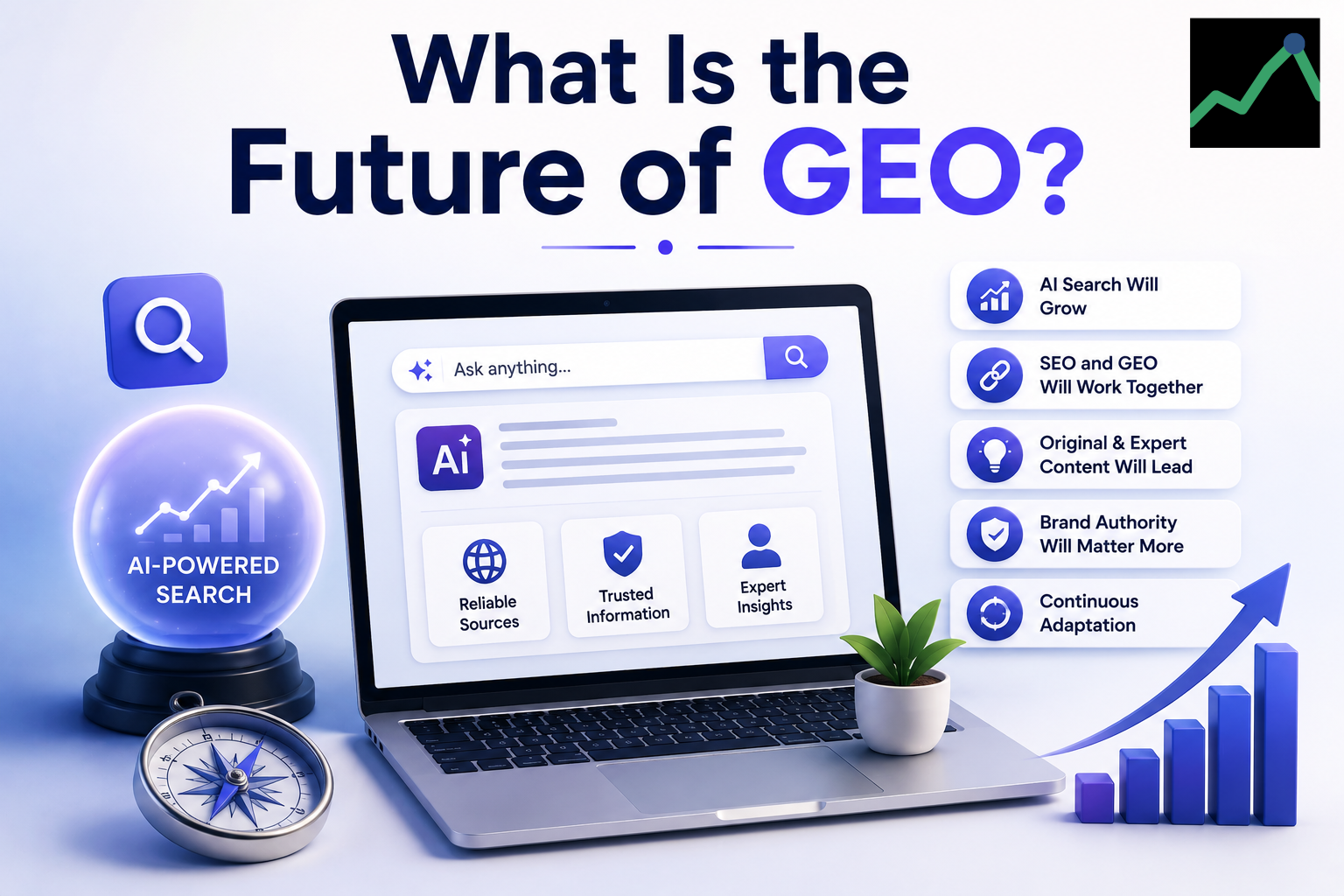
The future of Generative Engine Optimization (GEO) will depend on how quickly AI-powered search becomes part of everyday online discovery. As generative engines continue to improve their ability to understand questions, evaluate sources, and generate detailed responses, businesses will need to consider how their content is discovered and represented within these experiences.
AI Search Will Become a Bigger Discovery Channel
People are increasingly using AI-powered platforms to research topics, compare options, find recommendations, and solve problems. As this behavior grows, AI search visibility can become an important part of how customers discover brands, products, and services.
SEO and GEO Will Become More Connected
The growth of GEO does not mean traditional SEO will become irrelevant. Technical SEO, website accessibility, strong content, internal linking, and authority can continue to provide an important foundation. Businesses will increasingly need an approach that supports visibility across both traditional search and generative search.
Original and Expert Content Will Stand Out
As producing AI-generated content becomes easier, generic information may become less valuable as a differentiator. Original research, expert opinions, first-hand experience, unique data, and practical insights can help businesses create content that provides real value and demonstrates expertise.
Brand Authority Will Matter More
A strong GEO strategy will involve more than optimizing individual webpages. How a brand is represented across reputable websites, publications, expert sources, and other online channels can contribute to its overall credibility and authority.
GEO Will Require Continuous Improvement
There is unlikely to be one permanent formula for GEO optimization. AI platforms and search experiences will continue to change, which means businesses will need to monitor visibility, review their content, update outdated information, and adapt their strategies over time.
The future of GEO is ultimately about building a trustworthy and authoritative digital presence. Businesses that consistently create accurate, useful, original, and relevant content will be better prepared for a search landscape where AI-generated answers play a larger role.
Conclusion
Generative Engine Optimization (GEO) is changing the way businesses think about online visibility. As AI-powered search becomes a bigger part of how people discover information, products, and services, being visible in traditional search results may no longer be the only goal. Brands also need to consider how their content appears within AI-generated answers.
A strong GEO strategy is built on the same foundation of quality that users expect from a trustworthy website: relevant information, clear explanations, accurate facts, genuine expertise, and original insights. Instead of creating content only to gain AI mentions, businesses should focus on becoming a reliable source that provides real value.
At the same time, GEO and SEO should work together. Technical SEO, website structure, content quality, and authority remain important, while GEO optimization helps extend that foundation into generative search experiences.
The future of search will continue to evolve, but one principle is likely to remain important: useful and trustworthy information will stand out. Businesses that start building strong, authoritative content today will be better positioned to earn visibility as AI-driven search continues to develop
Frequently Asked Questions
Is GEO replacing SEO?
No. GEO and SEO serve different purposes but can work together. SEO focuses on visibility in traditional search results, while Generative Engine Optimization focuses on improving the chances of being mentioned or cited in AI-generated answers.
What Is the Difference Between GEO and AEO?
GEO vs AEO can be confusing because both focus on AI-driven or answer-based search experiences. AEO generally focuses on optimizing content to provide direct answers to questions, while GEO takes a broader approach to visibility within generative AI responses, including mentions, references, and citations.
How Long Does GEO Take to Work?
There is no fixed timeline for GEO optimization. Results can depend on content quality, website authority, competition, the topic, and how different AI search systems process information. GEO is better treated as an ongoing strategy rather than a one-time campaign.
Can Small Businesses Benefit From GEO?
Yes. Small businesses can use GEO strategy to build visibility around specific services, locations, industries, and areas of expertise. Creating focused, authoritative content can help a smaller brand become a useful source for relevant questions.
Does GEO Work for Ecommerce Websites?
Yes. Ecommerce businesses can apply GEO to product pages, category content, buying guides, comparisons, FAQs, and educational resources. Clear product information and helpful content can improve the chances of being considered for relevant AI-generated recommendations or answers.
Can AI-Generated Content Help With GEO?
AI can assist with research, brainstorming, outlining, and drafting, but simply publishing AI-generated content does not guarantee GEO visibility. Content should be reviewed, fact-checked, improved with genuine expertise, and enriched with original information.
How Can I Track GEO Visibility?
You can monitor AI search visibility by regularly checking relevant queries and recording brand mentions, citations, references, positioning, and AI-driven website traffic where measurable. Tracking these signals over time can help evaluate your overall GEO performance.